Categories
Sports

Canada’s constant Achilles heel: Can Carter Hart put an end to years of shaky world junior goaltending?


The mercy pull came midway through the second period.

By then, Scott Wedgewood was down and dazed in the crease, his bare head buried in his hands after being run over by a Russian forward following a breakaway goal. In some ways, it was a fitting image for what it’s like to be a Team Canada goalie at the world junior hockey championship.

“I allowed a four spot, but I wasn’t playing awful,” Wedgewood, who is now playing with the Arizona Coyotes, said of the 2012 world juniors in which Canada lost 6-5 to Russia in the semifinal and ended up winning bronze.

“They had a couple of breakaways and a couple of shots bounced in off (defenceman) Ryan Murray. But at the end of the day, if your goalie misses a shot, then it’s on him. It doesn’t matter if it’s a six-on-nothing or what, your job is to stop the puck. We lost one game, but to take you out of a gold medal, it’s something that haunts you a little bit.”

Wedgewood’s world junior experience is not exactly unique.

From Mark Visentin’s five-goal implosion in the third period of the 2011 tournament to the six goals that Mackenzie Blackwood allowed in a 6-5 quarter-final loss against Finland in 2016, a lack of big-game goaltending when it matters the most is a reason Canada has won just one gold medal in the last eight tournaments.

The last time Canada had a goalie named to the tournament all-star team was Steve Mason in 2008 and Carey Price the year before. In the decade since, only two Canadian goalies have even finished in the top-three in save percentage. Even when the Canadians have won gold lately — 2015, when Zach Fucale nearly blew a 5-1 lead by allowing three straight goals in the final to Russia — it’s been almost in spite of their goaltending.

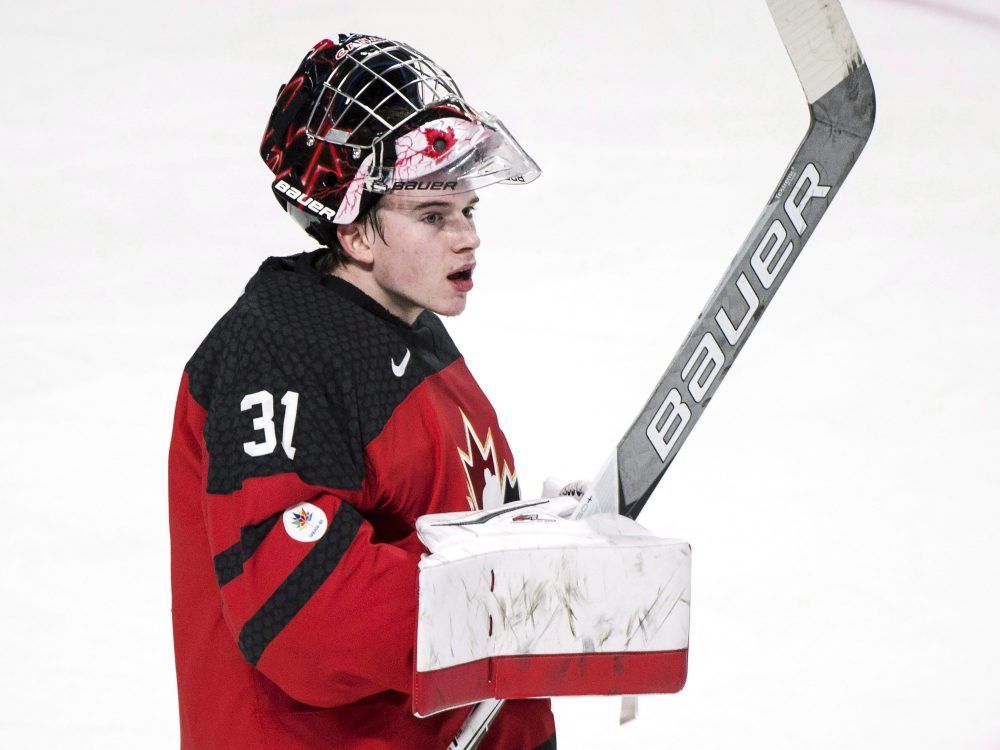
Carter Hart hopes to change that.

A year ago, the second-round pick of the Philadelphia Flyers came within one save of winning gold in an overtime shootout loss to Team USA. But as one of seven returning players for Canada, he heads into this year’s tournament in Buffalo looking to take care of some unfinished business.

“Obviously, that was a pretty heartbreaking loss,” said Hart. “I definitely learned a lot from that experience. I think having gone through that experience will definitely help me for this year.”

On a no-name team that is devoid of top picks and blue-chip prospects, Hart not only has to be steady — he needs to steal games if Canada hopes to win gold. It’s a lot to ask of a 19-year-old. But as a two-time WHL goalie of the year who has a league-best .961 save percentage with the Everett Silvertips this season, Hart has the pedigree — and mindset — to get it done.

“I’ll do whatever it takes to win,” he said. “I don’t know if there’s a change in pressure at all when Canada has the expectations of winning gold all the time. If you don’t set yourself up for that goal, then you’re selling yourself short.

“It’s pretty much gold or nothing for us.”

A year ago, Hart and Tampa Bay Lightning prospect Connor Ingram split the first four games of the round robin, before Ingram was named the starting goalie for the playoff round. But once Ingram was pulled after allowing three goals on four shots against Sweden in the semifinal, Hart came in and took over the No. 1 job.

In the final against the U.S., Hart stopped 31 of 36 shots. But he also twice gave up a two-goal lead, and while American goalie Tyler Parsons was perfect in the shootout, Hart went 3-for-4, allowing the game-winner on a deke from Troy Terry.

“My goodness, he was one save or one goal by Canada away from winning a gold medal last year,” said Silvertips GM Garry Davidson. “There is a tremendous amount of pressure on the team and it always falls on the goaltender. I’m pretty sure he’s going in there with the mindset that he wants to get the job done that he didn’t.”

When the tournament ended, Hart returned home to Edmonton for a week to hit the reset button after an emotional high. It was during that time that he received a phone call from Washington Capitals goalie Braden Holtby. The two had never met, but share the same mental coach in Dr. John Stevens, whom Hart has known since he was 10 years old.

“Tough bounce there,” Holtby told Hart, adding that he looked forward to seeing him in the NHL one day — with a caveat. “You’re a Philadelphia Flyer, so I’m still going to kick your ass.”

It was the kind of pick-me-up that Hart needed at the time. In the last 15 or so years, the world juniors has gone from being one of many junior-aged tournaments on the calendar to becoming the be-all, end-all event for teenaged prospects. But at the end of the day, it’s still just a hockey tournament that doesn’t have any bearing on a player’s NHL career.

Of course, it can be difficult to remember that.

Perhaps that is why if you look closely, you’ll see Hart repeating variations of the same phrase while standing in net: “Does the puck know it’s a big game? Does the ice know it’s a big game?”

It’s a bit silly, but it’s his way of deflating the external pressure and remembering that this is still just hockey. As a goalie, he can’t control everything that happens on or off the ice. All he can do is try and stop the puck like he’s always done — and have some fun in the process.

“Don’t get me wrong, I’ve watched the world juniors and had many guys play in the world juniors,” said Dr. Stevens, who has coached former world junior stars such as Canada’s Jeff Glass and Russia’s Andrey Makarov. “But it’s a game. In the whole grand scheme of things, it’s one of those things where it’s another stepping-stone in his career. His ultimate goal is he wants to be a Philadelphia Flyer.”

The fact Hart has already competed in the world juniors should give him a leg up on the competition. He knows what to expect. There’s undoubtedly going to be highs and lows throughout the tournament. Like last year, there is a chance he could temporarily lose the starting job to Dallas Stars prospect Colton Point. But if he does, don’t expect it to affect him much.

While Hart might be Canada’s highest profile goalie since Price, his strength is his composure. “The one thing with Carter is he’s a very calm presence in net for us,” said Silvertips head coach Dennis Williams. “You never know if he’s got a shutout or he’s allowed five goals in.”

It didn’t happen overnight. The mental side of the game is something Hart has refined and worked on since he started playing the position. After a practice, most players will hit the gym or go home for a nap. Hart heads to what he refers to as his “mental gym,” where he spends upwards of an hour on breathing exercises, concentration grids or ball juggling.

“What stands out with Carter and guys like Braden Holtby is they don’t overlook the mental side,” said Dr. Stevens. “It’s another part of his training. When people talk about his composure, it didn’t happen overnight. He’s been working on it for a long, long time.”

An eighth-round pick in the WHL draft, Hart was 5-foot-6 when he joined the Silvertips as a 15-year-old. No one expected much. Well, no one except for Hart. “I remember him sitting in my office and him making the comment: ‘I think I’m every bit (as good) as everybody else here and I’m going to prove that to people,’” said Davidson. “And don’t take this wrong. It didn’t come across as cockiness. He just believed it. He’s got a self-confidence, but it doesn’t go over the top.”

Since then, Hart has made good on his words. As a rookie, he went 18-5-5 with a 2.29 goals-against average. The following season, he was named the Canadian Hockey League’s goalie of the year and was drafted 48th overall by the Flyers.

“He’s definitely the type of goalie where if he’s behind you, then you feel pretty confident,” said Team Canada forward Sam Steel, who has played on the same teams as Hart since they were 10 years old.

Last year, Hart was even better. He once again was named the WHL’s goalie of the year, and though the Silvertips didn’t advance past the second round of the playoffs, he made headlines with a CHL-record five-OT period win against the Victoria Royals to clinch a first-round series victory. “It started at noon and finished at eight at night,” said Davidson, laughing. “Carter outdueled the boy in Victoria (Griffin Outhouse), who I think is the second-best goalie in the West right now.”

“Obviously, his performance speaks for itself,” said Williams. “He goes about each and every game as a pro. He’s been absolutely fantastic in net.”

Hart missed six weeks at the start of the season when he developed mononucleosis during Flyers training camp. Since coming back, he’s been on a tear, leading the Silvertips to the best record in the Western Conference.

Heading into the world juniors, he’s arguably the hottest goalie in the world. The question is whether he can remain that way when it matters the most.

“Carter’s had stretches for us in the past where he’s been in the zone for a period of time and, typical of a young player, his game would slide a little bit,” said Davidson. “But since he’s come back, he has just been in a zone and he hasn’t budged from it. And again, I do believe he is on a bit of a mission.”

Email: mtraikos@postmedia.com | Twitter: @michael_traikos

Canada’s goaltending history

Much like the NHL playoffs, goaltending tends to be the deciding factor for success at the world junior hockey championships. For Canada, it’s at times been the Achilles’ heel. Here is a look at how the country’s goaltending has held up in the last eight tournaments.

2017
Result: Silver

Canada went up 2-0 in the first period, gave up two goals in the second and followed the same pattern in the third. Carter Hart stopped 31 of 36 shots, but it was Team USA’s Tyler Parsons who stole the 5-4 win with a 44-save performance, which included a perfect 5-for-5 showing in the overtime shootout.

2016
Result: 6th

Finland’s Patrik Laine scored twice in the back-and-forth semifinal, but he might not have if Canada decided to change its goalie. Instead, while Finland swapped out goalies, Mackenzie Blackwood (23 saves on 29 shots) was left in net for the entire 6-5 loss.

2015
Result: Gold

Zach Fucale wasn’t named to the tournament all-star team, but he led all goalies with two shutouts, a 1.20 goals-against average and a .939 save percentage. That being said, he provided a bit of a scare in the final when he nearly allowed a 5-1 third-period lead to evaporate by giving up three straight goals.

2014
Result: 4th

For the third straight year, Canada lost in the semifinal. This time, you couldn’t blame the goaltending. While Fucale allowed four goals on 22 shots, the big problem was Finland’s Juuse Saros, who made 23 saves in a 5-1 win and was named to the tournament’s all-star team.

2013
Result: 4th

Canada beat the U.S. 2-1 in the preliminary round, but it was a different story in the semifinal rematch, as goalie Malcolm Subban was pulled after allowing four goals. On the other end, tournament MVP John Gibson stopped 41 of 42 shots.

2012
Result: Bronze

Scott Wedgewood was pulled midway through the second period of the semifinal after allowing four goals on 13 shots, while Mark Visentin gave up a goal on the first shot he faced. Down 5-1, Canada tried to mount a third-period comeback, but lost 6-5 to Russia.

2011
Result: Silver

Canada was leading 3-0 in the third period of the gold-medal game when it all fell apart. Led by Artemi Panarin, Vladimir Tarasenko and Evgeny Kuznetsov, the Russians scored five straight goals on Visentin in a shocking, come-from-behind 5-3 win.

2010
Result: Silver

Both Canada and the U.S. pulled their goalies in the final, with Martin Jones replacing Jake Allen after he allowed five goals on 23 shots. While Canada forced overtime with back-to-back goals from Jordan Eberle, American defenceman John Carlson beat Jones with the eventual winner.

Original source article: Canada’s constant Achilles heel: Can Carter Hart put an end to years of shaky world junior goaltending?


Source link

Categories
Sports

‘Bundle up’ or risk hypothermia: Pyeongchang Olympics will be cold enough to make spectators teary


PYEONGCHANG, Korea, Republic Of — The cold is back for the Winter Games.

After two straight balmy Olympics where some might have wondered if it was even winter, let alone the world’s pre-eminent freeze-dependent sporting event, athletes and visitors alike will finally experience a serious chill in their bones during the games in mountainous Pyeongchang.

How cold is it?

So cold that tears spring to the eyes. So cold the ink in a pen grows sluggish and fades as it scribbles over a page. So cold that South Korean men sometimes flash back to being posted for hours on the frozen frontline during mandatory military service. So cold at least six people were treated for hypothermia last month after a pop concert at the open-air Olympic Stadium.

“We all hope it will be better in February, but if it’s like it is now, there will be big trouble. It’s just too cold for outsiders,” says Choi Jong-sik, 64, smirking in his short-sleeve shirt as a visiting reporter removes layer after layer of thick outerwear for an interview at Choi’s Pyeongchang restaurant.

Vancouver and Sochi, where ski jumpers were landing in puddles, got complaints for being too warm, as might Beijing in 2022, but the weather in Pyeongchang will likely dazzle spectators, and confound organizers and athletes, in its bitterness.

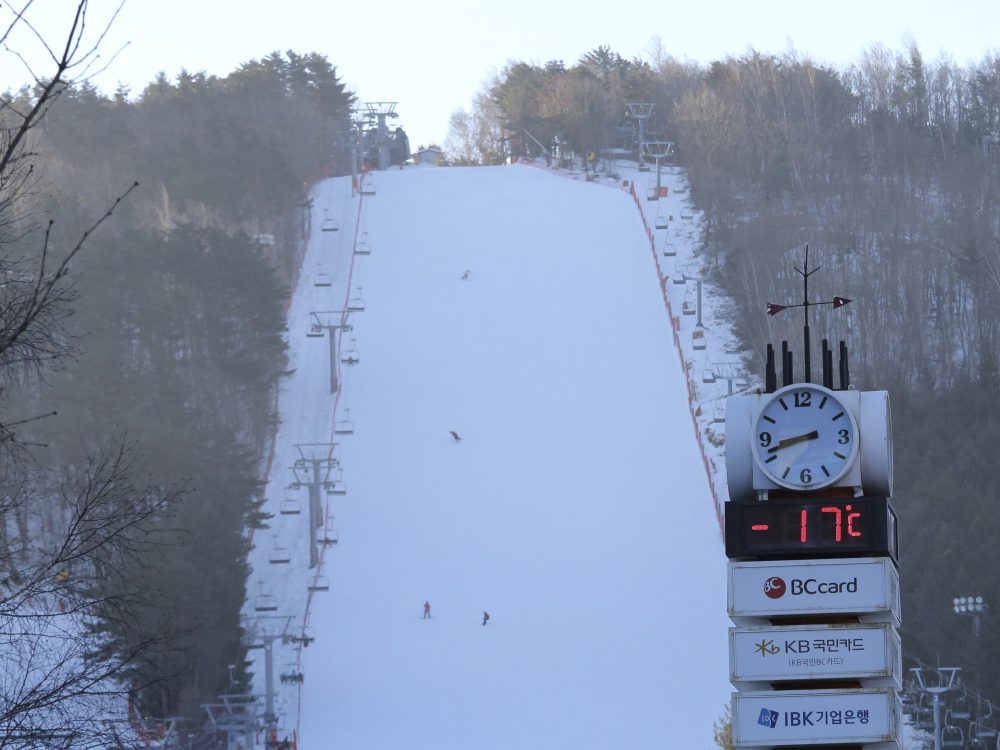
Pyeongchang sits nearly a kilometre above sea level in the northeastern corner of South Korea, not too far from the border with the North. It is one of the coldest parts of the country — wind chill in February often hovers around -15 C — and notorious for a powerful, biting wind that gathers force as it barrels down out of Siberia and the Manchurian Plain and then across the jagged granite peaks of North Korea.

It can be hard to get people here to talk about, or even acknowledge, the cold. It is simply a fact of life, and stoicism is often the rule when confronted with outsiders’ weather-related questions.

“The only thing foreigners can do is the same thing locals do: bundle up,” Nam Sun-woo, 60, a fishmonger in Pyeongchang, says. “Not many outsiders understand how cold it gets here. It’s not like where they’re from. This kind of cold is completely different.”

The weather will be on display, and maybe a major nuisance, at the Pyeongchang Olympic Stadium in Hoenggye village. The much-criticized 35,000-seat open-air pentagon-shaped arena, which cost 118.4 billion won (US$107 million), will be used only four times — during the opening and closing ceremonies of the Olympics and Paralympics — and then torn down.

On a recent blustery day, from the top of a nearby 17-story building, the white angular stadium looks a little like a giant discarded Lego piece. It rises isolated on a wide, flat plain, muscular mountains cascading down behind it. It looks vulnerable and exposed — all those thousands of orange and pink seats laid bare below the wide dome of sky — but also slightly magical as the sun glitters off millions of tiny ice flakes blowing across the plain.

The wind is brutal, and it pounds the entire area, including the stadium and the rooftop, where the gusts rattling through the big AC units sound like a doomed bomber plummeting out of the sky in an old war movie.

Despite the cold, organizers have done little to protect stadium visitors. Spectators will have to sit exposed for as long as five hours in the elements during the nighttime ceremonies. There are no built-in heating systems for the seats and the corridors, and it’s too late to build a roof and too expensive to install central heat, officials say.

Many of the concertgoers last month where six were treated for hypothermia reportedly flocked to the arena’s toilets for a rare bit of respite from the cold.

Organizers plan to provide each spectator at the Olympics ceremonies with a raincoat, a small blanket and heating pads — one to sit on, one for the hands and a pair for the feet. They also plan to install polycarbonate walls above the highest seats across the two northwest sides of the stadium to block the strongest winds. About 40 portable gas heaters will be placed in aisles between the rows of plastic seats, and lots of hot coffee and tea, fish sticks and heated buns will be on sale.

Still, by the time the opening ceremony starts at around 8 p.m. local time, the wind chill at the stadium could be -14 C. That is much colder than the wind chill at the ceremonies for the Vancouver and Sochi Games, which were 5 C and 4 C, respectively, according to South Korean officials.

When Associated Press journalists visited the area earlier this month, it was -18 C midmorning at a resort near Olympic Stadium.

Sochi temperatures soared at times. On Monday, Feb. 10, 2014, for instance, it was 16 C.

The coastal areas of Gangneung, where skating and hockey will be held, are warmer than Pyeongchang. But it’s still cold. Tourists can be seen in thick quilted coats standing on piers and posing for pictures as huge, frigid blue-green waves crash behind them; they run and laugh, trying to dodge the spray.

Locals often smirk when they see bundled up tourists waddle around Pyeongchang like penguins. Choi, after an interview, stands outside his restaurant, still in his short-sleeve shirt, smoking a cigarette while a well-layered-up reporter shivers nearby. “Sometimes I go out like this and the people in warm coats look at me like I’m crazy,” he said.

A drive into the mountains twists through isolated former mining towns and past frozen fields, frozen rivers, frozen forests and dramatic granite peaks that look in places like they’re sliding into the valleys. The sun sparkles on the brittle ice covering the landscape; the wind roars through the pine trees like traffic on the interstate.

“It’s cold, and it’s going to get colder. But what can we do?” says Ahn Young Ju, 36, a restaurant owner in the remote town of Nammyeon in Jeongseon county, which will host the downhill skiing events. “We were born here, so we try not to think too much about it.”

Associated Press writer Kim Tong-hyung and video journalist Yong Jun Chang contributed to this report.


Source link

Categories
Sports

Kailer Yamamoto sets sights on American world junior gold — and on an Edmonton Oilers playoff run


As far as predictions are concerned, Kailer Yamamoto is not guaranteeing another gold medal for Team USA at the world junior hockey championships. Nor is he promising that he will lead the tournament in scoring.

But the 19-year-old is willing to go out on a limb when it concerns the Edmonton Oilers.

They’re making the playoffs, he said. And who knows, maybe Yamamoto will be back in the NHL by then to join them in their pursuit of a Stanley Cup.

“Definitely,” Yamamoto said when asked if he expects the Oilers, who are stuck in second-last place in the Western Conference standings, to be in the post-season. “I mean, they have so many weapons on that team. I think once they start getting on a streak, they’re going to get it rolling. They’ve had some unlucky bounces this year that have just kind of took some games away from them, but I think once they really start to get things going, they’re going to be a really dangerous team.”

It’s been six weeks since Yamamoto was sent back to the Western Hockey League after unexpectedly making the Oilers’ opening-night roster and appearing in nine games. During that time, he’s never forgotten about the team that drafted him 22nd overall and then gave him a brief chance to play on Connor McDavid’s line.

“I follow them every game,” he said. “I try to watch as many games as I can, but even if I can’t, I definitely know who’s doing what. I text Leon Draisaitl a lot and Adam Larsson and talk to Drake Caggiula a little bit. I probably talk the most to Jujhar Khaira. I grew up playing with his younger brother, so it made it a little easier to connect with him.”

Yamamoto feels for them. But he also believes in them.

After all, the Oilers believed in him.

No one — not even Yamamoto — had expected him to make the team out of training camp. For one, Yamamoto was tiny. Only 5-foot-8 and 154 pounds, the 19-year-old seemed too small even for the WHL. But he not only beat out Jesse Puljujarvi for a temporary spot on the roster, he proved that he was a goal or two away from sticking in the NHL for good.

“I never really thought I would make the team, but as it went on I started to do a little better and it showed me that I can stay up here and was close to making it,” said Yamamoto, who had no goals and three assists in his nine-game stint with the Oilers. “It’s obviously disappointing to go back, but playing those nine games gave me a big boost of confidence and really helped my game and showed me how fast I can play, showed me how to grow up and be a man and act off the ice. It was really good for me.

“I just have to take a couple of more steps and work on some things in junior. I think once I figure those things out, I’ll be there.”

Since returning to the Spokane Chiefs, Yamamoto has scored 12 points in 13 games. It’s not the torrid pace he was on last season, when he shot up the draft rankings with 99 points in 65 games. But Yamamoto is more concerned with developing into an all-around player, something he will have an opportunity to showcase at the world juniors in Buffalo.

“Obviously, we have a little bit more added pressure now that it’s in the States this year and we’re defending (the gold medal),” said Yamamoto. “But I think you just have to acknowledge that we have a lot of pressure, and that once you acknowledge it, you have to throw it behind you and look at every game the same with the mindset that you’re going to win every game. That’s how I look at it. I’m going into every game looking to win it.”

Yamamoto, who was cut from last year’s team, is expected to be a key contributor to the offence this year. He has been playing on a top line with Ottawa Senators prospect Logan Brown and Buffalo Sabres prospect Casey Mittelstadt, who dominated the summer showcase tournament by combining for two goals and seven points in wins against Canada and Finland.

“I think we’re really dangerous,” Yamamoto said of a U.S. team that has five returning players from the group that won gold in an overtime shootout against the Canadians last year, as well as three draft-eligible prospects. “We have a lot of weapons. I think every guy on our team can score goals, but we’re also really good defensively, too.”

It sounds a lot like his assessment of the Oilers. Like that team, it’s just a matter of putting it all together.

Email: mtraikos@postmedia.com | Twitter: @michael_traikos


Source link

Categories
Sports

The AL East just got a little easier: Tampa Bay Rays trade star 3B Evan Longoria to San Francisco Giants


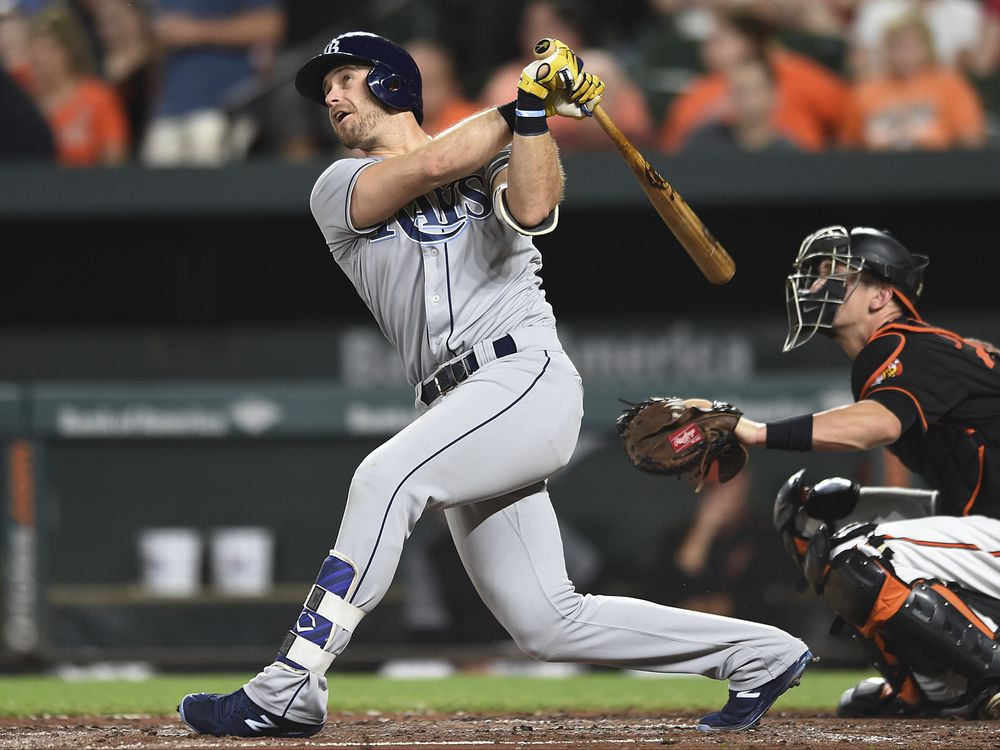
SAN FRANCISCO — The San Francisco Giants acquired infielder Evan Longoria and cash from the Tampa Bay Rays on Wednesday for outfielder Denard Span, infielder Christian Arroyo and two minor league pitchers.

The 32-year-old Longoria leaves Tampa as the longest-tenured player in franchise history, after spending nearly 10 seasons in a Rays uniform. He is the club’s all-time leader with 1,435 games played, 261 home runs and 892 RBIs. Of the 30 post-season games in Rays history, all 30 have featured Longoria starting at third base.

Longoria hit .261 with 20 homers and 86 RBIs last season. He is expected to fill a significant void for San Francisco at third. Longoria has played at least 156 games in each of the past five seasons. He was the AL Rookie of the Year in 2008 and won three Gold Gloves.

The 33-year-old Span has hit .283 with 60 homers and 432 RBIs over 10 years in the majors. He led the Giants last season with 73 runs scored despite a stint on the 10-day disabled list. He previously played for the Nationals and the Twins.

Arroyo is one of the Giants’ top-ranked prospects. San Francisco also is sending right-hander Stephen Woods and left-hander Matt Krook to Tampa.

Elsewhere in the American League East, Orioles closer Zach Britton has torn his right Achilles tendon in off-season training, a significant injury that could cause him to miss part of the 2018 season.

Baltimore executive vice-president of baseball operations Dan Duquette on Wednesday confirmed the torn Achilles tendon. It was not immediately clear how long Britton would be out.

Britton had 15 saves and a 2.89 ERA with the Orioles this past season. In 2016, had a 0.54 ERA and was perfect in save opportunities with a major league-leading 47.

The left-hander, who turns 30 on Friday, is arbitration eligible after making $11.4 million last season. Britton can become a free agent after next season, which made him a strong trade candidate before the injury.

Britton has converted 135 of 145 save opportunities since becoming the Orioles’ closer in 2014.


Source link

Categories
Sports

Hot Buttered Post: Burglars break into former Raptor Charlie Villaneuva’s home — and steal the toilet


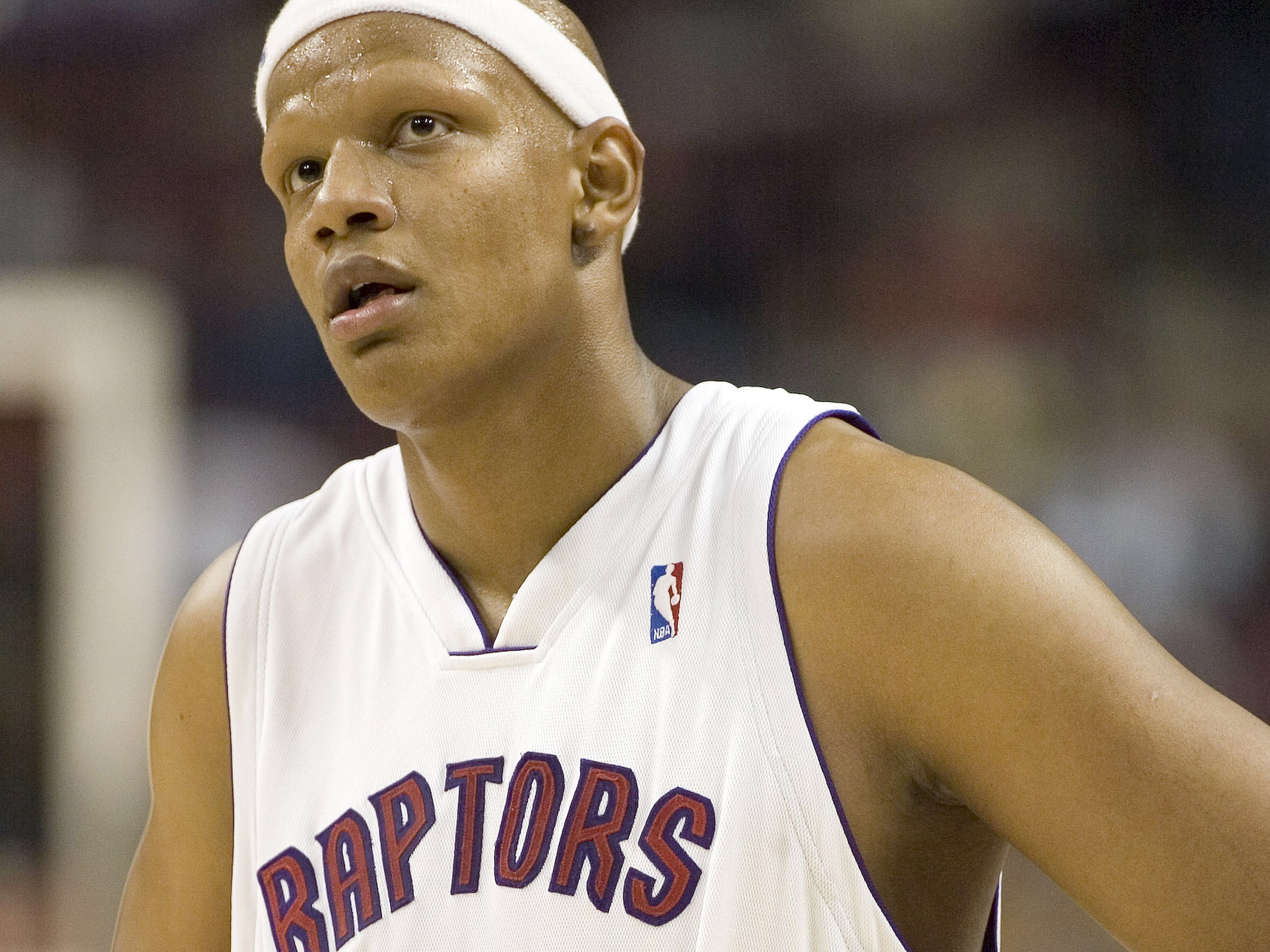
In this Oct. 18, 2005 file photo, Toronto Raptors forward Charlie Villanueva takes a break during a game against the New Jersey Nets.

Photograph by: David Lucas

Your midday sports snack.

Toast points

• The Sportsnet account @SNstats tweeted out the breaking news yesterday that the Maple Leafs had scored their 20,000th regular-season goal in NHL play during an 8-1 win over Carolina. SNStats reached the 20,000 figure by adding in 52 shootout “goals,” which aren’t actually goals but an accounting practice.

The NHL compounded the lack of basic understanding of its own game and of integers by using the same fallacious statistic in its morning media newsletter.

• Canada’s world junior team takes its winless exhibition record into a pre-tournament meeting with the Czech Republic tonight. Puck drop is 7 p.m. ET in London. The Canadians, who lost 3-0 and 4-3 in successive games against a team of university all-stars last week, will face Switzerland in Hamilton on Friday night before heading down to Buffalo for the start of the championships next Tuesday.

• Milos Raonic’s 2018 season is already off to a slow start after he withdrew from next week’s Mubadala World Tennis Championship in Abu Dhabi. Raonic, who played only three tournaments after Wimbledon because of wrist surgery and a calf injury, is being replaced by Andrey Rublev in the six-man invitational event. Stan Wawrinka also withdrew, saying he wasn’t yet prepared to return from his injuries either; Kevin Anderson will take his place. Rafael Nadal and Novak Djokovic, who himself hasn’t played since July because of an elbow injury, are the headliners.

• Marion Bartoli, the 2013 Wimbledon champion from France who retired two months after her only Grand Slam title, announced a comeback on Twitter yesterday. Now age 33, Bartoli said she’s aiming to return to the tour in March in Miami.

• The Packers were officially eliminated from the NFC playoff chase when Atlanta won on Monday night. As expected, since there is nothing left to play for, the team placed quarterback Aaron Rodgers on injured reserve yesterday, ending his season. Rodgers returned to action on Sunday against Carolina, nine weeks after he sustained a broken collarbone on his throwing side.

• Entering the annals of bizarre injuries is Texas Rangers pitcher Martin Perez. The club announced yesterday that the left-hander broke his right elbow when he fell after he was startled by a bull on his ranch in Venezuela. Of course, beef is no more dangerous than vegetables, as Brewers pitcher Matt Wise found out when he missed a couple of days in 2006 after he cut himself on salad tongs.

• Speaking of bizarre: Charlie Villanueva’s toilet was stolen last night. The former Dallas Mavericks forward tweeted his displeasure with that city’s police department after the alleged burglary, saying no one had responded to four calls of his reporting the disappearance of that essential fixture (and other home appliances). Villaneuva, whom the Raptors drafted seventh overall in 2005, hasn’t played in the NBA since the end of the 2015-16 season.

• New Miami Marlins president Derek Jeter, by all accounts, faced something of an angry mob when he held a town hall for season-ticket holders last night. Jeter contended that the off-season moves made by the new ownership, such as trading Giancarlo Stanton and Marcell Ozuna, are in service of putting the past behind them and starting properly from scratch. Jeter also had to deal with Marlins Man, the self-promoting bane of baseball. Jeter was, as always, the embodiment of detached cool.

• Major League Soccer is expected to announce at 5 p.m. ET that Nashville has been awarded an expansion franchise, becoming the league’s 25th team. Another franchise, believed to be Sacramento, is expected to be announced in the coming weeks.

• The World Chess Championship got some perhaps unexpected attention yesterday when Twitter users started sharing one of its graphic designs for the 2018 tournament — emphasis on graphic.

The Telegraph went so far as to call it “Pawnographic” in a headline. World Chess doubled down later in the day by offering limited edition prints.

Nutritional analysis

Let’s circle back to Sunday, when NFL referee Gene Steratore famously used a card from his pocket to decide whether the Cowboys had been successful on a fourth-down play with just under five minutes left in the fourth quarter with the score tied 17-17 against the Raiders. The game hung in the balance.

After Cowboys quarterback Dak Prescott ran a quarterback sneak, the ball was spotted with the tip abutting the 40-yard line. After the chains came out to measure, which did not appear to solve the mystery, Steratore pulled a card out of his shirt pocket and used it in some manner against the tip of the football.

As Ben Austro explained on his website footballzebras.com, the whole card thing was sort of meaningless because the officiating crew knows exactly what they’re looking at. On first downs, to guard against these kinds of dramatic snafus, the ball is always placed touching a yard-line marker. The crew would have known this, and really didn’t need the chains to decide if it was a first down. They would know by looking down from above as to whether the ball was on or over the 40-yard line marker.

Steratore may have been using the card to see whether there was any 40-yard-line paint under the card when he placed it against the tip of the ball. The chains, it would appear, were irrelevant to the whole exercise.

As happens after any controversial call by an official, Steratore was asked to meet with a pool reporter chosen from among the beat reporters in attendance. Two Raiders beat reporters, Michael Gehlken and Vic Tafur, tweeted the transcript of Steratore’s remarks after the game. It’s not clear who the pool reporter was.

Below are Steratore’s comments, along with the questions posed by the pool reporter. Steratore REALLY wanted to be clear that the card had very little to do with his decision. The reporter couldn’t quite get Steratore to explain how he used the card to “reaffirm” the call, which would have helped stop the launch of a thousand Raiders conspiracy theories.

Q: Why did you use the index card?

Gene Steratore: “Didn’t use the card to make the final decision. The final decision was made visually. The card was used nothing more than a reaffirmation of what was visually done. My decision was visually done based on the look from the pole.”

Q: How did it reaffirm?

Steratore: “That was already finished. The ball was touching the pole. I put the card in there and as soon as it touched, it was nothing more than a reaffirmation. The decision was made based on my visual from the top looking down and the ball touching the front of the pole.”

Q: So the card was used for what purpose?

Steratore: “It was just for reaffirmation, but the decision was made based on my visual, looking at the ball touching the pole.”

Q: It reaffirmed it how?

Steratore: “The decision was made based on my visual look that the ball was touching the pole. The card did nothing more than reaffirm. The judgement was not made by the card itself. It was made by my visual looking at the football as it relates to the line and the pole.”

Q: How did it reaffirm your call?

Steratore: “My call was made based on my visual looking at the football and the front of the line and the pole.”

Q: Have you used the card before or how did you think of using that?

Steratore: “It’s maybe been done at some point in someone’s career, but I didn’t use the card for my decision. I used my visual looking at the ball reaching the pole.”

For today’s analysis, we broke down the 215 words in Steratore’s comments and found that the same 11 words (or iterations of the same word) covered 33 per cent of his utterances. We didn’t include the word “the,” which he used 34 times alone.

Photo of the day

Would you buy merchandise with this logo?

At nationalpost.com

• The above image comes from this Victor Mather report on the IOC’s rules for branding and apparel that Russian Olympians will have to adhere to in Pyeongchang. “Print size for words ‘Olympic Athlete from’ should be equivalent to the word ‘Russia,’” reads one line in the IOC’s painfully detailed set of instructions, released earlier today. (To go on record with our answer: We would absolutely splurge for a button, hockey jersey or quarter zip with that logo.)

• The climbing season was over, so the corpses were left in the “death zone” to stiffen and freeze. A year later, five Sherpas returned to Mount Everest to bring them home. New York Times reporter John Branch has a story of deliverance from 27,000 feet, the journey of two Indian expeditioners to the toughest stretch of the world’s tallest mountain — and the effort it took to ensure they wouldn’t lie there forever.

TV tonight

All times Eastern

7 p.m. Hockey: World junior exhibition, Czech Republic vs. Canada TSN1,3-5
7 p.m. NBA: Toronto at Charlotte SN One
7:30 p.m. NHL: Toronto at Columbus Sportsnet, TVAS
8 p.m. NCAA Football: Frisco Bowl, Louisiana Tech vs. SMU TSN2
9:30 p.m. NHL: St. Louis at Calgary SN 360
10 p.m. NBA: San Antonio at Portland NBATV
10:30 p.m. NBA: Memphis at Golden State SN One

Hot Buttered Post is served Monday through Thursday.

Original source article: Hot Buttered Post: Burglars break into former Raptor Charlie Villaneuva’s home — and steal the toilet


Source link

Categories
Sports

What will Russians be allowed to wear at the Olympics? The IOC has answered — in excruciating detail


When the Russian Olympic team was barred from the coming Winter Games for running a doping program, the ruling by the International Olympic Committee raised a host of important questions.

Can it be considered the most elaborate doping conspiracy in sports history? How many Olympic events were corrupted by Russian athletes using illicit substances? And, for any athletes from Russia who manage to get special dispensation to participate as neutral athletes in the 2018 Pyeongchang Games, what will the textile specifications be for their uniforms?

The IOC has now answered some of those questions, in excruciating and glorious detail.

Russian athletes who convince sports officials that they are clean and were not part of the doping conspiracy will get to compete at the Winter Games, but will not officially be representing Russia. Instead, these athletes will be known as “Olympic Athletes from Russia.” And the IOC clearly plans to be vigilant that the word “Russia” doesn’t make too big of an appearance at the games.

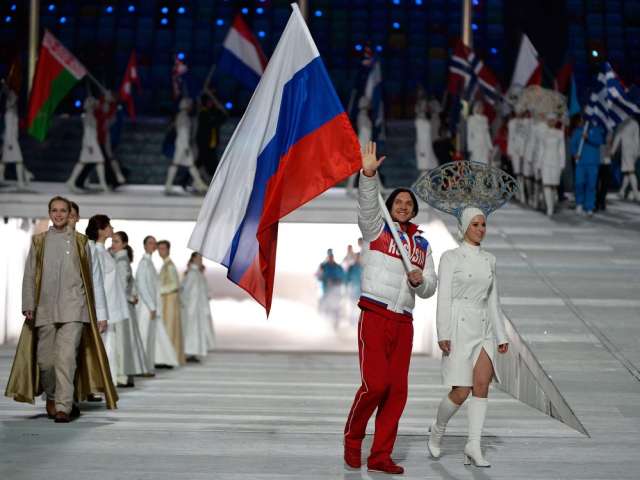
In this Feb. 23, 2014 file photo, figure skater Maxim Trankov carries the Russian flag into the closing ceremony of the Sochi Olympics. Pascal Le Segretain / Getty Images

Under rules announced Wednesday, with surprisingly little fanfare, Russian athletes’ and officials’ uniforms and equipment can say only two things: “Olympic Athlete from Russia” or the abbreviation “OAR.”

Olympics officials, showing great savvy, got out in front of any efforts at typographical shenanigans.

“Print size for words ‘Olympic Athlete from’ should be equivalent to the word ‘Russia,’” the IOC said, thwarting any delightfully clever attempt to print a tiny “Olympic athlete from” dwarfed by a jumbo “Russia,” a tactic likely proposed by several nine-year-olds.

The Russians can also forget about doing something fancy with their new designation. Fonts should be “as generic as possible.” So no bubble letters that would garner global support for the Russian athletes who are not officially Russian athletes but rather neutral athletes (from Russia).

The announcement included a proposed logo for Russia, with the words “Olympic Athlete from Russia” in a bland red circle almost designed to sell as little merchandise as possible.

The IOC’s proposed logo for “Olympic Athletes from Russia.” IOC via AP

The Russian flag’s colours are red, white and blue, but the neutral athletes’ uniforms can’t have all three colours at these games.

“Only single or dual color elements are permitted,” the IOC said in a document that somehow has not yet gone viral in the textile rules community.

But what if the top was red and white and the pants blue? Nope.

“Separate items of clothing cannot create a tricolor,” the IOC added.

Yes, you read that correctly: Olympic officials even barred the neutral athletes (from Russia) from creating a tricolor, surely an Olympic first.

In fact, let’s steer clear of Russian red, white and blue entirely, shall we? “The colors used in uniforms, accessories and equipment may not be in exactly the same pantone as those used in the Russian Federation flag.” The IOC helpfully advises: “It is suggested that these are darker in color.”

The IOC is obviously taking great pains to ensure that it everyone knows that these “Olympic athletes from Russia” are most definitely, positively not Russian Olympic athletes. Everyone clear?


Source link