Categories
Alberta Canada Economic Ft Mac

Budget Cuts Force Shell Investment Decisions to be Delayed

Shell investment decisions, budget cuts

Budget cuts due to the falling price of oil has cause expected Shell investment decisions to be delayed. The final decision on investing in the last two phases of the Carmon Creek project has been delayed. This was announced shortly after the Royal Dutch Shell company revealed on Thursday that the business will be cutting $15 million in global capital spending. 40 projects have been either eliminated or delayed as a result of these cuts, and Carmon Creek is one of the projects affected. This announcement comes just a few weeks after Shell Albian Sands said that they would cut 10% of their workforce, costing about 300 jobs. All of these cutbacks are the result of oil prices dropping fast, making it difficult for petroleum companies to stay cost effective and lowering the potential profits seen with new projects.

Right now oil prices are volatile, and these are much lower than they have been in the recent past. High gas and oil prices have made oil recovery very profitable, but when prices go down then budget cuts must be made to offset the lower profits achieved. The Shell investment decisions announced in the last month have been caused by concern that oil prices will continue to plummet and recovering this precious resource will be much less profitable in the near future. The effect that these decisions have on Wood Buffalo and Fort MacMurray could be damaging. It is too soon to tell which projects will be delayed and which ones will be put on hold indefinitely.

Categories
Economic Ft Mac

Wood Buffalo Housing and Development Corporation Holds Willow Square Engagement Session

Wood Buffalo Housing and Development Corporation, Willow Square

The Wood Buffalo Housing and Development Corporation recently held a Willow Square engagement session in order to allow the public to get information and ask questions, and the crowd was emotional during the meeting held at the Sawridge Inn on Monday. The former Willow Square lands are still vacant, and the municipally owned developer who is in charge of the project shared the plan’s early concepts at the event. The proposal that was unveiled will include a senior facility, residential space, and retail space so that social housing, affordable housing, opportunities for seniors, and marketing can all occur in the same space.

Mike Evans, the presenter at the Willow Square engagement session scheduled by the Wood Buffalo Housing and Development Corporation , said “Wood Buffalo (Housing) accepted the stewardship of this parcel of land to facilitate the construction in this community of an Aging in Place facility for seniors. It’s not financially viable as a project that’s exclusive for seniors on this site. There’s an opportunity to meet the needs of seniors as they’ve been expressed in this community for a number of years, but also to provide some complementary development that would provide benefits to seniors, but also the community at large.” According to Bryan Lutes, the president of WBHDC, “At this point we’re still looking at what the whole site will look at. The purpose of the needs assessment are to say, what the gaps are in the community and what of those gaps we can accommodate on the site. Once we have that we’ll be able to determine what the site’s going to look like.”


Categories
Canada Economic U.S.

TransCanada Still Has Hope Keystone XL Pipeline Will Be Approved by New Congress

Keystone XL pipeline, TransCanada

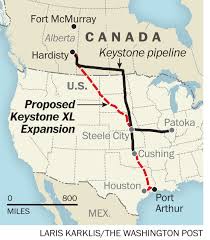
TransCanada still has hope that the Keystone XL pipeline will be approved by the new Congress, and the company is calling out the legislators in the US government to overcome a threatened veto by President Obama. When Republicans in the new Congress won a majority of seats this provided hope that the long stalled project would finally get back on track once more. President Obama has made his disapproval of this project very clear, to the point that some believe the US President wants to see Americans pay high prices for oil and gasoline. One of the first things taken under review by the Republican House of Representatives was the Keystone XL pipeline project. 60 senators took the step of co-sponsoring the bill and 63 more expressed that they would support the bill when it comes up on the floor. This gives the bill enough votes to pass the House and move on to the Senate.

When the Keystone XL pipeline bill was approved by the House of Representatives Josh Ernst, the White House Press Secretary, told journalists that “If this bill passes this Congress, the president wouldn’t sign it.” Even a presidential veto would not stop the bill if two thirds of Congress approves it though. Russ Girling, CEO and President of TransCanada, said “The review process for Keystone XL has been anything but a ‘well-established process. We are well over the six-year mark reviewing the final phase of Keystone with seemingly no end in sight. The bar continues to move again and again… It’s time to make a decision.”


Categories
Alberta Economic

Fort MacMurray Would Be Harmed By Provincial Sales Tax

provincial sales tax, Fort MacMurray

A new provincial sales tax would be very detrimental to Fort MacMurray according to local leaders and business owners. Many in the local Fort MacMurray community are warning that the proposed tax could cause the entire Wood Buffalo area to see higher living expenses and make it very difficult for small businesses and lower income residents to survive. In recent months the treasury of Alberta has seen an increasing shortfall because oil prices have been steadily dropping, and Premiere Jim Prentice floated the idea of a provincial sales tax in order to make up for the millions in losses for oil revenue. In fact Prentice warned that failing to pass the proposed sales tax could leave Alberta with a shortfall of $7 billion.

When discussing the provincial sales tax Fort MacMurray Mayor Melissa Blake said “I recognize change is imminent during challenging times but I am not sure if a tax on sales is the way to go. When I think of a new tax, I think about the wage gaps in our community from low-income earners, such as in the hospitality and service sector, compared to those in the oilsands and higher paid industries.” Blake continued by stating “If there is a recessed economy or serious slowdown, that has fewer people going to local businesses. Certainly, considerations become more dire for anyone purchasing goods.” Nick Sanders, the President of the Fort McMurray Chamber of Commerce, told the media that “Before we go down that road, let’s look at our provincial expenditures. We definitely see it as an absolute and desperate last resort. Not having a sales tax seems to be something Albertans hold sacred. There are just other levers available for the province right now.”


Categories
Economic

Bank of Canada lowers overnight rate target to 3/4 per cent

Available as: PDF

The Bank of Canada today announced that it is lowering its target for the overnight rate by one-quarter of one percentage point to 3/4 per cent. The Bank Rate is correspondingly 1 per cent and the deposit rate is 1/2 per cent. This decision is in response to the recent sharp drop in oil prices, which will be negative for growth and underlying inflation in Canada.

Inflation has remained close to the 2 per cent target in recent quarters. Core inflation has been temporarily boosted by sector-specific factors and the pass-through effects of the lower Canadian dollar, which are offsetting disinflationary pressures from slack in the economy and competition in the retail sector. Total CPI inflation is starting to reflect the fall in oil prices.

Oil’s sharp decline in the past six months is expected to boost global economic growth, especially in the United States, while widening the divergences among economies. Persistent headwinds from deleveraging and lingering uncertainty will influence the extent to which some oil-importing countries benefit from lower prices. The Bank’s base-case projection assumes oil prices around US$60 per barrel. Prices are currently lower but our belief is that prices over the medium term are likely to be higher.

The oil price shock is occurring against a backdrop of solid and more broadly-based growth in Canada in recent quarters. Outside the energy sector, we are beginning to see the anticipated sequence of increased foreign demand, stronger exports, improved business confidence and investment, and employment growth. However, there is considerable uncertainty about the speed with which this sequence will evolve and how it will be affected by the drop in oil prices. Business investment in the energy-producing sector will decline. Canada’s weaker terms of trade will have an adverse impact on incomes and wealth, reducing domestic demand growth.

Although there is considerable uncertainty around the outlook, the Bank is projecting real GDP growth will slow to about 1 1/2 per cent and the output gap to widen in the first half of 2015. The negative impact of lower oil prices will gradually be mitigated by a stronger U.S. economy, a weaker Canadian dollar, and the Bank’s monetary policy response. The Bank expects Canada’s economy to gradually strengthen in the second half of this year, with real GDP growth averaging 2.1 per cent in 2015 and 2.4 per cent in 2016. The economy is expected to return to full capacity around the end of 2016, a little later than was expected in October.

Weaker oil prices will pull down the inflation profile. Total CPI inflation is projected to be temporarily below the inflation-control range during 2015, moving back up to target the following year. Underlying inflation will ease in the near term but then return gradually to 2 per cent over the projection horizon.

The oil price shock increases both downside risks to the inflation profile and financial stability risks. The Bank’s policy action is intended to provide insurance against these risks, support the sectoral adjustment needed to strengthen investment and growth, and bring the Canadian economy back to full capacity and inflation to target within the projection horizon.

Information note:

The next scheduled date for announcing the overnight rate target is 4 March 2015. The next full update of the Bank’s outlook for the economy and inflation, including risks to the projection, will be published in the Monetary Policy Report on 15 April 2015.

Source:: http://www.bankofcanada.ca/2015/01/fad-press-release-2015-01-21/


Categories
Economic Ft Mac

Oil Price Drop Means Coming Cutbacks in Fort MacMurray

oil price drop, coming cutbacks, Fort MacMurray

The recent oil price drop has many thinking about the coming cutbacks in Fort MacMurray, an oil boom town in Alberta, Canada. Past downturns in oil prices have caused problems in the area, but the city has continued to grow at a rapid pace. This time around a number of analysts are predicting that the oil price drop is not temporary though, and prices may stay depressed for some time to come. Most of the roughly 75,000 people who reside in and near Fort MacMurray depend on the nearby oilsands and the energy industry for employment. It costs more to produce oil from the oilsands than more traditional methods, so the drop in prices has a higher impact. This is also true for shadow workers, a population of around 60,000 who live and work in camps in the area.

It could take several months for the full effect of the oil price drop and coming cutbacks to be seen in Fort MacMurray because many of the employees are contract workers who move from one project to the next. Some are already starting to feel the chill of coming cutbacks. Shane Boersma, manager of the Driving Force which supplies trucks on a lease basis to those in the energy industry, told the media “I can’t say business as usual. We haven’t had so much a lot of returns of vehicles from our current customers but we’re seeing that there aren’t as many orders put in as you would normally see.” Wood Buffalo Brewing Company Steven Sachse said “We notice it in terms of our sales right now. There’s not as many business meetings happening. The biggest fear right now is how long it’s going to last. We can definitely weather the storm. We go down to business basics and ensure our costs don’t exceed our revenues.”