Categories
Economic

S&P 500 posts biggest decline in 3 months on Washington worries


[unable to retrieve full-text content]

U.S stocks sold off on Thursday with the S&P 500 recording its biggest daily percentage drop in three months as escalating worries about the Trump administration’s ability to push through its economic agenda rattled investors.


Source link

Categories
Economic

Walmart took bigger bite out of Canadian grocery industry last quarter, earnings show


Walmart says its Canadian stores gained market share against rivals during its fiscal second quarter.

“We further improved our price position against competitors, which contributed to market share gains in key traffic driving categories such as food and consumables,” Walmart chief financial officer Brett Biggs said in remarks prepared for analysts during a conference call to discuss its most recent results Thursday.

“Inventory was also a focus, as the team reduced overall levels, even as sales increased.”

In Canada, Walmart’s biggest competitors in the food segment are the major domestic grocery chains owned by Loblaw, Empire, Metro and the Canadian arm of Costco.

Sales rose faster in Canada than in U.S.

Walmart Canada’s comparable-store sales rose 2.5 per cent, trailing only the Mexican arm’s 7.2 per cent growth and ahead of the United States (1.8 per cent), United Kingdom (1.8 per cent) and China (0.6 per cent).

Overall revenue for the three months ended July 31 climbed to $123.36 billion US, from $120.85 billion US. Wal-Mart’s international revenue was down 1.5 per cent at $29 million US, due to divestitures.

Walmart’s online sales surged 60 per cent. The results beat the $122.71 billion US that analysts surveyed by Zacks Investment Research were looking for.

There are signs that traditional retailers are gaining traction online in the face of intense competition from Amazon.com. On Wednesday, Target said its online sales jumped 32 per cent in its most recent quarter.

And Walmart’s effort to revitalize traffic in stores continues to gain ground. Sales at U.S. stores open at least a year increased 1.8 per cent, the 12th straight quarter of growth for the figure. Traffic rose 1.3 per cent.

Walmart Stores Inc. earned $2.9 billion US, or 96 cents per share, for the quarter. A year earlier the Bentonville, Arkansas-based company earned $3.77 billion US, or $1.21 per share.

Stripping out certain items, earnings were $1.08 per share. That was a penny better than what analysts polled by Zacks expected.

The retailer anticipates 2018 adjusted earnings of between $4.30 and $4.40 per share. It predicts third-quarter earnings of 90 to 98 cents per share. Analysts polled by FactSet predict full-year earnings of $4.36 per share and third-quarter earnings of 97 cents per share.


Source link

Categories
Economic

EpiPen settlement reached in U.S. for $465M


Mylan NV has finalized a $465 million US settlement with the U.S. Justice Department, resolving claims it overcharged the government for its EpiPen emergency allergy treatment, which became the centre of a firestorm over price increases.
 
The U.S. Attorney’s Office in Massachusetts revealed the accord on Thursday, 10 months after Mylan said it reached a deal resolving claims it misclassified the EpiPen as a generic rather than a branded product to avoid paying rebates owed to Medicaid.
 
“Taxpayers rightly expect companies like Mylan that receive payments from taxpayer-funded programs to scrupulously follow the rules,” Acting U.S. Attorney William Weinreb said in a statement.

 
Mylan did admit wrongdoing in entering into the settlement.
 
“Bringing closure to this matter is the right course of action for Mylan and our stakeholders to allow us to move forward,” Mylan Chief Executive Heather Bresch said in a statement.
 
The deal followed a False Claims Act whistleblower lawsuit filed by French rival Sanofi SA in 2016, two years after it first raised the matter with authorities, Weinreb’s office said.
 
Sanofi, which in 2015 ceased marketing a rival product called Auvi-Q, will receive nearly $38.8 million as a reward from the government.
 
Sanofi said in a statement it considered pursuing the matter “the right thing to do.” It has a separate antitrust lawsuit pending, claiming that Mylan engaged in illegal conduct to squelch competition to EpiPen.
 
The EpiPen, which Mylan acquired in 2007, is a handheld device that treats life-threatening allergic reactions by automatically injecting a dose of epinephrine.
 
Mylan came under fire last year after raising the price of a pair of EpiPens to $600, from $100 in 2008, enraging consumers and putting it in the center of the ongoing debate over the high cost of prescription medicines in the United States.
 
Mylan has since offered its own generic version for about $300.
 
The Justice Department settlement centreed on claims that Mylan avoided higher rebates to state Medicaid programs by misclassifying the EpiPen as a generic product, even through the company marketed and priced it as a brand-name product.
 
Some members of Congress in both parties have previously criticized the $465-million settlement as too small.
 
A U.S. Department of Health and Human Services’ Office of Inspector General analysis released in May found the U.S. government may have overpaid for EpiPens by up to $1.27 billion between 2006 and 2016.


Source link

Categories
Economic

Manufacturing sales fall in June after 3 straight monthly gains


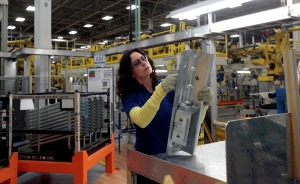
An assembly worker Chrysler’s Windsor assembly plant is shown. Statistics Canada reported Thursday that manufacturing sales fell in June, after three months in a row of gains. (Reuters)

Statistics Canada says manufacturing sales fell in June, following three consecutive months of gains.

The federal agency says manufacturing sales slipped 1.8 per cent to $53.9 billion in June.

The drop came due to lower sales in the petroleum and coal product, transportation equipment and chemical industries.

Sales fell in 15 of 21 industries, representing 72.1 per cent of the manufacturing sector in Canada.

Sales fell in every province except Manitoba and British Columbia. Ontario and Quebec posted the largest declines, at 1.7 and 3.3 per cent, respectively.

More to come


Source link

Categories
Economic

Where does the CIBC-PC Financial breakup leave consumers?


CIBC and President’s Choice Financial are amicably breaking up a 20-year banking marriage and divvying up the assets — news one financial expert says isn’t necessarily a good or bad thing for consumers.

In a nutshell, President’s Choice Financial will keep the PC Financial MasterCard credit card service and the PC Plus loyalty program, while the two million PC Financial banking customers will move to CIBC’s new service called Simplii Financial.

CIBC says these customers can continue to use their chequing, savings and other accounts without interruption and expect the same no-fee daily banking when the Simplii Financial service begins Nov. 1.

“They will still have this option through CIBC. It’ll just no longer be called PC Financial,” said Bruce Sellery, author of The Moolala Guide to Rockin’ Your RRSP.

Sellery doesn’t think the change is necessarily a good or bad thing for consumers.

“A lot of Canadians are simply happy to just bank where they always bank, do what they always do, and while they rant and rave about their annoyance with service fees they don’t do much about it.”

President’s Choice Financial will no longer offer kiosks and ATMs after CIBC’s Simplii Financial begins service Nov. 1. (Nicole Ireland/CBC)

But Marvin Ryder, an assistant professor at McMaster University, said some of the incentives to bank with PC Financial, such as earning PC Points with the bank accounts, will go away after Oct. 31.

“I think that’s what the questions going to be for consumers,” Ryder said.

CIBC will hear a lot of, “What incentives are you going to offer me in this world out there? I have many choices out there as a consumer,” he said.

“We’re going to have to see how they [CIBC] react.”

Only time will tell if PC Financial customers will stay or new customers will sign up with Simplii Financial, but Wednesday’s announcement generated much interest on a Reddit thread.

“Seems like the only significant change is the removal of the ATMs and the kiosks at the Loblaw stores. Other than that it is just a name change. As long as the free chequing is still there, I’m fine with this move,” Reddit user umbrato wrote.

“It’s hard to get to too wound up about this. There are so many alternatives to PC/simply that have free access to atms (credit union/exchange) and offer better interest rates,” username10983 wrote.

Jaymesned posted, “Changes like this are never for the benefit of the consumer. It’s just a matter of time before fees go up and services go down. Or Simpii becomes ‘financially unviable’ and everyone is converted to a regular CIBC customer. It might be time to look into my local credit union.”

Other no-fee banking options

For consumers, there aren’t many virtual financial institutions with the kind of reach that President’s Choice Financial has. There’s Tangerine Bank’s No Fee Daily Chequing.

There are more options from credit unions but they tend to be more regional. They include No Fee eChequing Account from Alterna Bank, Simply Free Account from Enderby Financial, No Fee Account from TCU Financial Group, Simply Free Account from Island Savings and No Fee Account from Conexus Credit Union.

“There are credit unions across the county and a lot of them have offerings that are quite competitive if not more competitive than the banks,” Sellery said. “But people don’t necessarily consider them. So if you’re willing to do the legwork there is a way for you to find deals.”

The Financial Consumer Agency of Canada’s account selector tool has one of the most comprehensive lists available to the public, he said.

[embedded content]


Source link

Categories
Economic

'A broken system': Why workers are fighting mandatory mail-order drug plans


Jamie Mueller has had heart problems since suffering complications from rheumatic fever as a child.   

Now 51, and mother to a 13-year-old girl, the longtime Labatt employee takes seven different pills a day.

For 10 years, she filled her prescriptions at the same pharmacy in London, Ont., about two hours west of Toronto, where she had “full faith and confidence” in her pharmacist.

But that comfortable routine ended in October 2015 when Labatt told its employees they would have to order their prescriptions through a mail-order pharmacy called Express Scripts Canada to help cut costs in the employee benefits program.

Mueller said the trouble started with the very first delivery, which was missing three of her medications.

The shipments that followed were rarely error-free, she said.

“It was so awful. I’m on heart medication. This is not insignificant,” Mueller said. “I’m suffering and worrying, and some big people behind the scenes are making these decisions about my health and medication.”

‘A broken system that delivers me the wrong medications, or doesn’t deliver them on time, or where the dosages are wrong, could quite honestly kill me!’ – Jamie Mueller, Labatt employee

Sometimes the dosages would be wrong.

One delivery was left sitting outside her front door for hours.

Mueller said she would spend an exhausting amount of time on the phone with customer service representatives at Express Scripts. The fact that it would always be someone different on the line only added to her stress.  

“A broken system that delivers me the wrong medications, or doesn’t deliver them on time, or where the dosages are wrong, could quite honestly kill me!” Mueller told CBC News.

A growing number of insurance companies are using mail-order pharmacies to try to save money by creating what’s known as preferred pharmacy networks (PPNs). A PPN makes it mandatory for employees to use a specific pharmacy or group of pharmacies to get some or all of their medications.

Express Scripts Canada is the largest mail-order pharmacy in Canada that’s not connected to a retail or chain pharmacy. Launched in 2011, it promises “to better meet the needs of its customers by making it possible to significantly reduce the cost of providing a prescription drug benefit.”

Express Scripts Canada headquarters in Mississauga, Ont. (CBC)

It’s an accredited and licensed pharmacy registered in B.C., Manitoba, Ontario and New Brunswick and is mainly used for maintenance medications, which are prescriptions that treat chronic or long-term conditions such as high blood pressure, heart disease and diabetes.

Customers can receive a 90-day supply for a single dispensing fee.

Unions fight back

Mueller and her co-workers complained about the program, and their union eventually won a grievance against Labatt, forcing the company to remove the mandatory use of Express Scripts Canada from its plan.

In April, Labatt employees in Creston, B.C., won a similar grievance.

More than 225 Labatt employees at locations in Mississauga, Ont., Halifax and St. John’s must still use Express Scripts Canada while their unions are fighting the same battle.

‘There are always unique circumstances that contribute to less than satisfactory service in the short term but those do get resolved very quickly.’ – Express Scripts Canada

Charlie McNaught is one of those workers.

The truck driver based in Mississauga is often on the road and can’t always be home when his seven different medications are delivered.

McNaught said six deliveries so far this year didn’t contain the correct amount of medication. He would have to go several days without vital pills, which caused his doctor to go “ballistic.”

Labatt declined CBC ‘s request for an interview.

In the brewer’s response to the union grievance in London, senior manager of rewards Robin Doobay said Express Scripts Canada would provide “some relief against the cost of the employee co-payment” and that “the lower drug prices will also benefit employees by helping to keep the benefit plan sustainable in the longer term for everyone covered.”  

“While not 100 per cent perfect,” Doobay said, “the [Express Scripts Canada] program is generally working well for our employees in Canada. Most, if not all of these problems are resolvable in one form or another.”

Other Canadian companies have experienced similar problems after switching to mandatory use of Express Scripts Canada.

Canadian Pacific Railway signed up with the pharmacy in 2012.

Henry Helfenbein, vice-president of Teamsters Canada Rail Conference, which represents some 2,500 maintenance workers at CP, said approximately 70 per cent of its members work on production crews and are away from home for most of the week, making it difficult to receive deliveries.

Helfenbein said he understands CP wants to cut costs, but the logistics just don’t work for everybody.

Canada Post tried Express Scripts Canada in 2013 as a pilot project, but according to union spokesperson Farouk Karim, it “was not popular mainly because … people are attached to their pharmacy and pharmacist.”

The service is still offered on a voluntary basis and Canada Post says many employees continue to use it.

The Home Depot Canada made the move in March 2016, but after employees complained the company posted a statement saying it has “come to realize that one size doesn’t fit all,” and gave its workers the option to choose their own pharmacies.

homedepot

The Home Depot announces it will make Express Scripts Canada’s service optional for its employees. (The Home Depot)

In Quebec, Bill 92 prohibits group insurance contracts and employee benefit plans from limiting members’ freedom to choose their pharmacist.

Express Scripts Canada declined CBC’s interview request but said in a statement it’s “proud of the effective, efficient service that our Express Scripts Canada pharmacy provides to Canadians.”

“Our patient satisfaction rating reflects that our patients are very happy,” the statement says. “There are always unique circumstances that contribute to less than satisfactory service in the short term but those do get resolved very quickly.”

‘It isn’t right’

Brian Lindenberg, senior partner at Mercer, a global health and benefits consultant, expects health-care costs will increase 130 per cent by 2025, so companies will be seeking a variety of options to try to control them.  

“So there is a bit of a different headspace,” he said. “Many of them are now prepared to say, ‘You know what? If I can save, say, between five and 15 per cent of my drugs spend by asking my employees to behave in a different way, I am prepared to do that.'”

Jamie Mueller said she was “relieved” when her union won its fight, and she immediately went back to her local pharmacy.

She said she feels for workers who aren’t given a choice. 

“It isn’t right. You’re being forced to deal with a company that you know you need to run from but can’t.”


Source link