Categories
Ft Mac

Mortgage Qualifying Rate

Mortgage Qualifying Rate

Definition: A pre-determined interest rate that the lender may use to determine the maximum mortgage amount you qualify for when requesting a variable rate mortgage or terms less than 5 years. It is often NOT the actual low interest rate you see advertised or indeed what you might end up paying.

Confused? So you have been on-line and thrown some numbers into a mortgage calculator and it has told you how much you qualify for and therefore your maximum purchase price of a new home. But then you find out that you don’t actually qualify for as much as you thought because of what is called a “qualifying rate” or “benchmark rate”. Read on for more clarification and how it applies to you.

What is the Qualifying Rate? The qualifying rate differs depending on the amount of your down payment, the type of mortgage and the length of the mortgage term. See our Mortgage Smart Tips on Mortgage Type and Mortgage Term for more information. The qualifying rate is based on what is known as the “benchmark interest rate” that is set by the Bank of Canada every Wednesday based on the bond market performance. This rate is much higher than current rates and as of March 3rd, 2014 it was 5.24%. Remember that this is NOT the actual rate you will pay, just what has to be used to make sure the mortgage is affordable to you if it applies to you.

Why do you need to be qualified at a higher rate? Interest rates are still at historical lows and when the lender reviews your application they want to ensure that you can not only afford to pay the mortgage today, but that you can handle future rises in interest rates when your mortgage is up for renewal in the coming years.   The last thing anyone wants is to risk you losing your home when your mortgage is up for renewal and there is a jump in rates and you can no longer afford it. This mandatory “qualifying rate” requirement came into effect back in 2012 in Canada in order to avoid the foreclosures that we saw south of the border in 2007 to 2010, where rising interest rates meant thousands lost their homes and a housing market crash ensued.

When does this apply to you? I mentioned earlier that there is certain criteria when this may affect you and how much you qualify for. Below is a guideline and if any of these apply, could result in you needing to qualify using this higher rate:

  1. Amount of your Down Payment: If you have less than 20% down payment and applying for a variable rate mortgage OR a mortgage term of less than 5 years
  2. Type of Mortgage: No matter your down payment amount, if you are looking for a variable rate mortgage, you will need to qualify using the qualifying rate.
  3. Length of the Mortgage Term: If the mortgage term is less than 5 years so from 6 months to 4 years.

When does the qualifying rate not apply? If you select a five year fixed term mortgage or longer, then you can qualify using the actual interest rate you will be paying and we don’t have to use the higher qualifying rate. This often results in you qualifying for a bigger mortgage but of course limits your options for mortgage terms.

So how do you figure out what applies to you? Let me determine the maximum you qualify for with the different mortgage terms and products. I can provide you with options on both the maximum you qualify for using a 5 year fixed term and also the maximum using the qualifying rate. Remember, the latter means you can then select from 1 to 4 year fixed terms as well as the popular variable rate mortgages.

How do I qualify for more? So it is possible that using the qualifying rate results in you not being qualified to purchase the home at the price range you need or want? If the answer is yes, then in order to maximize how much you qualify for, you can select a 5 year fixed term or longer.

Barb Pinsent Mortgage Broker

Ph: 780.370.1490

http://www.barbpinsent.com


Categories
Economic Ft Mac

Mortgage Smart Tip for First Time Home Buyers

banner1 (1)

Buying your first home can be a daunting process including figuring out the right mortgage and options for you. One part of this is knowing about what Mortgage Term to select. Here let’s talk about its definition and what it really means, the options available and how do you choose the right one for you?

Definition: The number of years or months over which you agree to pay a specified interest rate and the lender commits to not changing it or asking for their money back (except in default of course) ! Also refers to whether it is an open or closed term

Options: Terms can be any of the follow:

Lengths:

  • 6 months, 1 to 10 years
  • Up to 25 years for secured lines of credit although fully open
  • A term that renews on a specific date the lender sets in the future e.g. could result in a 2 year 6 month term

Open or closed:

  • Completely open so even though a length of term is stipulated, you can pay it back in full with no penalty or;
  • Completely closed so a penalty is payable by you if you repay early

So how do you select the right one for you?

  • Determine which terms you actually qualify for and can select from. You may be limited to a 5 year fixed term based on recent legislation changes – if you want a 1 to 4 year term or a variable; you typically have to qualify at a much higher interest rate known as the benchmark rate…. This might reduce the amount you qualify for. I can let you know your options
  • Consider selecting your term based on the current trend for interest rates going up or down e.g.:
    • You might select a 5 year fixed term because rates are starting to go up and you want to “lock in” that lower rate
    • You might select a shorter term if rates are expected to remain low and aren’t expected to rise
  • Consider selecting your term based on any expected changes in your income. Maybe having a 5 year fixed term at the same rate and payment for the next five years makes more sense and better suits your needs now
  • Consider how long you intend to stay in this home, a question we asked earlier. You might want to align the term with your future moving plans or even possible job relocation opportunities
  • You may be expecting to receive a large sum of money soon and want to pay your mortgage off in full or a large part… paying it in full before the term expires may result in a penalty if the term is closed, e.g. selecting say a 2 year term which is when you plan to pay it off in full will save you money and penalty costs!

Barb Pinsent Mortgage Broker

Ph: 780.370.1490

http://www.barbpinsent.com


Categories
Alberta Ft Mac

8 Things to Avoid Before You Buy A Home

banner1 (1)

  1. Don’t apply for new credit: It may seem natural to apply for a credit card at a home improvement store or a furniture store when you are about to become a homeowner, but applying for credit can lower your credit score. Not only will you lose a few points because of a credit inquiry, but also, if you are approved for new credit, a lender may worry that you will spend up to your new credit limit and then default on your loan.
  1. Don’t close any credit accounts: You may be feeling that this is a good time to get your financial house in order by closing unused credit accounts or transferring your debt to a new credit card with a zero-interest balance transfer offer. While that’s a smart move financially, it’s a bad one for your credit score because you lose points when you have a higher usage of debt compared to your limit on one credit card and to your overall credit availability. Wait until your closing is complete before you make these changes.
  1. Don’t move your money around without a paper trail: Your lender will need the most recent bank statements before you go to settlement, so if you have any unusual deposits you will need to provide complete documentation of where the money came from. If possible, it’s best to move the cash you will need for your home purchase into one account before you apply for a mortgage. If not, make sure you have complete and accurate records readily available.
  1. Don’t increase your debts: In addition to your credit score, your debt-to-income ratio is extremely important to a loan approval. If you take on more debt you could be in danger of going above the maximum acceptable debt-to-income ratio.
  1. Don’t skip a payment or make a late payment: One of the most important elements of your credit score is your history of on-time, in-full payments; so don’t get so caught up in your move that you forget to keep up with paying basic bills.
  1. Don’t buy a car: You may be feeling that a new car would be a nice addition to the driveway of your new home. Resist that feeling. Even if you can easily afford a new car, the depletion of your savings or the addition of a new car loan could derail your mortgage application. Wait until after you have moved to switch to a new car.
  1. Don’t change jobs if you can help it: While a job change could mean a raise or a path to a better future, it could also delay your settlement. Your lender needs to verify employment and will need paystubs to prove your new income before your loan can go to settlement.
  1. Don’t spend your savings: You’ll need cash on hand at the settlement for your down payment and closing costs and your lender may even verify your cash reserves one more time, so make sure the funds stay in place. In other words, no matter how hard it is at this exciting time, it’s better to do nothing than to do anything.

Do contact me if you’re unsure of something, always better to check first!

Barb Pinsent Mortgage Broker

Ph:  780-370-1490

W:  http://www.barbpinsent.com

Categories
Ft Mac

Changes to Mortgage Down Payment Rules

The Canadian government is concerned about the ‘escalating home prices in high-priced markets’ and is making a change to the down payment required for mortgages that are backed by the Canadian government.

The Government of Canada’s Finance Minister Bill Morneau announced on December 11, 2015 that there would be changes to the down payment required when purchasing property.

Morneau said “we recognize that, specifically in the Toronto and Vancouver markets, we have seen house prices that have been elevated, and we want to make sure we create an environment that protects the people buying homes so they have sufficient equity in their home.”

At the moment, homebuyers can finance principal properties at 95%, needing 5% down on purchases under one million dollars. The Finance minister has tightened those rules and has mandated properties between $500,000 and One Million dollars will require a larger down payment. The change could mean having to put down up to an additional 2.50% of the purchase price. Anyone buying property will need 5% down on the first $500,000 and 10% down on any amount over $500,000. What this means, in dollars and cents is, if you purchase a property for $700,000, you will have to come up with an additional $10,000 down; 5% on $500,000 being $25,000 and 10% on $200,000 being $20,000 for a total of $45,000.

Although the new rules won’t be in effect till February 15th, some lenders have set application submission deadlines 7 – 10 days earlier in order to get those applications processed before the deadline. Completion deadline for purchases submitted prior to February 15th is July 1st.

The Canadian Mortgage Professionals, a group who lobbies on behalf of the mortgage industry, opposes the change believing the move will reduce house sales – which is why it opposes the change.  Time will tell if this new rule will do anything to slow the escalating home prices in the higher-priced markets.

This change will have an impact on Fort McMurray’s market but I don’t think it will have a huge impact. Those who haven’t saved enough will continue to save until they do, entering the housing market a little later than they may have anticipated.

Head over to http://www.downpayment.ca/barb-pinsent where you’ll find a calculator that will do the down payment calculation based on the new rules. Simply enter the purchase price; the calculator will do everything else.

Barb Pinsent – Mortgage Architects

Ph: 780-370-1490

E: barb@barbpinsent.com

W: http://www.barbpinsent.com


Categories
Economic Ft Mac

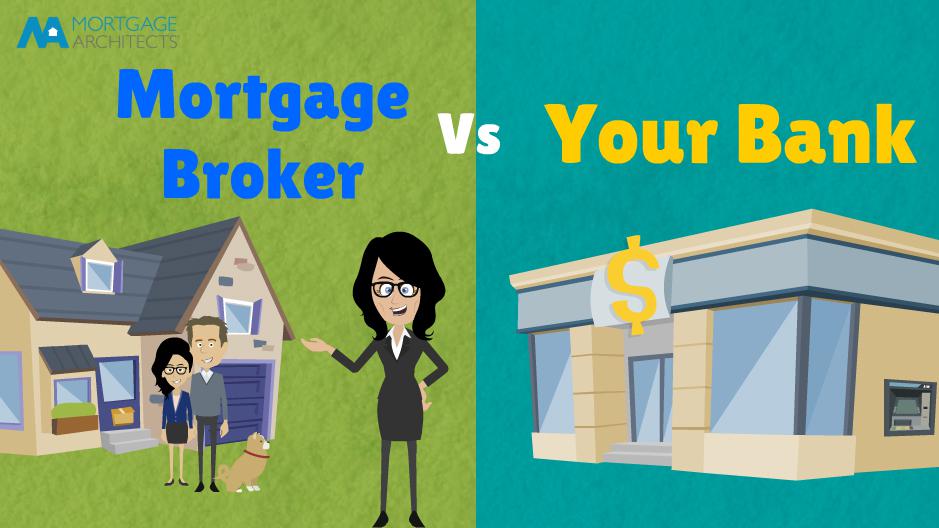
A Mortgage Broker or Your Banker – Which one is right for you?

“Our independent brokers are on your side, providing unbiased suggestions and home mortgage options that are tailor made for you.”

You are probably already familiar with banks and the procedure that they play in the

funding process, but you may not be as knowledgeable about the role of home loan

brokers. Brokers are on your side, providing unbiased recommendations and home loan

solutions that are tailor made for you. Home mortgage brokers work as intermediaries

in between banks and other lenders in order to obtain funding for first time

house purchasers or financial investment buildings, exactly what ever the circumstance, home loan

brokers are known to supply answers. Likewise if you were to see a Fort McMurray

mortgage broker, such as myself, you would be provided from a variety of

effective alternatives from over 50 different lenders!

So mortgage brokers can supply a lot more alternatives than any one bank would

offer. See banks can only provide you alternatives from what they have and home loan

brokers have access to choices from many loan providers. That also indicates you can

possibly get a more reasonable rate as we are offered huge discount rates in the really

competitive Canadian market.

fort mcmurray mortgage broker

Which is Better for You?

If you are interested in purchasing a Fort McMurray home and have to get

funding, it might be advantageous for you to do away with the standard path of

working straight with a bank and pick a home loan broker. While both techniques

of obtaining financing are popular, there are specific benefits that can be gotten

by picking a home mortgage broker over a bank.

Pros of Working Directly with a Fort McMurray Mortgage Broker vs your Bank:

If you decide to deal with a mortgage broker to get financing, you can have

peace of mind understanding that the home loan broker will do all the legwork for you.

This means that the mortgage broker will deal with your behalf with the lender. A.

mortgage broker has the capability to compare wholesale rates from various.

banks and lenders at one time. A lot of wholesale interest rates are preferred,.

since they are lower than what lots of banks provide straight.

When you choose to deal with a home loan broker rather of a bank, you.

basically get more loan options to pick from and can pick the one that matches.

your needs perfectly. Even if financing your loan is difficult, it is possible for a.

home mortgage broker making it possible due to their comprehensive knowledge and capability.

to select from different loaning partners. For these reasons, selecting a Fort.

McMurray mortgage broker over a bank might be best for you!

fort mcmurray mortgage help