U.S. President Donald Trump is set to unveil his administration’s much-anticipated Middle East peace plan in the latest American venture to resolve the Israeli-Palestinian conflict.
Odds of it taking shape, though, appear long, given the Palestinians’ preemptive rejection of the plan and Israeli Prime Minister Benjamin Netanyahu’s shaky political standing.
For both men, the White House summit looks to be a welcome diversion.
Trump is expected to present the proposal alongside Netanyahu at noon Tuesday. The event comes the day Trump’s impeachment trial continues in the Senate and the Israeli parliament had planned a hearing to discuss Netanyahu’s request for immunity from criminal corruption charges.
Netanyahu withdrew that request hours before the parliamentary proceedings were set to begin, saying in a statement he had “decided not to let this dirty game continue.” But Israel’s parliament, the Knesset, is still expected to meet even after the withdrawal. The body had been set to likely vote against immunity, dealing Netanyahu a blow.
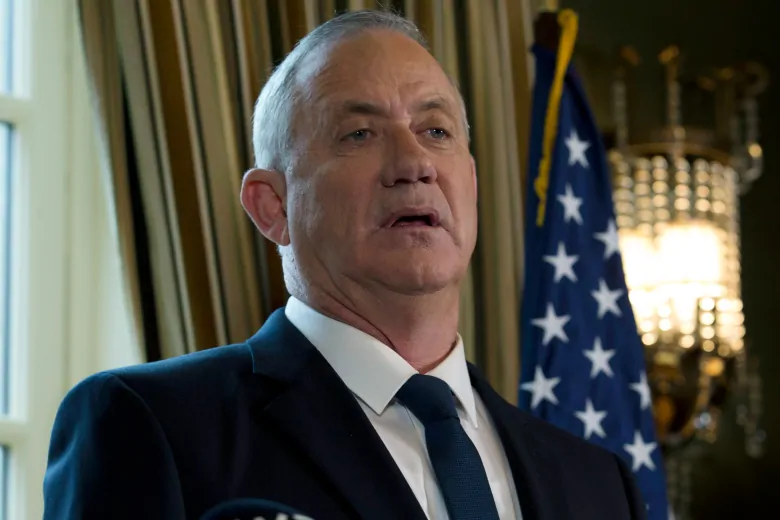
The Mideast peace proposal is expected to be very favourable to Israel, and Netanyahu has hailed it as a chance to “make history” and define Israel’s final borders. Netanyahu’s political challenger Benny Gantz has spoken in glowing terms about Trump and his initiative. Trump insists it has a chance despite skepticism.
“It’s been worked on by everybody, and we’ll see whether or not it catches hold. If it does, that would be great, and if it doesn’t, we can live with it, too. But I think it might have a chance,” Trump said alongside Netanyahu on Monday, when he also hosted Gantz at the White House.
Netanyahu will travel from Washington to Moscow on Wednesday to meet with Russian President Vladimir Putin and update him “on diplomatic developments and the ‘Deal of the Century,”‘ the Israeli Prime Minister’s Office said.
A key element will be whether the proposal includes an American approval to any Israeli annexation of the West Bank.
In the run-up to Israel’s March 2 election, Netanyahu has called for annexing parts of the West Bank and imposing Israeli sovereignty on all its settlements there. Israel captured the West Bank in the 1967 Mideast war, and the Jordan Valley in particular is considered a vital security asset.
The Palestinians seek the West Bank and east Jerusalem as parts of an independent Palestinian state.
The international community considers both territories to be occupied and all settlements illegal. But the Trump administration, in a break from its predecessors and the rest of the world, has taken a much friendlier approach and in November declared it does not consider settlements illegal.
After a slowdown in settlement activity during the final years of the anti-settlement Obama administration, Israel has stepped up its plans for construction since Trump took office.
Both settlers and their critics call this the “Trump effect,” and predict a jump in construction in the coming years.
According to the anti-settlement watchdog group Peace Now, Israel in 2019 pushed forward plans to build 9,413 settlement homes, roughly the same levels as 2017 and 2018. The figures are more than triple the level of settlement planning during the final two years of the Obama administration.
Protests in West Bank, Gaza
Reports in Israeli media have speculated Trump’s plan could include the possible annexation of large pieces of territory that the Palestinians seek for a future independent state. American approval could give Netanyahu the type of cover to go ahead with a move that he’s resisted taking for more than a decade in power.
But Netanyahu leads a caretaker government ahead of the country’s third election in less than a year, and such a far-reaching move, under the cloud of criminal corruption indictment no less, could lack public legitimacy.
Such a policy shift would appeal to Netanyahu’s hard-line nationalist supporters but would almost certainly torpedo the viability of an independent Palestinian state and likely infuriate neighbouring Jordan. In 1994, Israel and Jordan signed a peace treaty, the second between Israel and its Arab neighbours after Egypt.

Trump has reversed decades of U.S. foreign policy by siding more blatantly with Israel. Prior to the statement on settlements, the administration recognized Jerusalem as Israel’s capital and pushed ahead to move the U.S. Embassy there. He’s also closed Palestinian diplomatic offices in Washington and cut funding to Palestinian aid programs.
Those policies have proven popular among Trump’s evangelical and pro-Israel supporters and could give him a much-needed boost from his base as the Senate weighs whether to remove him from office and as he gears up for a re-election battle this year.
Jared Kushner, a Trump adviser and the Republican president’s son-in-law, has been the architect for the plan for nearly three years. He’s tried to persuade academics, lawmakers, former Mideast negotiators, Arab governments and special-interest groups not to reject his fresh approach outright.
But the Palestinians refuse to even speak to Trump, saying he’s biased in favour of Israel, and they are calling on Arab representatives to reject the Tuesday event at the White House. The Palestinian leadership also has encouraged protests in the West Bank, raising fears that the announcement in Washington could spark a new round of violence. Ahead of the announcement, the Israeli military said it was reinforcing infantry troops along the Jordan Valley.
Thousands of Palestinians were protesting in Gaza City ahead of the announcement.
The protesters burned pictures of Trump and Netanyahu, and raised a banner reading “Palestine is not for sale.”
During the rally, Gaza’s Hamas rulers expressed rare support for Palestinian President Mahmoud Abbas of the rival Fatah movement, welcoming his call for a broad meeting of Palestinian factions.
Senior Hamas official Khalil al-Hayya said Hamas and “all the factions” would join the meeting, planned for after the Trump announcement.
“When we are united, neither Netanyahu nor Trump dare to take away our rights,” said Hayya.
Hamas, an Islamic militant group that seeks Israel’s destruction, seized Gaza from forces loyal to Abbas in 2007. Several attempts to reconcile the two factions have failed, which many say has weakened the Palestinian cause.