Some Indigenous artists say a trade delegation to Tokyo was a “debacle” that wasted not only their money, but tens of thousands of taxpayer dollars.
The trade mission was organized by Indig Inc. — an online marketplace where Indigenous artists can sell their handmade items such as clothes, jewelry and home decor.
Indig Inc. recruited entrepreneurs from across Canada to travel to Japan from July 22- 28, promising an opportunity to showcase their work as well as their culture.
“It was pretty disastrous. We were very let down,” said ribbon skirt designer Agnes Woodward, who now lives in Indiana but is originally from Kawacatoose First Nation, about 115 kilometres north of Regina.
She says she and her husband, Whirlwind Bull, spent more than $6,000 on their flights, hotel, food, transportation and a delegate fee of $400 each. She was unaware that the trip organizer received a substantial provincial grant to cover expenses.
“We’re a lot of money in the hole, and we have a lot of product that did not get promoted or sold there.”
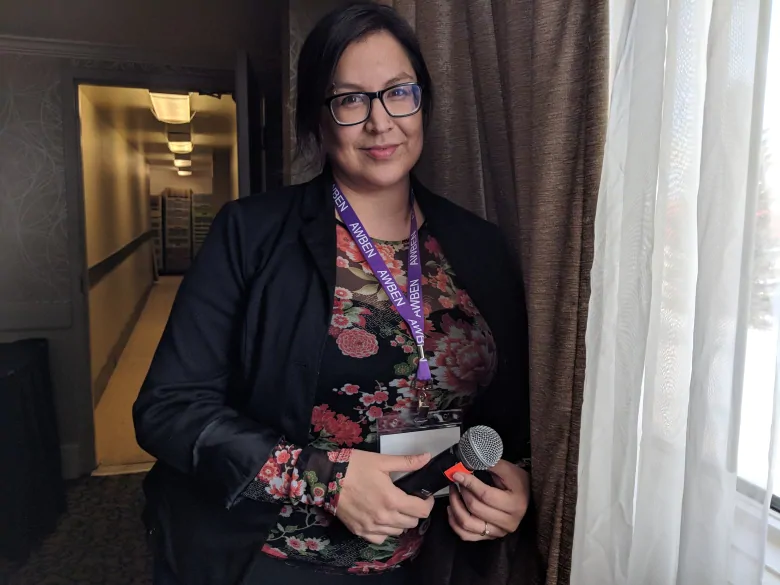
The trade mission was the brainchild of Cree businesswoman Heather Abbey, who has received accolades for founding Indig Inc. and promoting Indigenous artisans.
Abbey says she is “crushed” that her attempt to celebrate Indigenous culture and artists didn’t pan out as she had hoped. She accepts responsibility for some failures, she says, but adds that doesn’t justify the threats of violence and online hate that she says she is now receiving.
Critics of the trip are disgruntled vendors who didn’t sell much merchandise, she says.
Taxpayers’ money
Abbey has received $36,786 from Creative Saskatchewan after qualifying for a market and export development grant, according to the arts funding body of the provincial government.
She’s slated to receive the remaining 40 per cent of the more than $60,000 grant — worth $24,524 — if she can satisfy the reporting requirements.
About 30 entrepreneurs, dancers, and models were slated to travel to Japan. But some of those vendors told CBC News that days before their departure, Abbey contacted many of them to try to postpone the trip until October. In the end, only 14 travelled to Japan.
Faith Starlight, who lives in Calgary and makes beaded jewelry, says one of the first red flags emerged at customs in the Tokyo airport when Abbey advised the delegates to declare their merchandise as “gifts” rather than wares to be sold in the country.
Each person was asked to pay $650 to help cover their hotel cost at the Nikko Narita hotel. Instead, they were booked into a $20 per night Airbnb with thin cots, that one attendee called a “coffin hotel.”
Abbey defends the change, insisting it was a better location.

The delegates said their fee was supposed to cover a shuttle service to transport them and multiple suitcases full of art, jewelry, fashion pieces and powwow regalia. Instead, they had to navigate the Tokyo train stations on their own dime with luggage in tow.
The only “cultural showcase” and “vendor opportunity” took place at a mall two and half hours outside of Tokyo, where vendors say a group of Japanese seniors briefly stopped exercising long enough to watch the powwow dancers.
“It was a bust. It really sucked,” Starlight said. “Like, I could have went [to Japan] with a handful of earrings and had the same experience, maybe better, because I wouldn’t have to haul it halfway around the world.”
Several participants told CBC news that they confronted Abbey on the fourth day of the trip to demand answers about their itinerary and finances. Abbey reportedly told them she was bad at paperwork, and repeatedly broke down in tears, the participants said.
Abbey confirms she spent an entire day crying, and decided to leave a day early.
In the five weeks since returning to Canada, none of the participants CBC spoke to have been able to get photos from a professional photo shoot, or any reimbursement from Abbey, despite promises that she would refund money.
Frustrated, at least eight delegates have made public posts on social media or spoken to CBC News.
“She owes a lot of people a lot of money,” Woodward said.
One artist said he feels betrayed by a fellow Indigenous entrepreneur, and that makes the experience an even “tougher pill to swallow.”
‘Due diligence’: Creative Saskatchewan
Creative Saskatchewan says it restricted its initial instalment to Indig Inc. to 60 per cent of the total grant money in order to “mitigate risk” on what is the largest single largest investment it has made via this grant program in this fiscal year.
“We’re doing our due diligence,” said a spokesperson for Creative Saskatchewan, who added the government agency won’t comment further until after it receives a final report from Indig Inc.
Many delegates said they held fundraisers to collect money from friends and family members, and several received financial support from their First Nations bands.
“It ultimately was very embarrassing,” Woodward said. “I felt like I let a lot of people down.”

That sentiment is echoed by Indigenous photographer Elicia Munro-Sutherland, who publicly endorsed the mission in numerous media interviews.
Munro-Sutherland didn’t end up going to Japan, she said in a Facebook post, because Abbey never booked her flight despite assuring her otherwise.
Abbey says the delegates were aware that this was her first trade mission abroad and agreed to be “guinea pigs.”
“It was my first time planning, or even going into an international market. And I was very candid and open about that,” the businesswoman from Little Pine First Nation in western Saskatchewan said.
“Am I sorry the vendors did not make more sales? Absolutely. I absolutely am, and I take part of that responsibility upon myself,” she said.
“But do I feel like I should be threatened right now? Do I feel like I should have my safety threatened? And all of this backlash? Absolutely not.”