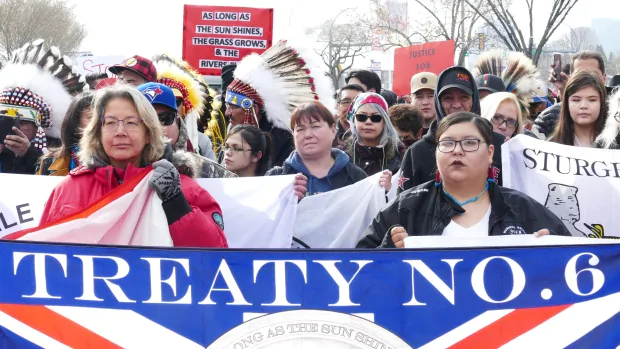
A dozen First Nations chiefs from across Canada are taking a stand against proposed federal legislation that would overhaul the Indigenous child-welfare system.
Chiefs from Treaties 6, 7 and 8 are organizing a national day of action on May 27. Regional protests will also be held the week before.
When Bill C-92 was unveiled in February, it was praised by Assembly of First Nations national Chief Perry Bellegarde.
It was introduced as a means to tackle the overrepresentation of First Nations, Métis and Inuit children in foster care by handing over control of services to Indigenous governments.
But according to chiefs from B.C, Alberta, Saskatchewan and Ontario, who are calling for the protests, the bill does not respect First Nations sovereignty and future generations.
One of the problems, they say, is that funding under the new legislation will still be given to provinces rather than First Nations.
“Until the provinces are out of the picture, nothing will change,” said Chief Craig Makinow of Ermineskin Cree Nation, 95 kilometres south of Edmonton.
“It should be a bilateral process with the federal government, and the province shouldn’t be involved at all in this whole drafting of this legislation.”
Bill C-92 is just one of the pieces of legislation demonstrators will be speaking out about. Others include Bill C-86, an omnibus bill that contains amendments to legislation including the First Nations Land Management Act and The First Nations Fiscal Management Act.
“We are working with a network of nations chiefs across the country to alert our people about what’s happening, and to tell the government that they can’t continue to proceed unilaterally in that development of law policies and agendas that directly attack our inherited interest rates and sovereign jurisdiction,” said Okimaw Henry Lewis, chief of Onion Lake Cree Nation, which straddles the Saskatchewan-Alberta border.
Last week, Crown-Indigenous Relations Minister Carolyn Bennett backed down from plans to replace policies dealing with modern treaties and self government by June.
Opponents referred to the policy changes as “White Paper 2.0.”
In 1969, then-prime minister Pierre Trudeau and his justice minister, Jean Chrétien, introduced the White Paper, which aimed, unsuccessfully, to erase the distinct status of First Nations.
But Lewis said those efforts continue today.
“Canada has never stopped trying to implement their 1969 white paper policy, which is meant to domesticate our international treaties, turn us into municipalities and remove us from our lands,” said Lewis. “We must stand in unity as chiefs and peoples to fight off this agenda for our children and future generations,”