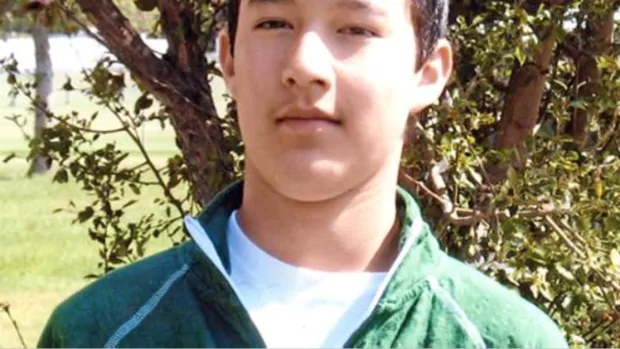
A coroner’s inquest jury that heard details all week about the death of Brydon Whitstone couldn’t decide how the 22-year-old came to be fatally shot by a Saskatchewan RCMP officer.
The six-person jury announced its finding after spending the week in a courtroom at Battlefords Court of Queen’s Bench hearing testimony about Whitstone’s death. Jurors could have found Whitstone’s death was a homicide or a suicide, among other options. They chose neither.
Whitstone, a 22-year-old man from Onion Lake Cree Nation, was shot by an RCMP officer in North Battleford, Sask., on Oct. 21, 2017. Whitstone had led officers on a high-speed chase, during which he collided with two RCMP vehicles. He then refused to exit his car even as officers surrounded him and shouted orders to surrender.
One of those officers shot Whitstone. That officer, Const. Jerry Abbott, testified this week that he had thought Whitstone was reaching for a gun.
The coroner’s inquest into Whitstone’s death began Monday.
The jury made one recommendation along with its finding:
“Use of Taser gun or other intervention to immobilize or stun the suspect first prior to the use of a gun.”
The jury
The jury was made up of six people: four women, two men. Three of the jurors came from a pool of self-identifying First Nations people. The rest were drawn from the general public.
The group knew fairly early that Whitstone died two gunshot wounds fired near his heart by Const. Abbott.
The key question the jurors were asked Friday was how they thought Whitstone came to be shot. They had five choices: suicide, homicide, accidental, natural and “undetermined.”
The jurors heard mixed evidence about Whitstone voicing suicidal thoughts before his altercation with RCMP.
1 question from jurors during proceedings
The jury had only one question during four days of testimony from 16 witnesses.
Late in the proceedings, a male juror asked about a move made by Constable Marco Johnson, a large man, during the frantic two minutes leading to the shooting.
Johnson had testified he grabbed an uncooperative Whitstone by the left arm and bent the arm along the side of the vehicle, in an attempt to pry Whitstone out of the vehicle.
“Do you think, given the facts, [that move] was appropriate if nobody was seeing a gun?” the juror asked.
“I would assume so, yes,” said Sgt. Pernell St. Pierre, the most senior officer on the scene that night.
Abbott testified that he yelled out that Whitstone was reaching for a gun, but never actually saw a gun.
RCMP camera not filming
Jurors also heard that one of two in-car RCMP cameras in the area that night did not record either the pursuit or the shooting.
The officer in that car, Garrett Dove, said he had not been trained in how to clear his camera’s hard drive, which was full at the time, so that it could record the night’s events. He and other officers who now have the WatchGuard cameras in their vehicles testified they are now trained to clear the hard drive.
The officer who initially pursued Whitstone did have a camera recording. It captured part of the altercation at the intersection, but from a distance. It appeared to show one person standing on each side of Whitstone’s car.
Saskatchewan’s “F” Division is the only division to have the cameras, the RCMP said earlier this week.