A Métis community that’s hemmed in by the oilsands north of Fort McMurray has bought a piece of land that’s far away from the loud mine sites and industrial facilities that belch smoke.
It’s called a resort, but instead of hotels and saunas, there are log cabins, land for hunting and endless lakes for fishing.
Calling it “historic,” the McKay Métis announced the purchase of 10-acres of land inside Birch Mountains Provincial Park and negotiated hunting and fishing access to the park for its 90 members.
“The reason it is so historic is that no Métis community has been able to achieve anything like this,” Ron Quintal, McKay Métis President said at a news conference Tuesday in Fort McMurray.
In March, the McKay Métis were the first in Canada to buy land from a provincial government.
The community paid $1.6 million for control of 492 acres (about 200 hectares) in the hamlet of Fort MacKay where it intends to build a gas station, a fast-food restaurant and recreation facilities.
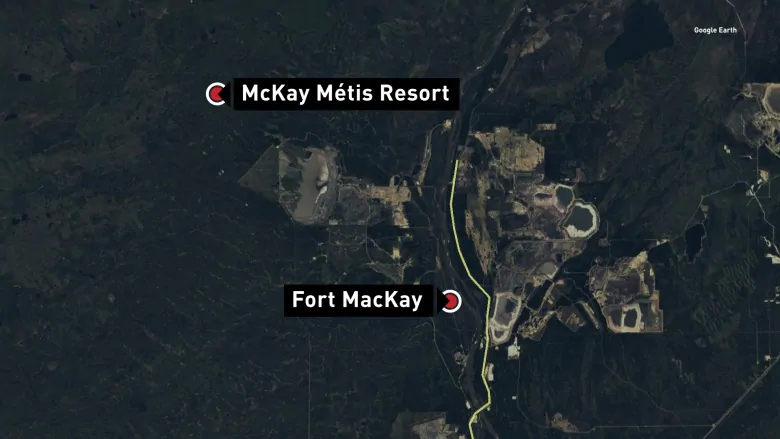
On Tuesday the community announced it bought a lodge with several cabins and a small airplane landing strip for $525,000 on the shores of Island Lake, approximately 60 kilometres from Fort MacKay.
As seen on this map, the McKay Métis resort is about 60 kilometres away from the hamlet of Fort MacKay. (CBC Graphics)
Currently, elders like Bernadette L’Acorde say they can’t hunt and fish in the vicinity of Fort MacKay because of concerns about contamination from the neighbouring oilsands sites.
“We used to hunt and fish. But not anymore.” L’Acorde said. “[The land] is all poisoned.”
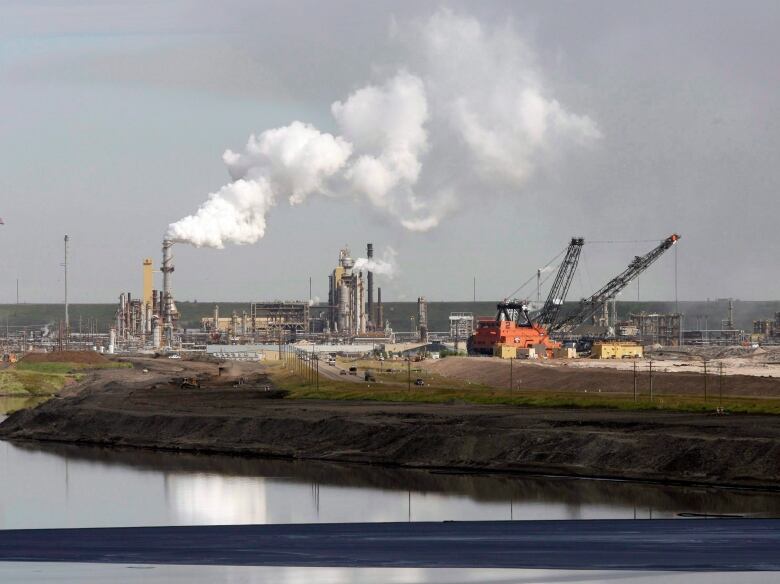
A tailings pond reflects the Syncrude oilsands mine facility near Fort McMurray, Alta., Wednesday, July 9, 2008. (Jeff McIntosh/The Canadian Press)
Quintal said the new land acquisition marks a return to their Indigenous traditions.
“To have an area that is pristine and protected by park boundaries from development is going to enable us to use the area unharassed,” Quintal said.
Connect with David Thurton, CBC’s Fort McMurray correspondent, on Facebook, Twitter, LinkedIn or email him at david.thurton@cbc.ca