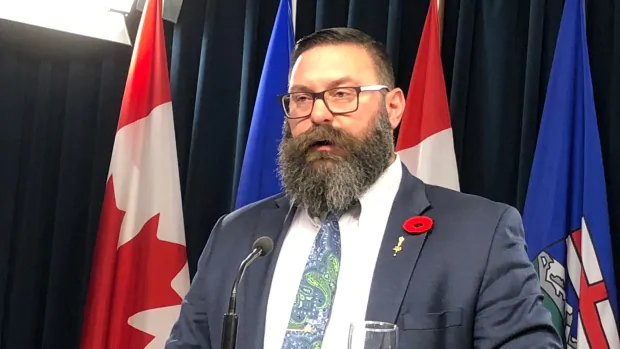
Home builders and land developers would no longer be allowed to donate to mayoral or council candidates under new proposed legislation introduced Monday.
Bill 23, An Act to Renew Local Democracy in Alberta, would ban corporate and union donations to candidates running in elections for municipalities, school boards, Métis Settlements or irrigation districts.
The act changes the period during which candidates can accept donations from four years to one, eliminating the advantage given to incumbents who can currently raise money for the next election throughout their entire term in office.
Bill 23 proposes campaign funds can only be accepted between Jan. 1 and Dec. 1 during an election year.
Candidates thinking about running can accept up to $2,000 prior to that date to help with door-knocking and brochures.
The bill lowers current limits on individual donations from $5,000 to $4,000.
The government said it wants to set a limit for how much campaigns can spend, but will conduct additional consultation before deciding on a figure.
If the bill is passed, all candidates, including those who fund their own campaigns, will have to disclose their donors. The names of anyone who donates more than $50 will be made public.
The legislation also empowers Alberta’s new elections commissioner to investigate and prosecute those who break the rules, and to administer penalties. Such matters have to be referred to the Court of Queen’s Bench under the current system.
As under provincial legislation, there will be no limits on who can donate to third-party advertisers, or political action committees (PACs) as they are more commonly known or how much they can contribute.
But PACs will have to register with the jurisdiction where they want to advertise once total donations hit the $1,000 mark. The jurisdiction is required to publicly post that information.
Other reforms under the bill include prohibiting candidates from posting signs or greeting voters on the property outside a polling station, requiring communities larger than 5,000 residents to hold advanced polling and eliminating the six-month residency requirement for people to vote in local elections.
The province followed advice from the chief electoral office and eliminating the six-month residency requirement for provincial elections last year.