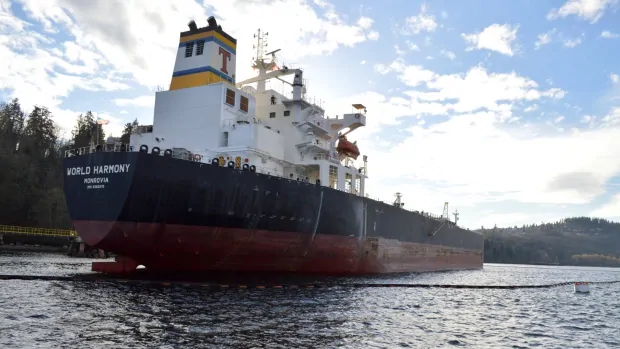
The National Energy Board has laid out next steps for a review of the Trans Mountain pipeline expansion project’s effects on the marine environment, and has given 99 stakeholders tight deadlines to make their submissions.
The federal pipeline regulator is giving the company and key federal government departments until the end of the month to present evidence, while other Indigenous, industry and environmental stakeholders will have until Nov. 20 to file their submissions.
Last month, the Liberal government gave the NEB 22 weeks to review the Trans Mountain pipeline expansion project to consider the project’s impact on the marine environment.
Dr. Rob Steedman, the NEB’s chief environmental officer, said he is prepared for a “very busy” period as the regulator works to meet the Feb. 22 deadline.
“I’m not going to say it’s not a challenge,” he told CBC News. “The process is designed, as we always do, to make sure there’s fairness and transparency on the information that’s filed, that people can listen to the oral sessions, they can see all the transcripts and documents in public.”
Steedman said that because the subject areas for review are narrow — limited to the impact of the expansion and increased tanker traffic on the marine environment, and specifically on the resident killer whale population — the NEB is confident is can meet the deadline.
He said he wouldn’t “speculate” about whether those impacts could be considered too great to be overcome with mitigation measures.
“We’ll get the evidence from everyone that has it to offer, and who offered to participate, and the board will have to consider those facts,” he said. “They’ll have to weigh the facts and consider the conflicting evidence which inevitably comes up.”
On Aug. 30, the Federal Court of Appeal quashed the approval of the $7.4-billion pipeline project, which would nearly triple the flow of oil from Alberta’s oilsands to the West Coast.
Criticism from appeal court
The court criticized the lack of attention given to how increased tanker traffic off British Columbia’s coastline would affect the environment, and said Canada’s efforts to meaningfully consult with Indigenous people, as required by law, fell short.
Earlier this month, the federal government announced that retired Supreme Court justice Frank Iacobucci will lead the new consultation process with Indigenous people on the project.
Iacobucci will act as the federal representative, designing and overseeing the consultation with affected Indigenous communities.
The government has said it does not plan to appeal the Federal Court of Appeal ruling that halted the project.