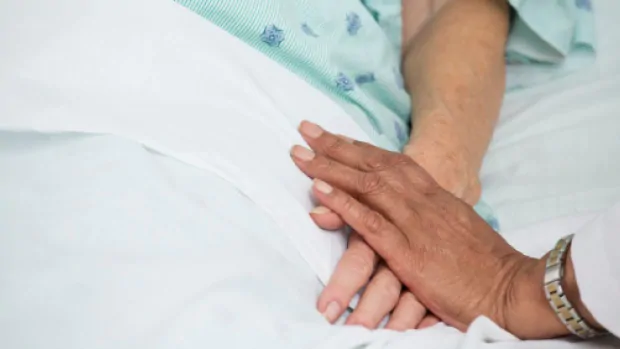
Some rural Alberta communities without government-provided hospice services are stepping up to provide that care themselves, a University of Alberta researcher says.
“It’s a lot of work; these are trained volunteers, trained in how to work with people in the end of life,” Kyle Whitfield, an associate professor in the faculty of extension, said Tuesday on CBC’s Radio Active.
“But we can’t continue to expect and assume that communities are capable and able to respond to the needs that are just going to get higher and higher.”
According to a 2014-2015 study, more than 50 per cent of deaths in Canada — excluding Quebec — happened outside of a hospital.
People in rural communities choose more often to die at home, Whitfield said.
“If you grew up rural, why should you go to an urban centre to die?”
In a recently-published paper in the Journal of Rural and Community Development, Whitfield examined the volunteer hospice society that formed in an unnamed Alberta town of fewer than 10,000 people.
She found that citizens recognized the lack of hospice care and came together to address it in a formal way. The volunteers organized themselves to become an incorporated entity, started fundraising, and applied for grants and formal training.
The group was motivated by stories of community members, one of whom was a woman who said her greatest fear was of dying alone.
“One of the roles this hospice society played was to rally people around her for several days while she was going through the dying process,” Whitfield said.
The volunteers complained they lacked government guidance on how to provide the service of hospice care and struggled with a lack of information in general, she said.
“There’s no manual on how to do this,” Whitfield said.
“Communities are not set up to be able to respond to the needs of people who are wanting to die at home and in their own communities … they can’t do it alone,” she said.
“The way we’re going now, we’re very reactive and we’re not responding to a long-term plan and approach.”