Edmonton’s Accidental Beach has welcomed more seagulls than sunbathers this summer.
According to a report from city administration, regular checks have shown a significant drop in attendance at the celebrated Cloverdale sandbar on the south bank of the North Saskatchewan River.
The biggest crowd city staff spotted during the regular surveys included about 50 beachgoers; during some of the other checks, the beach was empty.
With city council set to debate the next steps for the development of an urban beach at Wednesday’s community and public services meeting, Coun. Ben Henderson wonders whether such an investment will be worth it.
Like castles made of sand
“There is no point in putting a lot of money into making something happen if it’s not going to happen reliably,” Henderson said.
“I was curious to know was whether the beach was going to come back this year, and it sounds like it’s come back in a slightly different form.”
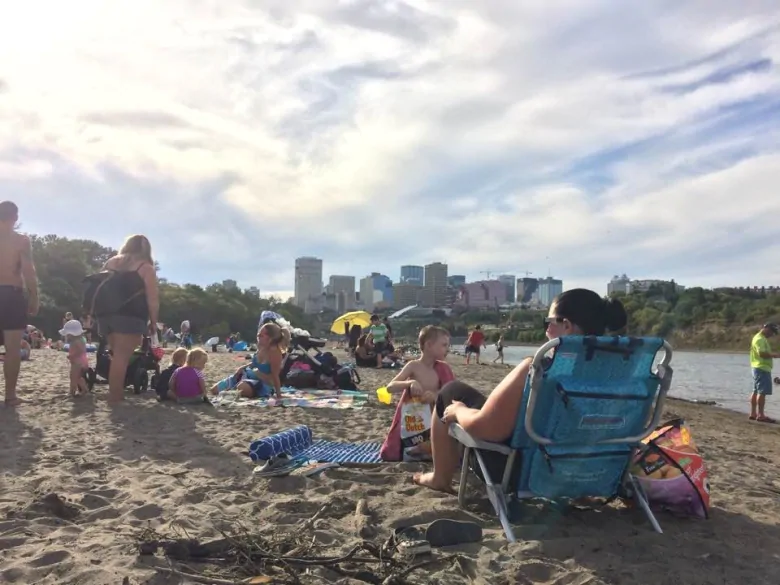
In 2017, Edmontonians flocked to the beach created by a change in current in the North Saskatchewan River from berms installed for LRT bridge construction. (Michael Clark)
Unlike last summer, this year’s version of the beach never evolved into a clean stretch of sand. Rather, it was swampy with high water levels that often left it completely submerged.
“Has it returned? Yes. But is it as good as it was last year? It sounds like the answer is no,” Henderson said.
“Maybe it’s just one of those happy accidents that we have to enjoy while it’s there.”
Accidental Beach was created last summer when LRT bridge construction altered the flow of the river. It rapidly became one of the city’s most popular unintentional attractions, regularly attracting crowds numbering in the hundreds.
After its inaugural season, councillors asked city staff to provide a list of potential sites for a permanent beach.
Administration identified six locations: Big Island, Terwillegar Park, Fort Edmonton Footbridge, the Accidental Beach site, Capilano Bridge and Rundle Park.
Wednesday’s report to city council details some of the costs associated with building a permanent urban beach.
Initial site analysis is expected to cost between $150,000 and $200,000 per location, while subsequent design planning could cost anywhere from $900,000 to $1.3 million depending on the site chosen.
Those estimates do not account for historical resource assessments or environmental remediation costs, which could also run into the thousands.
Administration expects that site selection and design planning could take anywhere from two to four years. Construction would hinge on an environmental review process and federal approval for the project.
The city has adopted an arm’s-length approach to Accidental Beach but it did provide provisions to curb potential headaches in the Cloverdale neighbourhood this summer.
The city deployed more peace officers and provided garbage cans, portable toilets and bike racks to the area after complaints about last year’s litter, excessive noise, parking problems and public urination.
“Mother Nature doesn’t care what the city wants.– Jamie Young
Cloverdale resident Jamie Young said he was disappointed to see public interest in the beach dry up this summer, but blames a lack of interest on the conditions.
“Nobody is going to the beach because it really isn’t there or very accessible at all,” Young said.
“It’s easy to say attendance is down but the beach hasn’t been there. The river is so high that there is 10, 15 yards of knee-deep water with mud underneath to get to it, and sometimes it’s not even there.”
“Last year, it was a wonderful beach. And this year, it’s a river.”
Young, who lives near the river with his wife and two young daughters, said there is a big appetite for an urban beach, especially among young families in Edmonton, Young said.
Even so, he said the city should only invest in a riparian oasis if the spot is guaranteed to re-emerge every spring.
“There are a million things to consider. Number one, is it going to be there?” he said.
“Mother Nature doesn’t care what the city wants.”