
Canada’s total oil production should increase to 5.6 million barrels per day by 2035 — a 33-per-cent increase over 2017 levels, according to a new industry forecast.
According to a report from the Canadian Association of Petroleum Producers (CAPP), the rise in production is expected to be driven largely by an increase in oilsands production — to 4.2 million b/d from 2.7 million b/d — even with a decrease in capital spending in the oilsands for the fourth consecutive year.
Tim McMillan, president and CEO of the Canadian Association of Petroleum Producers, says a lack of competitiveness continues to be one of Canada’s biggest impediments when it comes to attracting foreign investment (Amber Bracken/The Canadian Press)
Western Canada production is anticipated to account for the bulk of the country’s total production, roughly 95 per cent.
The industry group identified the greatest potential for growth in the Montney and Duvernay formations in the Western Canadian Sedimentary Basin, which are expected to contribute about 500,000 b/d of pentanes and condensates by 2026.
“In Eastern Canada, oil production will rise to 290,000 b/d by 2025 from major offshore projects including Hebron, Hibernia, Terra Nova, and White Rose,” according to the annual forecast.
“Hebron will account for the bulk of the production highs between now and 2025 as the region’s newest producing project ramps up. Beyond 2025, production will drop to 70,000 b/d by 2035.”
CAPP’s report also takes aim at a number of challenges it sees for the industry in the years ahead.
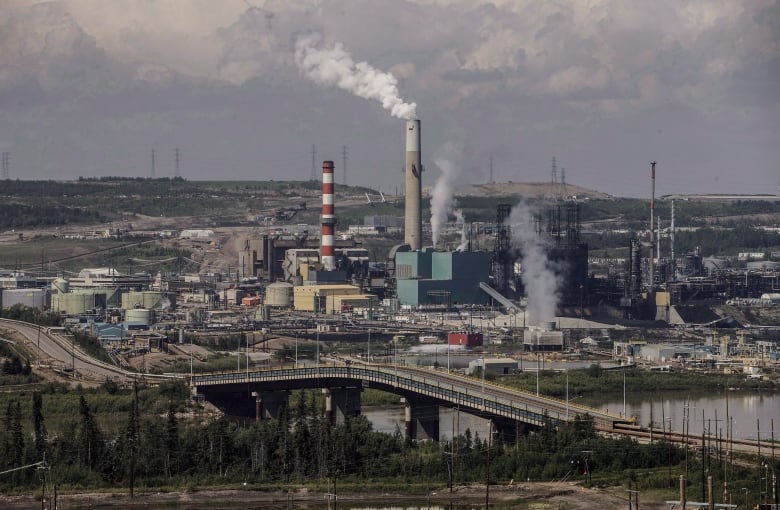
The rise in production is expected to be driven largely by an increase in oilsands production — to 4.2 million b/d from 2.7 million b/d — even with a decrease in capital spending in the oilsands for the fourth consecutive year. (Jason Franson/The Canadian Press)
“Canada needs to improve its competitiveness and get pipelines built if it wants to transport an additional 1.5 million barrels per day (b/d) of oilsands production growth by 2035 to new emerging markets,” it says.
“A lack of competitiveness continues to be one of Canada’s biggest impediments when it comes to attracting foreign investment.”
However, CAPP president Tim McMillan told an audience at the Global Petroleum Show that he supports the steps that the federal government took to push ahead development of the Trans Mountain pipeline expansion.