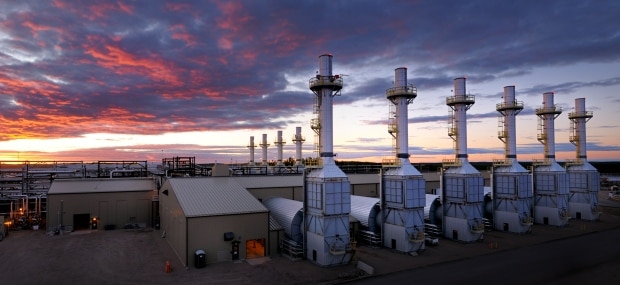
An Alberta First Nation with a long history of working closely with oilsands companies says it plans to defend its “key cultural heartland” from a Calgary-based energy producer that wants to develop a project nearby.
Fort McKay First Nation said it will oppose Prosper Petroleum’s Rigel Oilsands Project unless the province offers assurances it will reduce the project’s water use, safeguard wildlife and limit its proximity to the Moose Lake Reserve area.
Located about 60 km from the community of Fort MacKay, the Moose Lake Reserve is a remote area of unspoiled land with two lakes, Gardiner and Namur. Prosper Petroleum intends develop its project about four km from the reserve.
The Alberta Energy Regulatory has scheduled a public hearing for Jan. 9.
The First Nation said in a news release it plans to attend the hearing to “protect its last refuge.”
The Fort McKay First Nation, about 60 km from Fort McMurray, is encircled by oilsands plants.
‘Very disappointing’
According to the AER, the Rigel project intends to use steam-assisted gravity drainage to produce 10,000 barrels of bitumen per day from a site that’s about 65 km northwest of the community of Fort MacKay.
“We can’t accept development around Moose Lake the same way it happened around (Fort) MacKay,” said Alvaro Pinto, sustainability director of the Fort McKay First Nation. “It has to be different.”
Fort McKay First Nation has long welcomed oilsands development.
In 2016, Chief Jim Boucher told the Assembly of First Nations in Quebec his community had seen the benefits of oil and gas development, and he urged First Nations to ignore environmentalists, whom he blamed for poverty in Canada’s north.
At Cenovus’ Foster Creek oilsands operation, 450-metre wells are drilled and steam is injected to soften and separate buried oil from sand. Prosper Petroleum proposes a similar operation north of Fort McKay First Nation (Cenovus)
But the proposed development near the Moose Lake area is different, Pinto told CBC News.
The project would affect one of the last unspoiled places the Fort McKay band uses to practice their culture, and the area has historical, spiritual and environmental importance, he said.
The nation made a video highlighting the area’s pristine lakes and surrounding area, where elders teach youth how to hunt, trap and survive on the land.
[embedded content]
Moose Lake Home & Refuge (14 Minutes) from FMSD on Vimeo.
Fort McKay First Nation has been calling for an area protection plan for years. It has asked the province to create a special management zone that strictly regulates development within 10 km of the Moose Lake area.
Pinto said “it is very disappointing” that the NDP government has not delivered on its promise.
In March 2015, former premier Jim Prentice began the process, Pinto said. In February 2016, the NDP government agreed to develop and implement a plan. But almost two years later nothing has been delivered.
“Unless this protection plan is put in place, it’s going to be really difficult to accept this project,” Pinto said.
Prosper Petroleum ready to proceed
Alberta Environment said Monday it would not be able to provide comment for this story.
The company “is aware the area is of cultural importance to Fort McKay First Nation” and has been engaging with the First Nation and other Indigenous groups since 2012, Carrie Cochran, Prosper Petroleum’s vice-president of stakeholder affairs said in an email.
The company has proposed “numerous mitigation” proposals, and looks forward to January’s hearing after four years of regulatory review, added Cochran.
Follow David Thurton, CBC’s Fort McMurray correspondent, on Facebook, Twitter and email him at david.thurton@cbc.ca