A one-of-a-kind research station in the High Arctic has dodged a bullet yet again.
The federal government announced $1.6 million in funding on Wednesday, to keep the Polar Environment Atmospheric Research Laboratory (PEARL) open until fall 2019.
The lab, located in Eureka, Nunavut, tracks atmospheric data no other research station can, given its High Arctic latitude, only 1,110 kilometres from the North Pole.
Some of Canada’s leading climate change scientists have been fighting to save it, as PEARL’s core funding was set to run out this year and they were preparing to pull the plug on the lab in May. Those scientists, however, were seeking a commitment from the government for $1.5 million in annual funding for PEARL.
“Driven by our world-class researchers, Canada is a leader in atmospheric and climate science in the Arctic,” Environment Minister Catherine McKenna said in a news release.
“By investing in the PEARL research network, we’ll ensure that the research done in Canada’s high Arctic continues to deepen our knowledge of the challenges before us.”
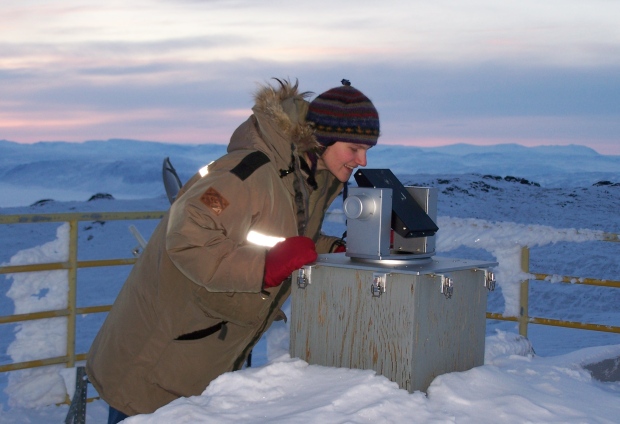
The PEARL facility is one of only a handful of research labs in the High Arctic. (CANDAC/Ashley Harrett)
Another close call
This isn’t the first time PEARL has faced funding shortfalls.
In 2012, cuts under the Harper government saw researchers come within 20 days of beginning a shutdown of the laboratory, until last-minute funding came through from the Climate Change and Atmospheric Research Initiative (CCAR).
While this latest influx of funding is enough to keep PEARL open for another two years, according to the federal government, it’s not a re-up of the CCAR initiative, as was recommended in April by the Natural Sciences and Engineering Research Council of Canada (NSERC) — the body that divvies up physical science funding to researchers, universities, and scientists across the country.

‘Today’s announcement demonstrates our government’s ongoing commitment to support science and evidence-based decision making,’ says Science Minister Kirsty Duncan. (CBC)
Science Minister Kirsty Duncan said the Harper government’s use of CCAR was a “one-off solution” to climate change.
“Unlike the previous government, we know that climate change is real and we’re playing our part in mitigating the effects of climate change by investing in research and technology programs,” Duncan told CBC News, adding her government has invested about $100 million in climate change and clean technology research through NSERC since 2015.
“While the CCAR program has reached the end of its funding cycle, today’s announcement ensures the operation and data collection at the PEARL facility will continue,” she said.
“Climate change research and the Arctic are far too important and, they deserve more than one-off efforts. They deserve a comprehensive, thoughtful, approach.”