The federal Liberal government has exceeded its own deficit projections by billions of dollars thanks to a roaring economy, but they’ve earmarked much of those savings for increases to the Canada Child Benefit and a more generous tax credit for low-income earners.
In his spring budget, Finance Minister Bill Morneau expected to post a deficit of $28.5 billion for the current fiscal year. Thanks to rising revenues from an economy that leads the G7, that shortfall is now expected to be $19.9 billion.
Morneau’s fall economic statement pegs GDP growth at 3.1 per cent this year and 2.1 per cent next, with unemployment at rates not seen in more than a decade.
Rather than earmark those newfound dollars to further reducing the deficit, the government is pressing ahead with nearly $8 billion in new spending over the next five years.
“With a little more wind in our sails, we’re doubling down on a plan with proven results and reinvesting in the middle class,” Morneau said Tuesday. “As the economy grows, we need to make sure the benefits are shared with the middle class, and those working hard to join it.”
He said while the Conservatives, and the NDP in the last election, were intent on balancing the books “at all costs,” the Liberal plan to spend more is now bearing fruit as evidenced in lofty growth numbers that are among the best in the industrialized world.
“Our strong fiscal position allows us to do what other countries would like to do, but can’t afford to do,” he said.
The Canada Child Benefit, the $23-billion program that sends monthly cheques to most families with children, will be indexed to inflation starting in July 2018, two years earlier than expected. The threshold for qualifying families will also rise with the cost of living. Indexing the tax-free benefit will cost an additional $5.6 billion between 2018-19 and 2022-23 as a result of the more generous payouts.
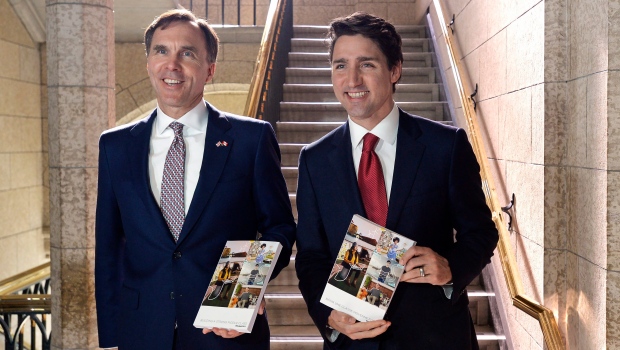
Finance Minister Bill Morneau is delivering his fall economic statement in the House of Commons. (Adrian Wyld/Canadian Press)
The Working Income Tax Benefit, a refundable tax credit for the lowest income earners, will also get a boost. While promising to provide more specifics in the 2018 budget, the government said it would spend an additional $500 million a year on the program starting in 2019. WITB payments depend on family makeup, and whether a person is married or has dependents. In 2017, the income threshold for families with children was $28,576 in most provinces.
The fall economic statement also included details of the small business tax cut announced by Morneau last week amid a firestorm of criticism from business owners angered by proposed tax changes to private corporations. The small business tax rate will drop from the current 10.5 per cent to 10 per cent on Jan. 1, 2018, before reaching nine per cent a year later. That policy change will cost an estimated $2.9 billion over the next five fiscal years.
The government is on track to add $100 billion to the public debt over the next seven years — but will still see debt-to-GDP fall to about 30 per cent by the next election.
For the first time, finance officials said how much they expect to recoup from a proposal to tighten rules around a tax planning measure called “income sprinkling,” one of the proposed small business changes. The government has booked $1.2 billion in revenue over the next six years as a result of the new measure.