Money alone can’t compensate for what they lost, say Sixties Scoop adoptees who are waiting to hear more details about an expected $800-million settlement from the federal government.
Sources told CBC News that survivors will get between $25,000-50,000 in an announcement scheduled for 9:30 ET Friday. It’s also reported that another $100 million will be dedicated to other reconciliation initiatives.
“It was just a shock to finally have some acknowledgement that what was done to us to rob us of our culture and identity and our childhoods was wrong,” Sixties Scoop adoptee Christine Cameron said.
But Cameron said the announcement brought mixed feelings.
“It’s not happy news. It shouldn’t have been this way,” she said.
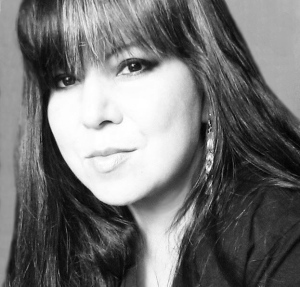
Christine Cameron grew up being culturally isolated and separated from her family. (Christine Cameron/Submitted)
The settlement to be announced Friday will be national in scope, and is expected to put an end to most of the 18 related lawsuits that are active throughout the country.
From 1965 all the way to 1984, Indigenous children were were sent for adoption outside their communities, often ended up with white families. Now adults, the Sixties Scoop adoptees say it resulted in culture shock that caused psychological harm which has dogged survivors into adulthood.
“This was such a shameful thing to not be able to talk about for so long. I didn’t know that there were other people,” she said.
Cameron, 46, is originally from Little Pine First Nation, Sask. She was the youngest of seven children and was adopted to a white family in Wynyard, Sask. in 1973 at the age of two. It was in Wynyard that she remembers the racism and being sexually abused by her extended, adopted family. When she tried to notify the family of the abuse, they disowned her.
I didn’t know that there were other people. I just thought that it was just me. – Cameron
“The picture that I was given of the people that I came from — because I did have questions — wasn’t a very pleasant one. There was a lot of confusion and shame, I was always reminded of how ‘lucky’ I was to be raised by white people.”
She grew up isolated from her family, not knowing anything about them. All of her siblings were also part of the Sixties Scoop, and were adopted out to various parts of North America, including Pennsylvania, New Jersey, Ontario and Saskatchewan.
“I didn’t know that there were other people. I just thought that it was just me. I didn’t realize that it was such a government, country-wide, international scandal,” said Cameron.
It wasn’t until last year that she was finally able to meet with one of her siblings, her brother. But she will never be able to reunite her whole family.
Recently, Cameron was able to get some closure after finally finding her sister Cleo Semaganis’ grave in New Jersey.
“My sister died as a direct result of the Sixties Scoop. She committed suicide in New Jersey when she was 13, because she couldn’t reconcile being so culturally isolated from where she grew up,” said Cameron.
‘Like meeting strangers’
“For me, I’m not sure how I feel about the money, just based on what my personal experience was, I think my biggest issue is loss of culture, loss of language,” said another survivor, Sharon Dainard.
But, she said, “I think the figure is quite low for settlement purposes.”
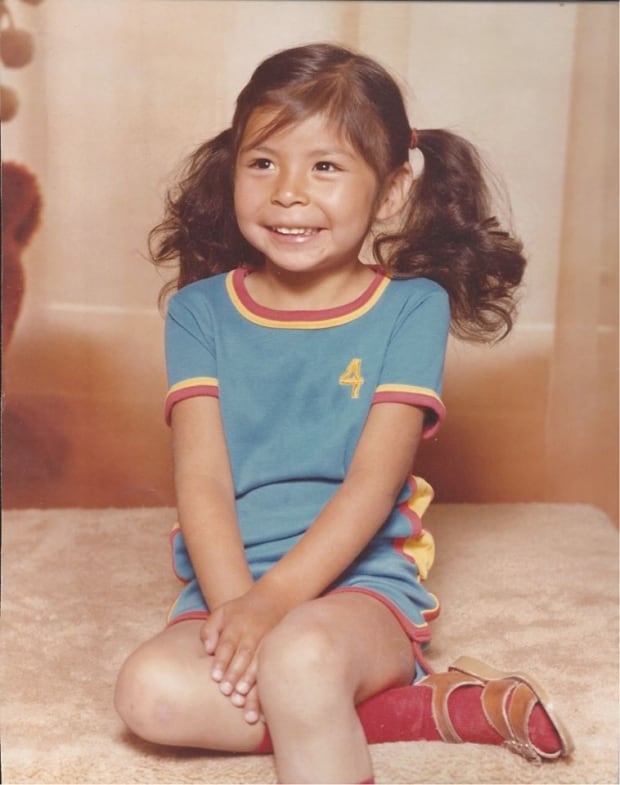
Sharon Dainard was apprehended from the hospital when she was born. She said that there was pressure on teenage mothers to put their children up for adoption in her community. (Sharon Dainard/Facebook)
Dainard, 41, is originally from Roseau River First Nation, Man., but was apprehended from the hospital into foster care, shortly after she was born. At 14 months old, she was adopted to a white family in Winnipeg.
However, her experience was different. Dainard grew up not knowing her cultural identity, but her adopted family never spoke badly about Indigenous peoples, and treated her well.
“My family loved me very much. That applies to my extended family,” said Dainard of the family that adopted her.
I would use the settlement money to pursue what I’ve lost. I know from other people’s experience they say — there’s nothing that can replace being taken away — and I agree with that. – Dainard
Just last week, Dainard was in Ottawa at a gathering for Sixties Scoop survivors, so she knows that not all stories are as positive as hers.
“At the gathering that I was at, I would say at least 80% had horrific stories, and it’s not something that I can relate to,” said Dainard.
“My issue is language loss, cultural loss, growing up in a white community, facing racism from early on. That was my experience.”
When she met her biological family at 16, she said it was like meeting strangers. “There was no connection basically.”
“If there wasn’t a social worker pressuring people on my reserve, I would have grown up in my home community with my family, learning the traditions, culture and ceremony. That’s something that I lack, and it’s difficult to gain back,” said Dainard.
She has had a hard time processing today’s news about a government settlement.
“I would use the settlement money to pursue what I’ve lost. I know from other people’s experience they say — there’s nothing that can replace being taken away — and I agree with that.”