The community of Fort Saskatchewan isn’t sheepish about their love for the fuzzy ruminant.
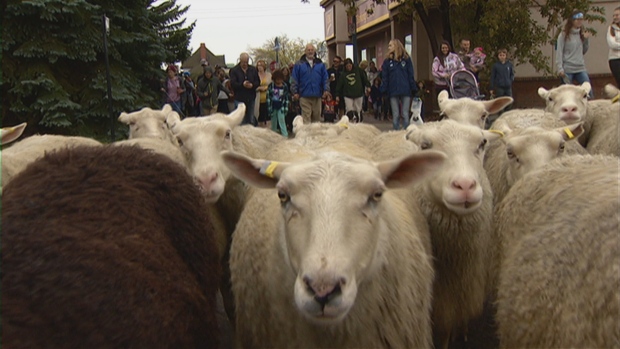
Hundreds of people lined the streets of the northern Alberta city Monday to bid farewell to their flock of turf-trimming sheep, which has its own week dedicated to its presence in the community, culminating in a parade.
Yes, the entire week leading up to their Labour Day departure is called Sheep Week.
The 53 woolly weed wackers have been a fixture in Fort Saskatchewan every grazing season for the past 25 years.
Woolly ambassadors
The sheep not only help trim the grass but have attained celebrity status in the community, attracting flocks of tourists and to the city every summer.
“You could be walking the trails in our river valley and come across a flock of sheep,” Diane Yanch, culture director with the City of Fort Saskatchewan, said in an interview Monday with CBC Radio’s Edmonton AM. “They keep our Fort Heritage grounds looking fantastic and they entertain visitors of the site.
“Hundreds of people visit the sheep on most days.”
The living lawnmowers are beloved by visitors and locals alike, Yanch said.
“The locals know exactly what time to come and where to find them and bring them apples,” she said.
“And the sheep actually get to know the locals as well and which ones feed them treats.”
Fort Saskatchewan is known for the sheep that graze its parks, attracting tourists in the summer. (CBC)
The flock spends the winter on a farm in Stony Plain, and their autumn pilgrimage back to the country is quite an affair.
During the farewell parade, the humble groundskeepers amble down main street from Legacy Park through downtown, ending up at Fort Heritage Precinct.
A team of eager border collies and a lone shepherd accompany the flock, keeping it together as onlookers snap photos and cheer them on.
“The shepherd and the sheep lead it off and everybody follows in along behind,” Yanch said.
“You can come up and feed the sheep, give them a cuddle, pet the dog and talk to the shepherd. It’s a really fun interactive thing for the people that come.”
The program, which started as an eco-friendly means of turf control, won’t be put on to pasture any time soon, said Yanch.
The sheep have become community mascots and it’s always sad to see them go, she said.
“I think the biggest thing they bring is that sense of small town community, the friendliness, the approachability that Fort Saskatchewan is known for,” Yanch said.