Subscribe:
[WARNING: CONTAINS MATURE CONTENT]
This is part one of a two-part episode. Part two will air on Friday, March 31.
For the majority of his life, Jesse Thistle lived the stereotype that so many people have of Indigenous men in Canada. He was born into a messed up family, with a history of abuse and addiction. He grew up with a chip on his shoulder, angry at the world. And he inevitably turned to drugs and alcohol himself when he was just a teen. It wasn’t long before he became heavily addicted to crack cocaine.
“I noticed that whenever I was in the jail system, or all these different shelters and places where homeless people haunt, all the homeless people look like me. They’re all Indigenous.”
Jesse was that guy you saw on the street, begging for enough change to get his next fix. He was that guy you paid tax money to feed in prison. He was also that guy that lived through the latest chapter in Canada’s dark history with its Indigenous people. As we prepare to celebrate 150 years as a nation, it’s important to understand the shaky foundation Canada was built on, and the land that was stolen. In the years since 1867, an impenetrable trauma has gripped generations of Indigenous families. Against all the odds, Jesse broke the cycle of intergenerational trauma that ripped his family apart. And now, he’s one of the most decorated PhD students in Canada.
Tomorrow: How Métis-Cree student Jesse Thistle overcame life on the street to becoming one of the top academics at @yorkuniversity. pic.twitter.com/AvgrzBD0Jz
— Campus (@CampusCBC) 24 March 2017
ABANDONED AT THREE YEARS OLD
When Jesse was born, his family was already severely broken. While his mom had a history of homelessness, his father was abusive, and a drug addict. Jesse was just three years old when his father took him and his two older brothers from their mother, and drove them to Ontario from Saskatchewan.
“And I remember being so alone, you know, with my brothers. We made a pact to take care of each other, no matter what because we were all that we had.”
They settled into an apartment in Sudbury. And it wasn’t long before his father needed a fix. He went out, left the boys in the apartment, and was later arrested for robbery. He failed to tell the police that his children were all alone in the apartment. The three young boys found themselves completely abandoned and fatherless.
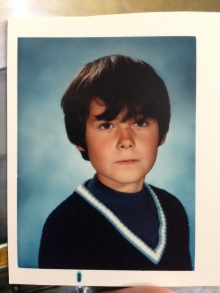
Jesse at eight years old
“We’d go from the apartment, when we were hungry, across the street and we would beg for change. When we got enough money together, we’d buy like a hotdog or something, and split it,” Jesse remembers.
IDEAS | Return of the Michif Boy: Confronting Métis trauma
After a few weeks of begging on the streets to survive, Jesse and his two brothers were taken into custody by Children’s Aid. They spent the next few months in and out of various foster homes until his grandparents found out, and took them in.
“My grandmother would wrap up Christmas presents for my dad and put them under the tree. She’d make way too much food and over-prepare, and like, she was waiting for her son to come home, and he never did. I remember just looking at them wondering where my dad was,” Jesse recalls.

DENYING INDIGENOUS HERITAGE
As he grew older, Jesse developed a deep resentment towards his parents. He became envious of other kids at school whose parents’ were there for them.
“I remember looking in the mirror and not seeing an Indigenous person. And I saw a white kid looking back at me. You know, that’s how deep my denial was.”
It led to constant fighting with his peers, including one that ended with a kid calling him a “dirty Indian”. “I shut my mouth and put my head down, and I was ashamed.

Jesse’s grandparents took him at three years old
It hurt me so much in that moment,” he remembers. Jesse soon became completely disconnected from his own identity. On the other hand, his brothers tried to embrace their Indigenous heritage.
“I just started to turn against my brothers whenever they’d try to express themselves because I didn’t understand what they were doing. When my brother Josh was trying to do a drum song or when he’d burn smudge, I’d make fun of him, like, ‘What is that? What’s this herb? What are you doing?'”

“CRAZY INDIAN”
By the time Jesse was 15, he was already drinking heavily and experimenting with drugs. It became an escape for him. He felt accepted, and his identity no longer mattered. He remembers one party in particular that resonated with him.
“I just remember feeling like a god, like I was superhuman or something. It’s like a hundred-thousand roman candles going off in your soul, like you light up the night.”
“I was drinking more than everybody that night, and I was doing more drugs than everybody that night, and my friend called me a crazy Indian because I was acting so wild,” he said.
Jesse embraced that label. And with his newfound popularity, fueled by his crazy Indian persona, Jesse was finally able to put aside all those questions about his Indigenous identity. He had found himself in drugs, or so he thought.
Eventually, his grandparents grew impatient with him and kicked Jesse out of the house. He temporarily stayed with a friend, and that’s when he was introduced to crack cocaine. From the moment he took his first toke, Jesse was hooked. “It’s like a hundred thousand roman candles going off in your soul, like you light up the night,” he said.

CRACK ADDICT
It wasn’t long before Jesse found himself homeless, and in the throws of addiction. And even though he spent months trying to fight it off, the psychological calling was too strong to deny. “Every time after that, any money that I got, I’m talking like any money, I would buy crack. Nothing mattered. All that mattered was that I wanted to feel like a god,” he remembers.
“It’s more important to you than everything. So the love of your family, crack’s more important than that. You could sell your own kids for that.”
Every single day, for the next ten years, his sole purpose was to satisfy his addiction. He stole from stores, cars, people, and constantly begged for money. Gripped with an undying addiction, and absolutely no money, Jesse was seemingly left with no options.
NEXT WEEK ON CAMPUS I Find out how Jesse overcame his crack addiction, and ultimately broke the cycle of an intergenerational trauma that ripped his family apart. Part-two of his story will air on Friday, March 31.