Britain has introduced restrictions on carry-on electronics on direct inbound flights from Turkey, Lebanon, Jordan, Egypt, Tunisia and Saudi Arabia for the safety of the public, a spokesperson for Prime Minister Theresa May said on Tuesday.
Earlier, the United States imposed similar restrictions on planes coming from 10 airports in the Middle East and North Africa in response to unspecified security threats.
“Direct flights to the U.K. from these destinations continue to operate to the U.K. subject to these new measures being in place,” May’s spokesman told reporters. “We think these steps are necessary and proportionate to allow passengers to travel safely.”
Important notice to our passengers who are traveling to USA #EGYPTAIR pic.twitter.com/qAVC04B6sf
Passengers would not be allowed to bring phones, laptops or tablets into the cabin — if any of these measure over 16 centimetres in length and 9.3 centimetres in width, with a depth of over 1.5 centimetres. These items would have to be in checked-in hold luggage, he said.
Canada’s Transportation Minister Marc Garneau said Canada is reviewing the information, but has not made a similar decision.
“Canada makes its own decisions,” said Garneau. “We’ll see.”
Senior officials in U.S. President Donald Trump’s administration announced the restrictions Tuesday morning.
The officials said the decision was prompted by intelligence about ongoing potential threats to airplanes bound for the United States. The officials would not discuss the timing of the intelligence report or if any particular group is thought to be planning an attack.
Airlines will have until 3 a.m. ET Saturday to implement them or face being barred from flying to the United States, the officials said.
The ban for U.S.-bound flights differs slightly from the U.K. ban. The U.K. ban applies to all electronic devices larger than the dimensions listed above — but it does not matter whether the device is a phone, gaming device, camera or other electronic device. The U.S. ban applies to all electronics larger than a cellphone.
Also, the U.K. ban affects direct flights from six countries, while the U.S. ban affects flights from international airports in the following 10 cities:
- Amman, Jordan
- Kuwait City, Kuwait
- Cairo
- Istanbul
- Jeddah and Riyadh, Saudi Arabia
- Casablanca, Morocco
- Doha, Qatar
- Dubai and Abu Dhabi, United Arab Emirates
About 50 flights a day to the U.S., all on foreign carriers, will be affected. The officials said no U.S.-based airlines have non-stop flights from those cities to the United States.
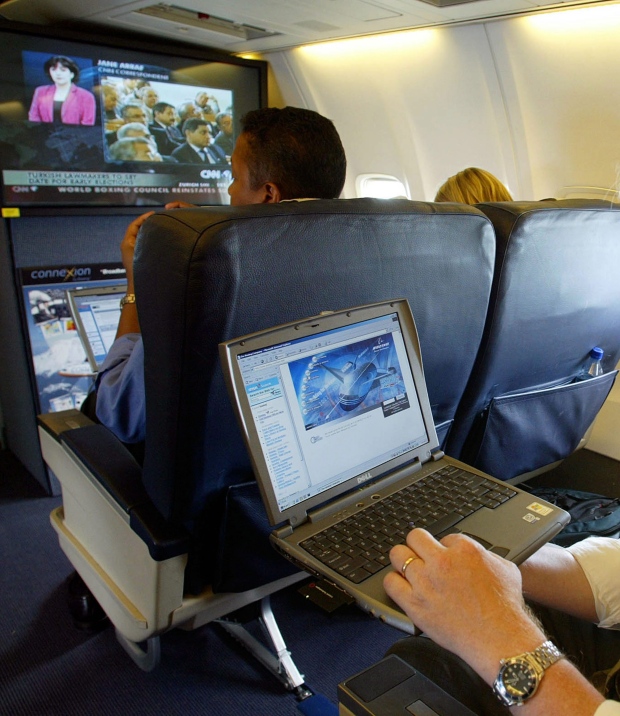
The new restrictions apply to many electronic devices in the carry-on bags of passengers travelling to the U.K. and the U.S. (Chris Ison/Associated Press)
Medical devices excluded
A spokesperson for the UAE-based Emirates airline, the largest airline in the Middle East, confirmed to CBC News that the directive has been issued, saying it excludes medical devices.
“It is applicable to all U.S.-bound passengers from Dubai International Airport, whether originating or transiting through. Emirates requests that all passengers travelling to the U.S. pack all electronic devices larger than a cellphone/smartphone in their checked-in baggage,” the spokesperson said.
The spokesperson said the directive will come into effect March 25 and stay in place until Oct. 14.
However, U.S. Homeland Security said the new rules will “remain in place until the threat changes.”
Turkish Airlines confirmed to Reuters that it is one of the airlines affected.
Confusion ensues
Across the Atlantic early Tuesday, problems and confusion ensued.
EgyptAir said it has received instructions from U.S. transport authorities imposing restrictions on electronic devices carried by incoming travellers and will bring them into effect on March 24, a spokesman said on Tuesday.
Earlier, the airline said it had not received any instructions about the ban, adding that a New York-bound EgyptAir flight departed Tuesday morning and that passengers were allowed to take their laptops and other electronics on board in their carry-on luggage.

The U.S. ban applies to 10 cities in eight countries. The U.K. ban affects six countries. (CBC)
A spokesman for Royal Jordanian said the airliner has not yet started to enforce the new U.S. regulation. Basel Kilani told The Associated Press the airline was still awaiting formal instructions from the relevant U.S. departments, which could possibly come later on Tuesday.
The airline said the electronics ban would affect its flights to New York, Chicago and Detroit.
The ban would begin just before Wednesday’s meeting of the U.S.-led coalition against ISIS in Washington. A number of top Arab officials were expected to attend the State Department gathering. It was unclear whether their travel plans were related to any increased worry about security threats.
Homeland Security Secretary John Kelly phoned lawmakers over the weekend to brief them on aviation security issues that have prompted the impending electronics ban, according to a congressional aide briefed on the discussion. The aide was not authorized to speak publicly about the issue and spoke on the condition of anonymity.
Most major airports in the United States have a computer tomography or CT scanner for checked baggage, which creates a detailed picture of a bag’s contents. They can warn an operator of potentially dangerous material, and may provide better security than the X-ray machines used to screen passengers and their carry-on bags. All checked baggage must be screened for explosives.