Environment Canada said rat poison from oil sands facilities could be killing animals that are traditionally trapped for their furs.
The study, released last week, found rat poison in the livers of some fishers and martens that live near oil sands facilities as far north as Fort Chipewyan.
Phil Thomas is a biologist for Environment Canada and the study’s lead author. He said the exposure of rat poison to these animals is unprecedented.
“There’s some effects for sure,” he said.
“It’s the first time in Canada that fishers are reported to being exposed to rodenticides and the first time worldwide that martens are being exposed.”

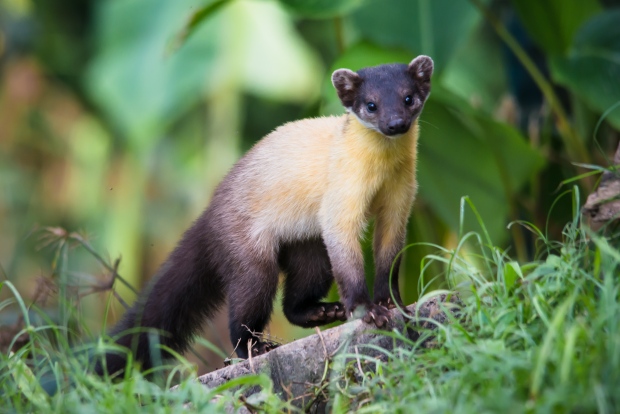
A researcher has found rat poison in commonly trapped animals, like martens, near oil sands facilities. (Wiki Creative Commons)
The amounts could be high enough to kill the animals, deteriorate their fur and leave them weak and lethargic. The research also traced the restricted rodent poison Bromadiolone to its use in nearby oil sands operations.
Oil sands companies commonly use rodent poison to kill mice and squirrels that can sometimes destroy equipment and buildings. Fishers and martens then eat these rodents.
The study screened the livers of these animals commonly trapped in Alberta and northern Canada, which were submitted by local trappers. It found that 25 per cent of fishers and 10 per cent of martens had detectable levels of the poison.
Declining animal populations
Fisher and marten populations have significantly declined due to overharvesting and habitat destruction, such as logging and resource development.

The study’s lead author and Environment Canada biologist, Phil Thomas, dissects one of the animals that local trappers submitted. (Submitted)
While the study detected the presence of these poisons, it hasn’t determined how many or at what rate these animals are dying.
“Those animals that were sampled were the animals healthy enough to pursue prey and then be captured on the trapline. So obviously those sick and lethargic animals we are not sampling,” Thomas said.
Ninety animals were collected across 27 traplines during the winter months.
Ryan Abel oversees environmental issues for the Fort McKay First Nation. He said he has been hearing from trappers and land users that they’ve been seeing fewer animals in the oil sands areas for years.
“The consensus in what I continually hear is that there’s less wildlife. There’s fewer animals to trap by far,” Abel said.
Some have also seen a decline in the health of the animals caught.

A dump truck works near the Syncrude oil sands extraction facility near the city of Fort McMurray, Alberta. (File Photo/Jason Franson/The Canadian Press)
“Some of the ones they were catching weren’t completely healthy and they were questioning as to why,” Rob Miskosky, vice-president of the Alberta Trappers Association said.
“And that’s when it was considered to have something to do with the oil and gas industry.”
Working with industry
Researchers said they informed oil sands companies in the region of their findings as soon as data started to come in.
As a result, 25 oil sands companies voluntarily stopped using the poison found in martens and fishers.
“Industry turned around and said, ‘Wow, this is incredible, and what can we do to help?”’ Thomas said.
It is up to the federal government to ban use of the harmful rat poison.
Follow David Thurton, CBC’s Fort McMurray correspondent, on Facebook, Twitter and via email.