An application by some creditors of two failed Lutheran Church investment funds to replace a court-appointed insolvency monitor has been dismissed by an Alberta Queen’s Bench judge.
“The anger and frustration expressed in these proceedings by a small minority of depositors, while perhaps understandable given their losses and the trust they placed in their church, is misplaced when it is directed against the monitor,” Justice Barbara Romaine wrote in her reasons for decision, filed Tuesday in Calgary.
“There is no reason arising from conflict of interest or breach of fiduciary duty to replace the monitor.”
Romaine also found that proposed plans of arrangement and compromise for the two insolvent funds “are fair and reasonable in the circumstances and should be sanctioned.”
The matter involves two Lutheran Church Canada Alberta-British Columbia District investment funds that became insolvent in January 2015.
Nearly 2,600 creditors of a church extension fund have proven claims of $95.7 million, while 12 trade creditors have claims of $957,000. A church investment corporation, also insolvent, has nearly 900 investors with outstanding claims of $22.4 million.

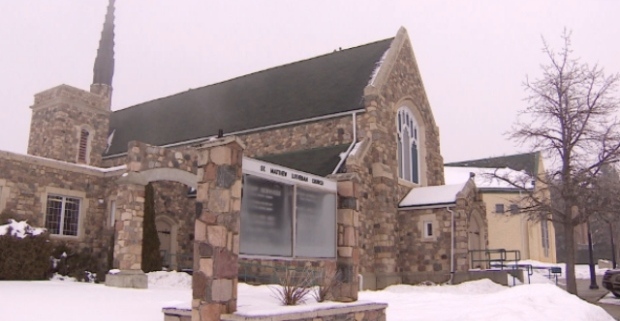
Investors met at St. Matthew Lutheran Church in Stony Plain in January 2015, one of many meetings about the troubled investment funds held in Alberta and British Columbia. (CBC News)
Larger investors have been encouraged to accept shares in a newly formed company in lieu of their investments in the funds, while investors with $5,000 or less in the funds will be paid out in full.
Several investors recently went to court, accusing a church financial committee and Deloitte Restructuring Inc., the court-appointed insolvency monitor, of engaging in a pattern of deceit, non-disclosure and bad faith to gain approval for a restructuring plan.
Romaine found the accusations unfounded, but said she understands the frustration experienced by investors.
“Many of these creditors and investors invested their funds at least in part because of their connection to the Lutheran Church,” Romaine wrote. “Many of them are elderly. Some of them are angry that what they thought were safe vehicles for investment, given the involvement of their church, have proven not to be immune to insolvency.
“Some of them invested their life savings at a time of life when such funds are their only security during retirement. Inevitably, there is bitterness, a lack of trust and a variety of different opinions about the outcome of this insolvency restructuring.”
For decades, members of the Lutheran Church Canada Alberta-British Columbia District had been encouraged to invest in the Church Extension Fund (CEF) and District Investments Ltd. (DIL).
The extension fund made loans to congregations to build or renovate churches and to build schools. The district invested in a real-estate development called Prince of Peace, east of Calgary, which includes a church, school, retirement home and a dementia care facility.
Documents filed with the Court of Queen’s Bench show the extension fund lent $91 million to the Prince of Peace development, which doesn’t have enough assets to satisfy its outstanding liabilities in a liquidations scenario.
Investors learned of the financial crisis in early January 2015. They were told their accounts were frozen and that the CEF was not able to fully repay the $95 million owed to investors.
Both funds are now protected from investors withdrawing their money under the federal Companies’ Creditors Arrangement Act.