Usually, when a studio declines to screen a movie for
reviewers, the reflexive assumption is that the picture is a dog. This largely
turns out to be true, but not always.
As for “Mechanic: Resurrection,” the disinclination of
Lionsgate to present it to viewers was a little puzzling in a different
respect. Sure, the 2011 film “The Mechanic,” a Jason Statham/Ben Foster starring remake
of the 1972 Charles Bronson/Jan-Michael Vincent master hitman thriller, only
got a 53% rating on Rotten Tomatoes, but I thought it was pretty okay,
and that’s all that counts. Given that the sequel pairs off Statham’s
implacable best-of-the-best anonymous assassin with charming genre movie mascot
Jessica Alba, and has Tommy Lee Jones third-billed or so, with Hong Kong
eminence Michelle Yeoh rounding out the supporting cast, well, how bad could it
be?
Not good, is the answer, learned at an early Thursday
evening screening. Despite some of the most picturesque locations money can
buy, and some not unimpressive looking movable props (yachts with helipads and
such) and so on, “Mechanic: Resurrection” suffers from a storyline and script
that strains credulity and insults intelligence even by the low bar set by the
majority of contemporary action movies.
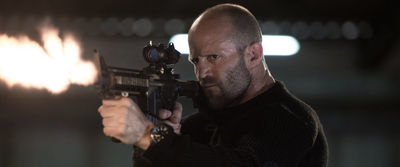
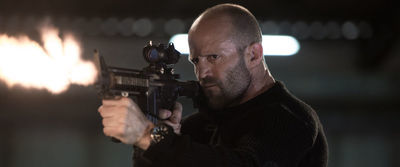
The picture opens with Statham’s Arthur Bishop
comfortably ensconced, à la Travis McGee, on a houseboat in Rio. The steadiness
of the houseboat is such that Bishop, now known as Santos, can rock out with a
vinyl turntable. But not for long. Lunching at his favorite cliffside outdoor
restaurant, he’s approached by a femme fatale who Knows Who He Really Is, and
who tells him her “Principal” wants him to kill three targets. Santos/Bishop’s
violent refusal to play ball is met with an attack by a small military
battalion’s worth of men. Not only does this action sequence fail to build a
head of steam, but the lack of logic is a little startling. I need you to kill
these men for me, because only you can do it, and if you refuse, I will kill
you myself. Spot the flaw in this thinking.
Bishop of course escapes, and regroups at a seaside village
in Thailand, watched over by old pal Mei, played by Yeoh. Soon enough a honey
trap with Alba as the bait makes itself known. But Alba’s not a villainess. Her
character, Gina, is being extorted in a sense by supervillain Crain, a bland
Sam Hazeldine. If Gina doesn’t play ball, Crain’s going to torch the Cambodian
orphanage at which Gina is a beloved fixture. Yes, you read that right.
Tending to Gina’s wounds in one scene, Mei says to her
patient, “My father was a doctor of Eastern medicine. He was a healer.” Well,
yes, I would hope so. Later in the movie, Gina says to Bishop, “Those kids are
everything to me. If they get trafficked or killed I just couldn’t take it.”
Bishop responds, “I was an orphan too.” Wow. This isn’t just a character note:
it’s a plot point. Crain was a childhood friend of Bishop back at the
orphanage. This wasn’t particularly convincing in the last James Bond film and
it works even less here, although if you choose to buy it you may wonder what
it is with British orphanages that make them turn out such efficient killers.
There’s also the matter of the phrasing of the dialogue itself. “If they get
trafficked or killed” doesn’t exactly roll off the tongue. Alba is an
appealing screen presence (and director Daniel Gansel takes some advantage of
this with a few beach-set shots of the sort that they used to call
“cheesecake”). She is not the most virtuoso actor, but not even Meryl Streep
could make such dialogue sing.
It’s kind of perplexing: clearly not too much expense was
spared in the beautiful locations and blow-stuff-up effects tech. Writers in
every industry come cheaper and cheaper these days; surely the producers could
have invested some of their financing in a script with more
inventiveness and engagement power than the one they had on set. Of
course, this still would have left the uninspired direction of Gansel. Might
he have delivered something more enjoyable with better material? We’ll never
know. As for Tommy Lee Jones, his role as a roguish arms dealer is not much more than
a cameo, for which he chooses to repeat many of the performing riffs he
worked to good effect way way back in 1992’s “Under Siege,” the elemental but
enjoyable action film that kind of made Jones into a big star. His work here is
one of two pieces of wit the movie has to offer; the other is courtesy of production designers Sebastian T. Krawinkel and Antonello Rubino, who
place a replica of the sculpture in the Mosfilm logo title shot in the
repository of Soviet kitsch that serves as Jones’ character’s panic room.