
(Kevin Frayer/Getty)
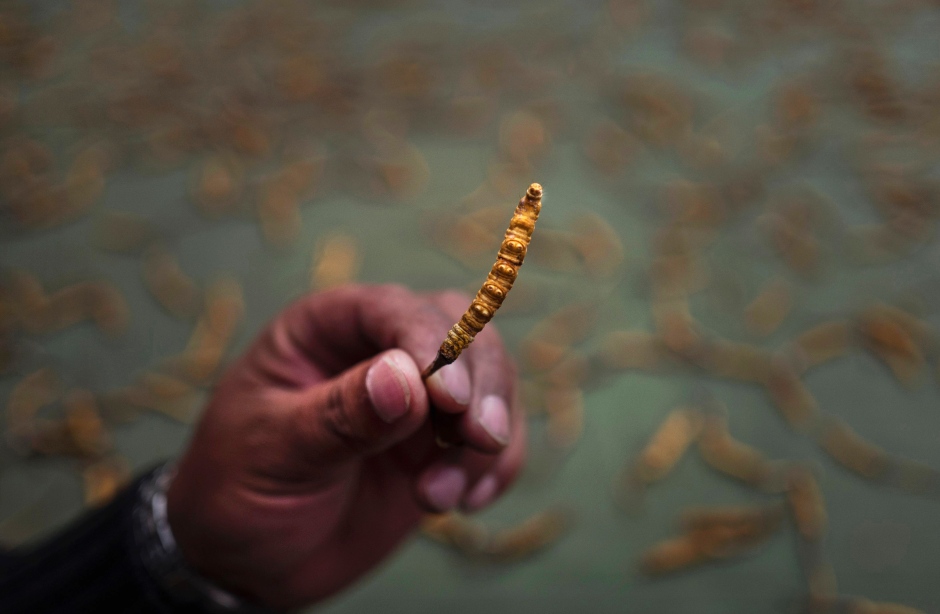
Half a kilogram of dried cordyceps fungi can fetch $50,000 US.
Demand from China alone has created a booming economy that ramps up in the spring when Tibetan nomads leave their farms and yak herds to take part in a weeks-long gold rush that flows from the fungal bloom.

(Kevin Frayer/Getty)

(Kevin Frayer/Getty)
The best product comes from high on the Tibetan Plateau.
The mountain grasslands of Tibet’s high country are home to the parasitic ophiocordyceps sinensis, or caterpillar fungus, which is a member of the cordyceps genus known for invading the bodies of insects before releasing their spores.

(Kevin Frayer/Getty)
The product is a mummified caterpillar.
It’s not the fungus itself that is prized, but the remains of its host: a species of caterpillar that the cordyceps invades and kills at its larvae stage.
Once harvested, the dried caterpillar carcasses are sold intact and made into herbal treatments that purportedly heal ailments ranging from asthma to impotence to cancer.

(Kevin Frayer/Getty)
The annual harvest is a state-sponsored industry.
Tibetan nomads who earn little from farming and herding can bring in enough income during the harvest to last through the year. A proficient picker can collect hundreds of the infected carcasses a day and the finest specimens fetch a high price at market.

(Kevin Frayer/Getty)
It’s an ancient practice.
Records of cordyceps harvesting, known as Yartsa gunbu, or simply “bu,” in Tibet, go back to the 15th century, and the primary consumer has always been China.

(Kevin Frayer/Getty)
The harvest is a game-changer in Tibet.
Nowadays, the industry has transformed rural Tibetan areas where roughly 40 per cent of the local economy comes from the short harvest.

(Kevin Frayer/Getty)
Environmentalists say the harvest is degrading the grasslands.
Now a state-sponsored industry, over-harvesting of cordyceps may be to blame for degradation of the mountain grasslands that the nomad’s yak and cattle herds use for grazing.

(Kevin Frayer/Getty)
Below-average rainfall this year is also expected to yield the smallest harvest on record, with many pickers reporting hauls way lower than expected.

(Kevin Frayer/Getty)