One night of drinking should not have resulted in the death of an 18-year-old from Keewaywin First Nation, according to her family’s lawyer who says her death should be ruled a homicide.
Robyn Harper was in Thunder Bay, Ont., to attend high school in 2007, when she passed out and died on the floor of her boarding home after a night of binge drinking.
Her death, along with six other First Nations students from remote communities, is the subject of a a coroner’s inquest that began in October 2015.
“This was no accident, this was homicide,” Jonathan Rudin said on Tuesday. “Alcohol poisoning doesn’t have to be fatal, if you’re taken to the hospital in enough time.”
Rudin is co-counsel for the families of six of the students and is among the many lawyers making submissions this week to the jurors at the inquest about how they should rule on each of the deaths.

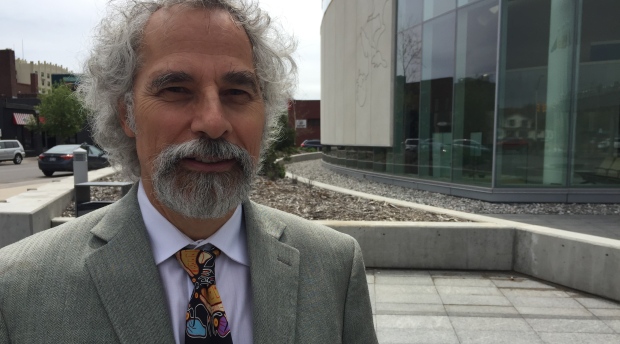
‘Homicide is the correct verdict because the people entrusted with Robyn Harper’s care failed in that duty,” says lawyer Jonathan Rudin. (Jody Porter/CBC)
A verdict of homicide at an inquest is not the same as in a criminal proceeding. Inquest jurors issue the ruling when they determine someone is responsible for a death, but they are not allowed to say who bears that responsibility.
Rudin, however, did not shy away from it, naming the boarding home parent and the support workers who drove the severely intoxicated student home on the night of her death, along with the agency that employed them and runs the First Nations high school in Thunder Bay.
“We hold Northern Nishnawbe Education Council (NNEC) responsible for what happened to Robyn,” he said. “There’s no question NNEC is trying its best, and there’s not a lot of money, but they did have services they held out to be capable and competent and they were neither.”
The education counsel is scheduled to make its submissions on Thursday.
Jurors have five choices when it comes to issuing their verdict on the method by which each student died — suicide, homicide, natural causes, accidental or undetermined.
‘No evidence’ of suicide
Rudin told the jury that all the deaths, aside from Harper’s, should be ruled as undetermined.
“There is no evidence at all that suggests suicide is a possible verdict,” he said.
Paul Panacheese was 21 years old when he died in 2006 on the floor of his mother’s home. Rudin told jurors a pathologist deemed there is “no anatomical cause” for Paul’s death and thus jurors “just don’t have enough information to rule on what happened.”
The family of Curran Strang, 18, whose body was found in the McIntyre River in 2005, is not represented at the inquest, but Rudin said his death is similar to the other four boys who drowned. They are:
- Jethro Anderson, 15, whose body was found in the Kaministiquia River in 2000
- Reggie Bushie, 15, whose body was found in the McIntyre River in 2007
- Kyle Morriseau, 17, whose body was found in the McIntyre River in 2009
- Jordan Wabasse, 15, whose body was found in the Kaministiquia River in 2011
There has been no evidence at the inquest about how any of the boys got into the water.
“The idea that these young men were pushed or thrown in the river is not speculative,” Rudin said. “This has happened to a student in Thunder Bay in circumstances strikingly familiar to these young men.”
Rudin referred to one of the last pieces of evidence at the inquest — an agreed statement of facts outlining the testimony of a former First Nations student who recounted his experience of being thrown into a river by a group of young men in 2008.