Categories
TV & Movies

Before “Deadpool”: The Golden Age of the R-Rated Blockbuster

Thumb_total-recall

In a move that must offer a great deal of comfort to people who toil on lost causes everywhere, the attempt to make a movie star out of Ryan Reynolds finally struck gold with “Deadpool.” Its $135-million opening weekend washed away pyrite memories of “Green Lantern” and “Self/less.” It also rejuvenated Hollywood’s interest in R-rated blockbusters. Unfortunately, it seems Hollywood is getting ready to learn the wrong lessons from success again. It isn’t so much that pasting curse words onto the flagging comic book movie juggernaut is the next step to insure they continue to be a license to print money. It’s that audiences don’t want to see the same movie over and over again. And the bloodless, sexless, anemic PG-­13 rating has slowly drained mainstream genre movies of their drive and nerve. It used to be par for the course that among the PG­-13 sops there would a healthy crop of event movies that earned their R rating. And the freedom it gave directors to run to the limits and past them is sorely needed now. Full frontal shots aren’t going make comic book movies grow up or be more palatable to audiences in telling the exact same origin story. Things will be better when R-rated blockbusters remember their roots and stop being afraid of women, sex, and consequences.

Perhaps the best of the R-rated blockbuster directors was Paul Verhoeven. Coming to Los Angeles by way of Amsterdam, he brought an outsider’s perspective and energy to American popcorn flicks. His first English-language film, “Flesh + Blood” was part of the medieval fantasy films boom made in the wake of “Excalibur,” but there wasn’t a single dragon in sight. Brutal and bloody, “Flesh+Blood” is “Game of Thrones” done better, tighter and sharper. It is anchored by two excellent performances from Rutger Hauer and Jennifer Jason Leigh. In the film co-written by Verhoeven, Hauer is the leader of a group of brigands and Leigh is the fair maiden whose caravan he captures. Instead of a hearts-and-flowers romance, what follows is sexual assault, kidnapping and fleeing the plague, with Leigh discovering that a ruthless pragmatism can be a weapon stronger than a sword.

Next for Verhoeven was 1987’s magnificent “RoboCop.” A satire of ’80s excess set in the near future, it created an eerily-prescient view of the early 21st century from an over­-armed police force to drowning our despair in consumerism. It was a supremely uncomfortable moment finally catching up with the film two years ago and it having to be pointed out to me that the cops in body armor and toting assault rifles was meant to be a sick joke. Peter Weller is great as a machine horrified to realize it was once a man. And Nancy Allen as a fellow officer is the only bit of warmth and tenderness in a world that’s become branded slogans and gunshot wounds that had to be toned down to get the film an R rating. It spawned disappointing sequels and a PG-­13 remake but it’s a film that’s aged incredibly well, partly because it’s such a late ’80s time capsule that saw so clearly where we were going as a society.

“Total Recall” has the happiest ending of Verhoeven’s hits, so it’s quite fitting that it might only be taking place in the hero’s head. An incredibly loose adaptation of Philip K. Dick’s “We Can Remember It For You Wholesale,” the film puts Arnold Schwarzenegger through one of his best roles as a working stiff who discovers accidentally he’s actually a crucial link in freeing the Martian colony from cruel corporate rule … maybe. It was a sci­-fi hit that looked and played like a Heavy Metal comic come to life. And in the current age of insisting sci­-fi be blue and no fun at all, the oranges, reds, and hot pinks of Sharon Stone’s lipstick look better than ever.

Verhoeven and Stone would team up again for “Basic Instinct,” a runaway hit that managed to outrage just about everyone for different reasons. Like Hitchcock filtered through a bottle of Evian and a vial of cocaine, complete with Jerry Goldsmith doing a first rate Bernard Herrmann impersonation on the soundtrack, the film was in ice pick to prudish sensibilities of all stripes. Stone had a star turn as Catherine Tramell in an “erotic thriller” that sneered at both words in that term and offered the ingenious twist of what happens when the femme fatale wrote the neo-noir’s script.
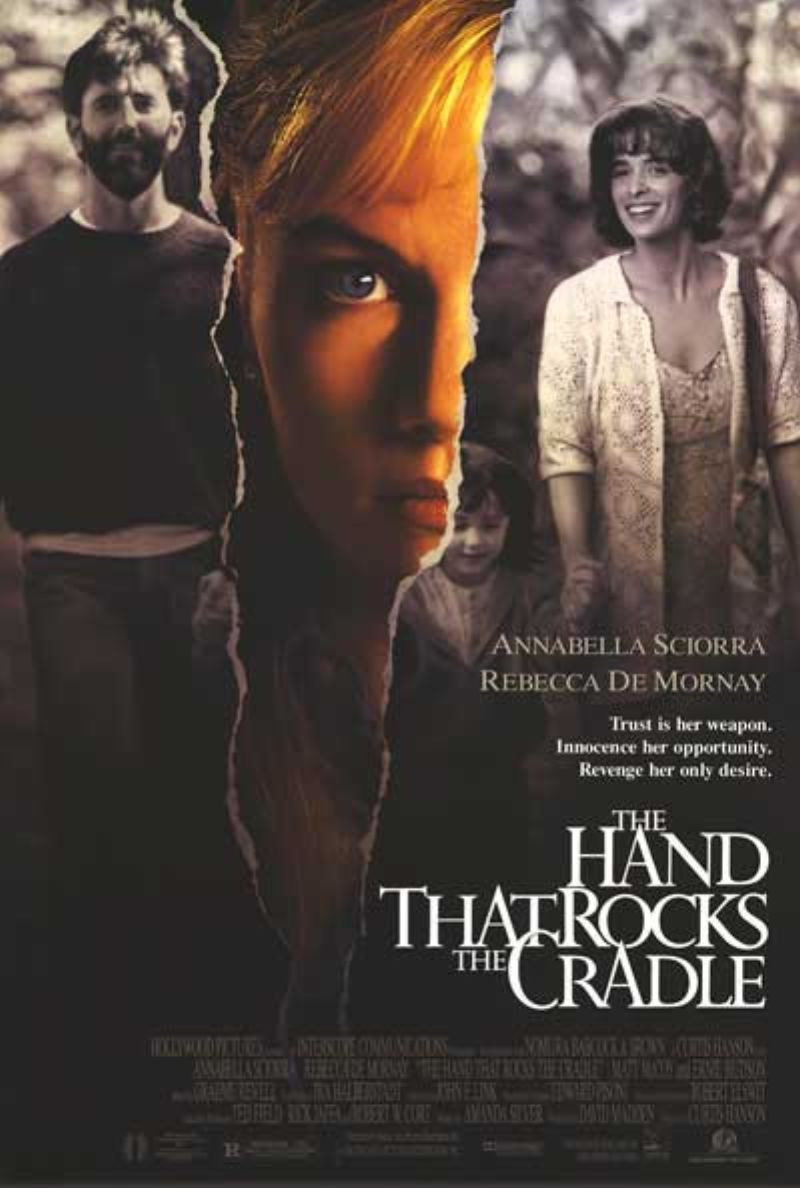
Women behaving badly or under duress was a reliable variety for the R-rated hit. From maternal protectiveness turned psychotic in “The Hand that Rocks the Cradle” to Geena Davis kicking ass in “The Long Kiss Goodnight,” audiences lined up to see actresses over 30 turn into monsters or try to outwit them. It was taken for granted that male audience viewers would identify with a female protagonist, nor was there concern that a woman’s story would fail to be “universal.” The variety of roles was such that Glenn Close could go from being the villain in “Fatal Attraction” to being betrayed by him in “Jagged Edge.”

For American born contributions to R-rated hits, there was John McTiernan. In the same year as “RoboCop,” he offered “Predator,” a first-rate thriller that mixed elements of action, horror, and sci-fi with a healthy portion of political queasiness at the United State’s proxy involvement in various Central American conflicts. In the film, a team of Black Ops specialists find themselves getting picked off one-by-one by a far deadlier opponent than the rebels they’re supposed to be hunting. The title creature, when revealed, is one of FX maestro Stan Winston’s finest designs, truly looking like nothing else had before.

McTiernan followed up with “Die Hard,” an instant classic. Numerous ripoffs since have done nothing to blunt the original’s wit, charm and excitement. Bruce Willis was made a movie star and the sorely missed Alan Rickman nearly stole the entire thing in his first film role. The film’s staying power resides not just in its first-rate action sequences but taking the time for scenes where Rickman orders the release of political prisoners like he’s ordering salmon from the Harry & David catalog.

The sequel “Die Hard 2: Die Harder” would be handled by another European import, in this case Renny Harlin. It’s louder and bigger, but the charm of the original had faded. Still, it isn’t without it’s moments, the ending being downright cheeky at the excesses of American blockbusters as the hero is surrounded by clouds of money fluttering around him on a airport runway.

A better sequel was “Terminator 2: Judgment Day,” James Cameron’s own follow up to his lean, tough original from 1984. In a body as sculpted as her Matsuda sunglasses, Linda Hamilton raged against everything from lecherous security guards to killer robots that could change form at will. It is a gorgeous film, infused with the heat and apocalyptic dread that’s always gnawing at the edges of Los Angeles. But it also carries a warning of what was to come with Blockbusters becoming PG­-13 only. It was already blunting its own edges with Arnold Schwarzenegger playing a cuddly protector this time around, and an unwillingness to suggest that the coming Armageddon was inevitable.

But looking at all those films as a whole, it’s hard not to miss them. At the very least there was not the visual sameness that plagues the comic book movie boom now. The crisp greens of “Predator’s” jungle are not the red dust-covered outposts of “Total Recall’s” Mars. One of the rare exceptions to the Marvel house style has been James Gunn’s “Guardians of the Galaxy,” which looks heavily influenced by sci­-fi artist Chris Foss. The film is a riot of yellow with streaks of green and purple. Interestingly, before “Guardians of the Galaxy,” Gunn directed the R-rated “Super,” an incredibly dark and scabrous send-­up of the superhero genre that goes places a Marvel or DC property wouldn’t dare. It also features an absolutely unhinged performance from Ellen Page as the nominal hero’s sidekick who takes to the violence of the job a bit too well.

At their best, R-rated blockbusters were about the thrill of breaking taboos, of seeing things you weren’t allowed to see, things you never discussed in polite company. “Deadpool” is shocking for sure; it remains to be seen if it will be memorable. And it certainly won’t be if the only lesson Hollywood takes is to tell the same orange and teal hero’s journey about a young white male. Only this time—he says “fuck” a lot.

Source:: http://www.rogerebert.com/balder-and-dash/before-deadpool-the-golden-age-of-the-r-rated-blockbuster


Categories
TV & Movies

Before “Deadpool”: The Golden Age of the R-Rated Blockbuster

Thumb_total-recall

In a move that must offer a great deal of comfort to people who toil on lost causes everywhere, the attempt to make a movie star out of Ryan Reynolds finally struck gold with “Deadpool.” Its $135-million opening weekend washed away pyrite memories of “Green Lantern” and “Self/less.” It also rejuvenated Hollywood’s interest in R-rated blockbusters. Unfortunately, it seems Hollywood is getting ready to learn the wrong lessons from success again. It isn’t so much that pasting curse words onto the flagging comic book movie juggernaut is the next step to insure they continue to be a license to print money. It’s that audiences don’t want to see the same movie over and over again. And the bloodless, sexless, anemic PG-­13 rating has slowly drained mainstream genre movies of their drive and nerve. It used to be par for the course that among the PG­-13 sops there would a healthy crop of event movies that earned their R rating. And the freedom it gave directors to run to the limits and past them is sorely needed now. Full frontal shots aren’t going make comic book movies grow up or be more palatable to audiences in telling the exact same origin story. Things will be better when R-rated blockbusters remember their roots and stop being afraid of women, sex, and consequences.

Perhaps the best of the R-rated blockbuster directors was Paul Verhoeven. Coming to Los Angeles by way of Amsterdam, he brought an outsider’s perspective and energy to American popcorn flicks. His first English-language film, “Flesh + Blood” was part of the medieval fantasy films boom made in the wake of “Excalibur,” but there wasn’t a single dragon in sight. Brutal and bloody, “Flesh+Blood” is “Game of Thrones” done better, tighter and sharper. It is anchored by two excellent performances from Rutger Hauer and Jennifer Jason Leigh. In the film co-written by Verhoeven, Hauer is the leader of a group of brigands and Leigh is the fair maiden whose caravan he captures. Instead of a hearts-and-flowers romance, what follows is sexual assault, kidnapping and fleeing the plague, with Leigh discovering that a ruthless pragmatism can be a weapon stronger than a sword.

Next for Verhoeven was 1987’s magnificent “RoboCop.” A satire of ’80s excess set in the near future, it created an eerily-prescient view of the early 21st century from an over­-armed police force to drowning our despair in consumerism. It was a supremely uncomfortable moment finally catching up with the film two years ago and it having to be pointed out to me that the cops in body armor and toting assault rifles was meant to be a sick joke. Peter Weller is great as a machine horrified to realize it was once a man. And Nancy Allen as a fellow officer is the only bit of warmth and tenderness in a world that’s become branded slogans and gunshot wounds that had to be toned down to get the film an R rating. It spawned disappointing sequels and a PG-­13 remake but it’s a film that’s aged incredibly well, partly because it’s such a late ’80s time capsule that saw so clearly where we were going as a society.

“Total Recall” has the happiest ending of Verhoeven’s hits, so it’s quite fitting that it might only be taking place in the hero’s head. An incredibly loose adaptation of Philip K. Dick’s “We Can Remember It For You Wholesale,” the film puts Arnold Schwarzenegger through one of his best roles as a working stiff who discovers accidentally he’s actually a crucial link in freeing the Martian colony from cruel corporate rule … maybe. It was a sci­-fi hit that looked and played like a Heavy Metal comic come to life. And in the current age of insisting sci­-fi be blue and no fun at all, the oranges, reds, and hot pinks of Sharon Stone’s lipstick look better than ever.

Verhoeven and Stone would team up again for “Basic Instinct,” a runaway hit that managed to outrage just about everyone for different reasons. Like Hitchcock filtered through a bottle of Evian and a vial of cocaine, complete with Jerry Goldsmith doing a first rate Bernard Herrmann impersonation on the soundtrack, the film was in ice pick to prudish sensibilities of all stripes. Stone had a star turn as Catherine Tramell in an “erotic thriller” that sneered at both words in that term and offered the ingenious twist of what happens when the femme fatale wrote the neo-noir’s script.

Women behaving badly or under duress was a reliable variety for the R-rated hit. From maternal protectiveness turned psychotic in “The Hand that Rocks the Cradle” to Geena Davis kicking ass in “The Long Kiss Goodnight,” audiences lined up to see actresses over 30 turn into monsters or try to outwit them. It was taken for granted that male audience viewers would identify with a female protagonist, nor was there concern that a woman’s story would fail to be “universal.” The variety of roles was such that Glenn Close could go from being the villain in “Fatal Attraction” to being betrayed by him in “Jagged Edge.”

For American born contributions to R-rated hits, there was John McTiernan. In the same year as “RoboCop,” he offered “Predator,” a first-rate thriller that mixed elements of action, horror, and sci-fi with a healthy portion of political queasiness at the United State’s proxy involvement in various Central American conflicts. In the film, a team of Black Ops specialists find themselves getting picked off one-by-one by a far deadlier opponent than the rebels they’re supposed to be hunting. The title creature, when revealed, is one of FX maestro Stan Winston’s finest designs, truly looking like nothing else had before.

McTiernan followed up with “Die Hard,” an instant classic. Numerous ripoffs since have done nothing to blunt the original’s wit, charm and excitement. Bruce Willis was made a movie star and the sorely missed Alan Rickman nearly stole the entire thing in his first film role. The film’s staying power resides not just in its first-rate action sequences but taking the time for scenes where Rickman orders the release of political prisoners like he’s ordering salmon from the Harry & David catalog.

The sequel “Die Hard 2: Die Harder” would be handled by another European import, in this case Renny Harlin. It’s louder and bigger, but the charm of the original had faded. Still, it isn’t without it’s moments, the ending being downright cheeky at the excesses of American blockbusters as the hero is surrounded by clouds of money fluttering around him on a airport runway.

A better sequel was “Terminator 2: Judgment Day,” James Cameron’s own follow up to his lean, tough original from 1984. In a body as sculpted as her Matsuda sunglasses, Linda Hamilton raged against everything from lecherous security guards to killer robots that could change form at will. It is a gorgeous film, infused with the heat and apocalyptic dread that’s always gnawing at the edges of Los Angeles. But it also carries a warning of what was to come with Blockbusters becoming PG­-13 only. It was already blunting its own edges with Arnold Schwarzenegger playing a cuddly protector this time around, and an unwillingness to suggest that the coming Armageddon was inevitable.

But looking at all those films as a whole, it’s hard not to miss them. At the very least there was not the visual sameness that plagues the comic book movie boom now. The crisp greens of “Predator’s” jungle are not the red dust-covered outposts of “Total Recall’s” Mars. One of the rare exceptions to the Marvel house style has been James Gunn’s “Guardians of the Galaxy,” which looks heavily influenced by sci­-fi artist Chris Foss. The film is a riot of yellow with streaks of green and purple. Interestingly, before “Guardians of the Galaxy,” Gunn directed the R-rated “Super,” an incredibly dark and scabrous send-­up of the superhero genre that goes places a Marvel or DC property wouldn’t dare. It also features an absolutely unhinged performance from Ellen Page as the nominal hero’s sidekick who takes to the violence of the job a bit too well.

At their best, R-rated blockbusters were about the thrill of breaking taboos, of seeing things you weren’t allowed to see, things you never discussed in polite company. “Deadpool” is shocking for sure; it remains to be seen if it will be memorable. And it certainly won’t be if the only lesson Hollywood takes is to tell the same orange and teal hero’s journey about a young white male. Only this time—he says “fuck” a lot.

Source:: http://www.rogerebert.com/balder-and-dash/before-deadpool-the-golden-age-of-the-r-rated-blockbuster


Categories
TV & Movies

Before “Deadpool”: The Golden Age of the R-Rated Blockbuster

Thumb_total-recall

In a move that must offer a great deal of comfort to people who toil on lost causes everywhere, the attempt to make a movie star out of Ryan Reynolds finally struck gold with “Deadpool.” Its $135-million opening weekend washed away pyrite memories of “Green Lantern” and “Self/less.” It also rejuvenated Hollywood’s interest in R-rated blockbusters. Unfortunately, it seems Hollywood is getting ready to learn the wrong lessons from success again. It isn’t so much that pasting curse words onto the flagging comic book movie juggernaut is the next step to insure they continue to be a license to print money. It’s that audiences don’t want to see the same movie over and over again. And the bloodless, sexless, anemic PG-­13 rating has slowly drained mainstream genre movies of their drive and nerve. It used to be par for the course that among the PG­-13 sops there would a healthy crop of event movies that earned their R rating. And the freedom it gave directors to run to the limits and past them is sorely needed now. Full frontal shots aren’t going make comic book movies grow up or be more palatable to audiences in telling the exact same origin story. Things will be better when R-rated blockbusters remember their roots and stop being afraid of women, sex, and consequences.

Perhaps the best of the R-rated blockbuster directors was Paul Verhoeven. Coming to Los Angeles by way of Amsterdam, he brought an outsider’s perspective and energy to American popcorn flicks. His first English-language film, “Flesh + Blood” was part of the medieval fantasy films boom made in the wake of “Excalibur,” but there wasn’t a single dragon in sight. Brutal and bloody, “Flesh+Blood” is “Game of Thrones” done better, tighter and sharper. It is anchored by two excellent performances from Rutger Hauer and Jennifer Jason Leigh. In the film co-written by Verhoeven, Hauer is the leader of a group of brigands and Leigh is the fair maiden whose caravan he captures. Instead of a hearts-and-flowers romance, what follows is sexual assault, kidnapping and fleeing the plague, with Leigh discovering that a ruthless pragmatism can be a weapon stronger than a sword.

Next for Verhoeven was 1987’s magnificent “RoboCop.” A satire of ’80s excess set in the near future, it created an eerily-prescient view of the early 21st century from an over­-armed police force to drowning our despair in consumerism. It was a supremely uncomfortable moment finally catching up with the film two years ago and it having to be pointed out to me that the cops in body armor and toting assault rifles was meant to be a sick joke. Peter Weller is great as a machine horrified to realize it was once a man. And Nancy Allen as a fellow officer is the only bit of warmth and tenderness in a world that’s become branded slogans and gunshot wounds that had to be toned down to get the film an R rating. It spawned disappointing sequels and a PG-­13 remake but it’s a film that’s aged incredibly well, partly because it’s such a late ’80s time capsule that saw so clearly where we were going as a society.

“Total Recall” has the happiest ending of Verhoeven’s hits, so it’s quite fitting that it might only be taking place in the hero’s head. An incredibly loose adaptation of Philip K. Dick’s “We Can Remember It For You Wholesale,” the film puts Arnold Schwarzenegger through one of his best roles as a working stiff who discovers accidentally he’s actually a crucial link in freeing the Martian colony from cruel corporate rule … maybe. It was a sci­-fi hit that looked and played like a Heavy Metal comic come to life. And in the current age of insisting sci­-fi be blue and no fun at all, the oranges, reds, and hot pinks of Sharon Stone’s lipstick look better than ever.

Verhoeven and Stone would team up again for “Basic Instinct,” a runaway hit that managed to outrage just about everyone for different reasons. Like Hitchcock filtered through a bottle of Evian and a vial of cocaine, complete with Jerry Goldsmith doing a first rate Bernard Herrmann impersonation on the soundtrack, the film was in ice pick to prudish sensibilities of all stripes. Stone had a star turn as Catherine Tramell in an “erotic thriller” that sneered at both words in that term and offered the ingenious twist of what happens when the femme fatale wrote the neo-noir’s script.

Women behaving badly or under duress was a reliable variety for the R-rated hit. From maternal protectiveness turned psychotic in “The Hand that Rocks the Cradle” to Geena Davis kicking ass in “The Long Kiss Goodnight,” audiences lined up to see actresses over 30 turn into monsters or try to outwit them. It was taken for granted that male audience viewers would identify with a female protagonist, nor was there concern that a woman’s story would fail to be “universal.” The variety of roles was such that Glenn Close could go from being the villain in “Fatal Attraction” to being betrayed by him in “Jagged Edge.”

For American born contributions to R-rated hits, there was John McTiernan. In the same year as “RoboCop,” he offered “Predator,” a first-rate thriller that mixed elements of action, horror, and sci-fi with a healthy portion of political queasiness at the United State’s proxy involvement in various Central American conflicts. In the film, a team of Black Ops specialists find themselves getting picked off one-by-one by a far deadlier opponent than the rebels they’re supposed to be hunting. The title creature, when revealed, is one of FX maestro Stan Winston’s finest designs, truly looking like nothing else had before.

McTiernan followed up with “Die Hard,” an instant classic. Numerous ripoffs since have done nothing to blunt the original’s wit, charm and excitement. Bruce Willis was made a movie star and the sorely missed Alan Rickman nearly stole the entire thing in his first film role. The film’s staying power resides not just in its first-rate action sequences but taking the time for scenes where Rickman orders the release of political prisoners like he’s ordering salmon from the Harry & David catalog.

The sequel “Die Hard 2: Die Harder” would be handled by another European import, in this case Renny Harlin. It’s louder and bigger, but the charm of the original had faded. Still, it isn’t without it’s moments, the ending being downright cheeky at the excesses of American blockbusters as the hero is surrounded by clouds of money fluttering around him on a airport runway.

A better sequel was “Terminator 2: Judgment Day,” James Cameron’s own follow up to his lean, tough original from 1984. In a body as sculpted as her Matsuda sunglasses, Linda Hamilton raged against everything from lecherous security guards to killer robots that could change form at will. It is a gorgeous film, infused with the heat and apocalyptic dread that’s always gnawing at the edges of Los Angeles. But it also carries a warning of what was to come with Blockbusters becoming PG­-13 only. It was already blunting its own edges with Arnold Schwarzenegger playing a cuddly protector this time around, and an unwillingness to suggest that the coming Armageddon was inevitable.

But looking at all those films as a whole, it’s hard not to miss them. At the very least there was not the visual sameness that plagues the comic book movie boom now. The crisp greens of “Predator’s” jungle are not the red dust-covered outposts of “Total Recall’s” Mars. One of the rare exceptions to the Marvel house style has been James Gunn’s “Guardians of the Galaxy,” which looks heavily influenced by sci­-fi artist Chris Foss. The film is a riot of yellow with streaks of green and purple. Interestingly, before “Guardians of the Galaxy,” Gunn directed the R-rated “Super,” an incredibly dark and scabrous send-­up of the superhero genre that goes places a Marvel or DC property wouldn’t dare. It also features an absolutely unhinged performance from Ellen Page as the nominal hero’s sidekick who takes to the violence of the job a bit too well.

At their best, R-rated blockbusters were about the thrill of breaking taboos, of seeing things you weren’t allowed to see, things you never discussed in polite company. “Deadpool” is shocking for sure; it remains to be seen if it will be memorable. And it certainly won’t be if the only lesson Hollywood takes is to tell the same orange and teal hero’s journey about a young white male. Only this time—he says “fuck” a lot.

Source:: http://www.rogerebert.com/balder-and-dash/before-deadpool-the-golden-age-of-the-r-rated-blockbuster


Categories
Entertainment

Jennifer Garner Compares Her Split From Ben Affleck to Brad Pitt and Jennifer Aniston's Divorce

Ben Affleck, Jennifer Garner, Brad Pitt, Jennifer Aniston

Getty Images

Jennifer Garner and Ben Affleck have taken quite a few trips together since announcing their divorce, so it’s no wonder fans are anxiously awaiting their announcement that the split is off.

Unfortunately, that probably won’t be coming.

The Miracles From Heaven actress opens up about her marriage’s demise in the pages of Vanity Fair‘s March 2016 issue and reveals that she’s just like everyone else in that she reads the celebrity news; she’s aware that people are waiting for her and Ben to get back together.

“When Jen Aniston and Brad Pitt broke up,” she admits to the magazine, “I was dying to see something that said they were getting back together.”

Weren’t we all, Jen. Weren’t we all. But onwards he moved with Angelina Jolieand she with Justin Theroux.

Despite their very amicable split, Jennifer admits that it’s still hard, especially when it comes time to enjoy something she normally would have with Ben by her side. Given the circumstances, she’s learned to adjust by returning to her roots. “When the earth shakes,” she says, “you go to what you know from childhood. All of a sudden I’m sitting down at the piano. I went back to church. I sat down and wrote bad poetry all day because I was so sad. I needed a dance class; it reminded me of my fight scenes [in Alias] and how I missed that.” 

READ: Jennifer Garner doesn’t regret marrying Ben Affleck

Jennifer Garner, Vanity FairPatrick Demarchelier/Vanity Fair

She continues, “I feel the need to be physical and I feel the need to punch someone. You know what I look forward to? I look forward to getting past the pity stage. I look forward to just having a sense of humor.”

And a sense of humor she has, although she might not realize it yet. The Alias alum opens up about the idea of dating and jokes that she’s a “dinosaur” for wanting to be courted the old-fashioned way.

“We were waiting for the bathroom at JetBlue,” Garner explains, “and I was so floored. I had to remind myself that [getting asked out] was something that could happen. He said, ‘Could I take you for a cup of coffee?’ And I was like, ‘No! You may not take me for a cup of coffee, sir.’ And then I said, ‘But thanks for asking.'”

READ: Jennifer Garner and Ben Affleck have no plans to move out of family home

But could she really see herself getting back on the dating bandwagon?

“I guess. I don’t know. It’s just that [from] everyone that I know that is dating it just seems, well…Men don’t call anymore…I want flowers; I don’t want to text. What does that make me? What kind of dinosaur am I?”

Even though she might not be thinking about other men just yet, Garner admits that two divorces weighs heavily on her considering how much she believes in the idea of matrimony. “I’m a pretty hard worker. It’s one of the pains in my life that something I believe in so strongly I’ve completely failed at twice,” she says. “You have to have two people to dance a marriage.”

Despite it all, she’s looking forward to the future. “I definitely put a lot of time towards my marriage that I will now have for myself,” she says. “I don’t know how I will use that.”

The world is your oyster.

PHOTOS: The ups and downs of Ben Affleck and Jennifer Garner’s relationship

RELATED VIDEOS:

Source:: http://ca.eonline.com/news/743723/jennifer-garner-compares-her-split-from-ben-affleck-to-brad-pitt-and-jennifer-aniston-s-divorce?cmpid=rss-000000-rssfeed-365-topstories&utm_source=eonline&utm_medium=rssfeeds&utm_campaign=rss_topstories


Categories
Entertainment

Jennifer Garner Compares Her Split From Ben Affleck to Brad Pitt and Jennifer Aniston's Divorce

Ben Affleck, Jennifer Garner, Brad Pitt, Jennifer Aniston

Getty Images

Jennifer Garner and Ben Affleck have taken quite a few trips together since announcing their divorce, so it’s no wonder fans are anxiously awaiting their announcement that the split is off.

Unfortunately, that probably won’t be coming.

The Miracles From Heaven actress opens up about her marriage’s demise in the pages of Vanity Fair‘s March 2016 issue and reveals that she’s just like everyone else in that she reads the celebrity news; she’s aware that people are waiting for her and Ben to get back together.

“When Jen Aniston and Brad Pitt broke up,” she admits to the magazine, “I was dying to see something that said they were getting back together.”

Weren’t we all, Jen. Weren’t we all. But onwards he moved with Angelina Jolieand she with Justin Theroux.

Despite their very amicable split, Jennifer admits that it’s still hard, especially when it comes time to enjoy something she normally would have with Ben by her side. Given the circumstances, she’s learned to adjust by returning to her roots. “When the earth shakes,” she says, “you go to what you know from childhood. All of a sudden I’m sitting down at the piano. I went back to church. I sat down and wrote bad poetry all day because I was so sad. I needed a dance class; it reminded me of my fight scenes [in Alias] and how I missed that.” 

READ: Jennifer Garner doesn’t regret marrying Ben Affleck

Jennifer Garner, Vanity FairPatrick Demarchelier/Vanity Fair

She continues, “I feel the need to be physical and I feel the need to punch someone. You know what I look forward to? I look forward to getting past the pity stage. I look forward to just having a sense of humor.”

And a sense of humor she has, although she might not realize it yet. The Alias alum opens up about the idea of dating and jokes that she’s a “dinosaur” for wanting to be courted the old-fashioned way.

“We were waiting for the bathroom at JetBlue,” Garner explains, “and I was so floored. I had to remind myself that [getting asked out] was something that could happen. He said, ‘Could I take you for a cup of coffee?’ And I was like, ‘No! You may not take me for a cup of coffee, sir.’ And then I said, ‘But thanks for asking.'”

READ: Jennifer Garner and Ben Affleck have no plans to move out of family home

But could she really see herself getting back on the dating bandwagon?

“I guess. I don’t know. It’s just that [from] everyone that I know that is dating it just seems, well…Men don’t call anymore…I want flowers; I don’t want to text. What does that make me? What kind of dinosaur am I?”

Even though she might not be thinking about other men just yet, Garner admits that two divorces weighs heavily on her considering how much she believes in the idea of matrimony. “I’m a pretty hard worker. It’s one of the pains in my life that something I believe in so strongly I’ve completely failed at twice,” she says. “You have to have two people to dance a marriage.”

Despite it all, she’s looking forward to the future. “I definitely put a lot of time towards my marriage that I will now have for myself,” she says. “I don’t know how I will use that.”

The world is your oyster.

PHOTOS: The ups and downs of Ben Affleck and Jennifer Garner’s relationship

RELATED VIDEOS:

Source:: http://ca.eonline.com/news/743723/jennifer-garner-compares-her-split-from-ben-affleck-to-brad-pitt-and-jennifer-aniston-s-divorce?cmpid=rss-000000-rssfeed-365-topstories&utm_source=eonline&utm_medium=rssfeeds&utm_campaign=rss_topstories


Categories
Sports

Toronto Maple Leafs throw Carolina Hurricanes’ playoff hopes off course with 3-1 win

P.A. Parenteau lingered after warm-up, among the last Maple Leafs to depart the ice, high-fiving a couple of fans.

On a night where the winger and perhaps a couple of others played their last home game – why not give a proper send-off Thursday night at the Air Canada Centre? Parenteau set up Josh Leivo for the winning goal and added insurance as Toronto tamed the Carolina Hurricanes 3-1.

A trip to Montreal is all that separates the Leafs from more roster upheaval up to Monday afternoon’s National Hockey League trade deadline. With Dion Phaneuf, Roman Polak, Shawn Matthias and Nick Spaling already moved out, Parenteau, an alternate captain with so many Leaf seniors chopped from the masthead, is arguably their most valuable trade asset. After his assist, he’s third in team scoring with 16 goals and 32 points.

Michael Grabner, Brad Boyes and depending on a Plan B in net, James Reimer, would be the other attractions for contending clubs. But Parenteau’s loss would further weaken the Leafs, who confirmed before Thursday that forwards James van Riemsdyk and Joffrey Lupul are being shut down for the remaining 23 games.

The victory kept them out of the league basement for the moment and avoided the first time since January of 1985 that they played a homestand of at least four games without winning one.

After some agonizing close calls, including from the opening face-off by the line of Nazem Kadri, Grabner and Brendan Leipsic, Toronto finally clicked late in its second power play.

Once again, newcomer Colin Greening’s bulk in front of the net prevented a loose puck from being corralled by goalie Cam Ward, allowing Boyes his long-awaited first goal with the man advantage. Net presence is what the Leafs have lacked on the power play since van Riemsdyk broke his foot.

Prior to that, Grabner continued his streak as the most unluckiest Leaf shooter in 2016. He has just one goal since Jan. 2, despite some glorious chances, including a few short-handed breakaways.

The Staal brothers, with a combined 67 points in 69 career games against the Leafs, were the only Hurricanes threatening in the first period, but Eric won a key draw on the tying goal. Beating Peter Holland back to John-Michael Liles, the ex-Leaf defenceman, who’d been in the box when Boyes scored, used a screen of Leafs to beat Bernier.

The Leaf goalie got lucky in the dying seconds of the period with a shot off the crossbar and the empty net rebound fired wide.

Eric’s absence from the morning skate touched off more trade whispers, but coach Bill Peters’ excuse of a maintenance day held up. Eric and Jordan were a combined 11-2 on the draw in the first, with four other Canes 1-for-8. Bernier stopped 30 shots for his first win at the ACC since Jan. 2 over the Blues, while the loss hindered Carolina’s February playoff push.

A Rich Clune penalty and Stu Percy giveaway to Jeff Skinner had the Canes poised to take an early second-period lead. But Viktor Loov was able to help break up a rush, gloving a puck ahead to Parenteau on a 2-on-1, feeding Leivo for his fourth in four injury-interrupted games. After the Leafs weathered a Daniel Winnik minor, their third of the game, Kadri found Parenteau on another perfect 2-on-1.

Parenteau was feisty throughout the game, serving two penalties, including an exchange with Skinner on a third period face-off. The previous two meetings were split between the clubs in low-scoring overtime contests. Though the Leafs have just 21 wins this season, they’ve not lost when leading after two periods, improving to 12-0-3.

Toronto will get some roster relief in Montreal now that Leo Komarov’s three-game suspension for a head shot on Ranger captain Ryan McDonagh eight days ago has ended. Komarov will likely be restored to first line right wing, bumping Leipsic. The latter survived an unpenalized boarding call on Andrej Nestrasil, avenged by Kadri’s clean check into the dasher that sent Nestrasil wobbling off the ice.

A rare night when everything worked out perfectly for Toronto, even if it was Parenteau’s last in town.

lance.hornby@sunmedia.ca

Source:: http://www.canada.com/sports/hockey/toronto+maple+leafs+throw+carolina+hurricanes+playoff+hopes/11745015/story.html