How far do you stretch the definition of acceptance of other’s
beliefs and free speech? We all like to think that we would allow all
differences of opinion, personality, and character to stand, proudly quoting
the First Amendment as we watch Neo-Nazis march down Main Street. Really think
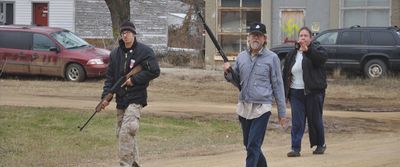
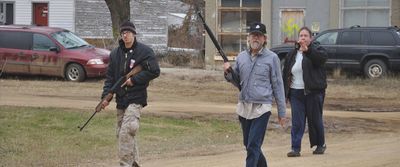
about it though. What if your neighbor patrolled the perimeter of his property
with a loaded shotgun? What if he came to city council meetings and verbally
harassed people to such a degree that nothing was out of bounds, including
mocking the murder of a council member’s daughter? What if he preached hate and
intolerance, and threatened to turn your neighborhood into one of the
frontlines for the battle for White Power? Would you really live and let live?
These were the questions faced by the two dozen (literally,
Population 24) residents of Leith, North Dakota, and deftly chronicled in
Michael Beach Nichols and Christopher K. Walker’s unsettling and downright
depressing “Welcome to Leith.” When Craig Cobb became the 25th resident of Leith, it became a national story. At first, no one really noticed
the grizzled old man who started buying up empty lots in an area of the country
described as “B-roll for The Walking Dead.”
Then Cobb made his presence known, announcing to the other members of the White
Power Movement—for which he had been an outspoken leader—that he was basically
taking over Leith. He invited people who believed as he did to move to
Leith, hoping to turn the city into a compound for his
organization, dominating votes on the city council and building monuments to his movement. When Cobb’s allies started buying the lots from him, and one
notable skinhead and his wife even moved in, the locals started to panic.
Nichols and Walker are careful to allow Cobb’s words and
actions to demonize him more than their filmmaking. It would have been easy to
sensationalize this story—using true crime documentary camera techniques to
really turn up the heat on Cobb’s rhetoric. Instead, they merely spent as much
time with the aggravator as possible, watching him torment people at city
council meetings and swear at his neighbors. They carefully avoid making “Welcome
to Leith” about what Cobb believes in, focusing on how those beliefs impact a
community more than the hatred and vitriol within them. To that end, they
surprisingly avoid much conversation with the only minority in Leith, who
happens to be the man who sold Cobb the property in the first place. Other
filmmakers would have made that the
story of “Welcome to Leith.” It’s easy to make a documentary about hateful
people. It’s harder to focus on the impact of hateful people on those around them.
To that end, the creators of “Leith” spend an
equal amount of time with Cobb and his cohorts as they do the residents of
Leith, resulting in a notable balance in this portrait of a community. Again,
being a strong proponent of free speech, I would never deny Cobb his right to
believe what he does, and I find outspoken people like him less terrifying most
of the time than those who hide their disgusting beliefs. At least we know
where Cobb is and what he thinks. But Nichols and Walker raise fascinating
questions about just how much disagreement and hatred we’re willing to accept
from our neighbors, and they do so without much flair or over-direction. They
provide what we hope to get from films about small communities—sketch it in
such a way that the local story becomes one in which we can see universal
issues. What happened in Leith could happen in hundreds of small towns across
the country, and, in many ways, is happening in major ones too, as hateful
people move in next to those they hate. As the world gets more crowded and
intolerance shows no signs of dissipating, what we will do when we see a bit of
the drama in Leith in our own cities? Or maybe it’s too late to even ask that question.
Source:: http://www.rogerebert.com/reviews/welcome-to-leith-2015


