Categories
Alberta Ft Mac

Police are Seeking Two Men for Gregoire Apartment Building Fort McMurray Shooting Around Christmas

Fort McMurray shooting, Gregoire apartment building

The RCMP has released photos of two men who are wanted in connection with a Fort McMurray shooting that happened the day after Christmas of 2014 in a Gregoire apartment building . The two men have been identified as 28 year old Mohamed Abdesemed and 28 year old Afif Elias Hassen, and police have released photos of both individuals and are asking the public for help in locating them. Police have reported that a bullet fro a gun fired inside an apartment traveled into and through the wall of the apartment, going into another unit. When police searched the area after the incident they located a pistol which was loaded, two rifles, some cash, 143 grams of cocaine, and some marijuana. Both men are facing a combination of more than a dozen charges that range from production of a controlled substance and unauthorized possession of a firearm to possession of a firearm for a dangerous purpose.

Arrest warrants have been issued for Mohamed Abdesemed and Afif Elias Hassen in connection with the Gregoire apartment building Fort McMurray shooting the day after Christmas. The police are asking the public for any help or information that they an provide so the men can be located, arrested, and taken into custody. It is believed that both men are currently in the Calgary area. If you see either of these individuals police caution that you should not approach them because the could be armed or dangerous. Instead call the local police department and report the sighting.

Categories
TV & Movies

Thumbnails 8/28/15

Thumb_0x11

1.

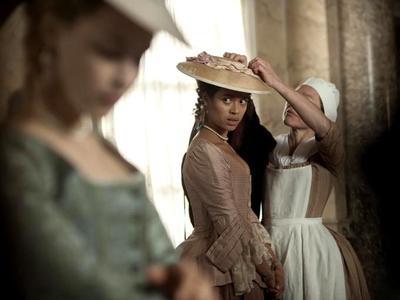
“Mapping Brutality: How Last Year’s ‘Belle’ Perfectly Explains White America’s Response to Racism”: An essential essay from Indiewire‘s Shannon M. Houston.

“What activists (and many others suffering from racial discussion fatigue syndrome) have learned in the past year or so is that our definitions of ‘proof’ of racism and racist institutions differ vastly from much of white America’s. It’s often not enough for white America to hear that a person of color has been killed by a police officer, and it’s often not enough for white America to hear that a small child was killed by a police officer, nor is it enough to read a headline about a man whose spine was severed in a police van. Instead, these murders are often interpreted as isolated incidents, some of which are indeed tragic, but ultimately do not prove that the killings are supported or encouraged by a racist system that’s as American as the stars and stripes. For this reason, one of the most thrilling moments of television this year came when Baltimore State’s Attorney Marilyn Mosby stood at a podium in front of a group of reporters and pointedly explained why six officers were being charged with the murder of 25-year-old Freddie Gray. On news stations across the country, her explanation was accompanied by an all-important visual image: a map detailing the several points at which the accused officers each broke the law and gave Gray the rough ride that broke his spinal cord, causing him to fall into a coma and eventually die.”

2.

“In Conversation: Quentin Tarantino”: A great interview with the ever-opinionated auteur, conducted by Vulture‘s Lane Brown.

“[Vulture:] ‘Hateful Eight’ uses the Civil War as a backdrop, sort of like how ‘The Good, the Bad and the Ugly’ does. [Tarantino:] ‘The Good, the Bad and the Ugly’ doesn’t get into the racial conflicts of the Civil War; it’s just a thing that’s happening. My movie is about the country being torn apart by it, and the racial aftermath, six, seven, eight, ten years later. [Vulture:] That’s going to make this movie feel contemporary. Everybody’s talking about race right now. [Tarantino:] I know. I’m very excited by that. [Vulture:] Excited? [Tarantino:] Finally, the issue of white supremacy is being talked about and dealt with. And it’s what the movie’s about. [Vulture:] How did what’s happening in Baltimore and Ferguson find its way into ‘The Hateful Eight’? [Tarantino:] It was already in the script. It was already in the footage we shot. It just happens to be timely right now. We’re not trying to make it timely. It is timely. I love the fact that people are talking and dealing with the institutional racism that has existed in this country and been ignored. I feel like it’s another ’60s moment, where the people themselves had to expose how ugly they were before things could change. I’m hopeful that that’s happening now.”

3.

“Mose Wright: Never Flinched. Never Hesitated.”: From the archives: A 2008 tribute to Emmett Till’s uncle, written by Steve Gorelick at Media and Mayhem.

“The 1955 murder of Emmett Till was a seminal moment in the history of the civil rights movement. Till was a 14 year-old African American from Chicago visiting his family in Mississippi. When he violated the unwritten laws of segregation by talking to a white woman, he was abducted and brutally murdered. Photographs of his open-coffin funeral, revealing an unspeakably savage beating, were widely circulated. Emmett’s mother Mamie became a passionate and eloquent voice for social justice. My hero, though, is Mose Wright. Mr. Wright was Emmett’s uncle and a witness to the abduction. When two men were accused of the crime, Wright chose to be a witness at the trial and personally identified the two white defendants. At the time, observers at the trial could not recall another example of a black man testifying against a white defendant. Wright moved to Chicago, but once more – ignoring warnings that he would be killed –returned to testify against his nephew’s killers. He never flinched or hesitated. There’s a lot more to the story. The defendants were acquitted, yet later admitted the killing to Look Magazine for $4000. And even more, many year later. Wright died at the age of 83 in 1973.”

4.

“In Praise of the Imperfect Photograph”: A lovely piece from National Geographic‘s Heather Greenwood Davis.

“My father, 69, is going through his massive collection of slides and digitizing them. As a result, every few days a photo or two from a family beach outing or a holiday long past will pop into my email stream without warning.They aren’t particularly arresting images—no wild kaleidoscopic sunsets or Instagram-worthy food shots here—and yet they command my immediate attention. In one (seen at right) I’m looking at the camera as my mother, slightly cut off, is braiding my hair. My younger brother, then about two, is reaching for the photographer. The color is too bright in some spots, too dark in others. The orange shag carpeting screams ‘the ‘70s have been here,’ as do my brother’s denim jumpsuit and my own minidress. I look at it and I can almost feel the slight pull on my hair as I turn toward my father’s lens.In another photo we are vacationing: a family of five on a park bench trying to achieve the perfect keepsake photo. Clearly it wasn’t working. In some, no one looks at the camera. In others, eyes are squinted or completely closed. And finally there are the ones where my teenage brother looks impossibly bored of the whole ordeal. These aren’t the photos that made it up onto my parents’ walls or even the refrigerator. The unfiltered, slightly blurred snapshots held no value to us then. Today they are, by far, the best things that have ever come into my inbox.”

5.

“Steering Away From ‘Ooga-Booga’ Horror Movies: John McNaughton on ‘The Harvest'”: In conversation with Jim Hemphill at Filmmaker Magazine.

“Filmmaker: Something that surprised me was that the kids really held their own in scenes with Academy Award-nominated adult actors. How did you create an environment where that could happen? McNaughton: This may be sexism, or reverse sexism, I don’t know, but I felt it would be good for the kids to have a woman cinematographer. A couple of the male cinematographers we interviewed were somewhat stringent, and I didn’t need that with kids – you have to make them comfortable. But both of these kids were great and had real chops. Natasha Calis was Kyra Sedgwick’s idea; I know Kyra through Kevin Bacon from when we did ‘Wild Things’ together, and she called me up and said, ‘John, I understand you’re casting for a young girl.’ I said, ‘Yeah, I am,’ and she told me, ‘I just worked with this girl named Natasha Calis on ‘The Possession,’ and she’s the best actor I ever worked with.’ Kyra’s worked with a lot of people, so that went a long way – although the funny thing with kids is, you’d be surprised how many kids can act. You think, ‘How am I ever going to find someone?’ and you find three. But after auditioning a lot of kids we realized Natasha was exceptional. Same thing with Charlie Tahan. He had already done great work – this wasn’t his first rodeo – and physically he was just perfect. Interestingly, the little guy in the basement, Nolan Lyons, came in to read for Charlie’s part but was just a little too small and a little too young. My original plan with the kid in the basement was to save money and just hire an extra, but my casting director Billy Hopkins said, ‘You’ll be sorry. It’s not just laying there, the kid’s gotta act.’ And he was right. Nolan was acting every second that he was lying there.”

Image of the Day

At Birth.Movies.Death, Phil Nobile Jr. unearths John Carpenter’s 1979 TV movie about Elvis Presley.

Video of the Day

VIDEO ESSAY: Pathways and Pathos: The Internalization of TRUE DETECTIVE Season 2 from Nelson Carvajal on Vimeo.

At his site, FREE CINEMA NOW, the excellent filmmaker Nelson Carvajal offers his latest video essay, “Pathways and Pathos: The Internalization of ‘True Detective: Season 2’.”

Source:: http://www.rogerebert.com/thumbnails/thumbnails-82815


Categories
TV & Movies

Z for Zachariah

Thumb_zforzachariah_2015_1

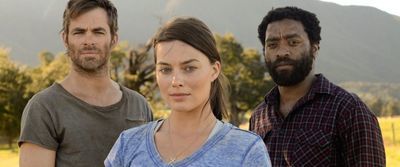
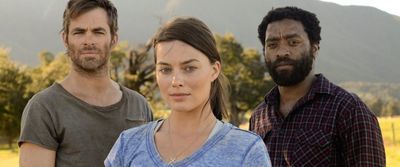
The Garden of Eden isn’t big enough for three people, it seems. Chiwetel Ejiofor, Margot Robbie and Chris Pine’s characters find that out the hard way in “Z for Zachariah,” an adaptation of a posthumously-published novel by Robert C. O’Brien (“Mrs. Frisby and the Rats of Nimh”). It’s set in the aftermath of unspecified decline-and-fall that definitely included nuclear weapons; pockets of radiation are everywhere, even in remote rural areas, and the film includes sequences where radiation-proof suits are used and people talk about underground bases and protocols. It’s hard enough just to survive out here, or so we’re told; forget about rebuilding civilization.

And yet that’s exactly what the film’s three characters (the only ones onscreen) try to do. The story begins with Ann (Robbie), a farm woman who inherited the place from her beloved church-building saint of a father, finding the title character (Eijofor) and nursing him back to health. The first third or so of the film is a two-character play that shows Zachariah gaining strength and getting to know Ann, who’s sweet but skittish and socially awkward (they both are—who wouldn’t be under the circumstances?), and forming something like a partnership, with the potential to become something else. Pine’s character, Caleb, eventually enters the picture; I don’t think this is a spoiler considering that Pine’s name and face are on the poster. The addition of a third character, and one who’s as ridiculously good-looking as the other two, injects a welcome note of tension into what was otherwise feeling like an exceptionally acted and photographed (in widescreen, by the masterful Tim Orr) psychodrama about really, really nice people.

There are racial and religious overtones to the way that Ann, Caleb and Zachariah try to work together, and relate to each other, and especially in the way that Ejiofor plays Zachariah, an engineer, as a man who worked hard, became a success in his chosen field, found a mate that he loved dearly, then lost everything in the cataclysm, and now finds himself having to compete with a younger, more cooly charismatic white man for the only available female. To make matters worse, Ann and Caleb seem to have an immediate chemistry that’s more labored the more paternal, or at least big-brotherly, energy that she has with Zachariah. Race is never explicitly mentioned in the film, except rather pointedly in one scene, but it colors, pardon the word, every suffering closeup of Zachariah as he watches Ann and Caleb flirt and trade not-so-furtive glances.

As for religion, Ann’s dad built the local church, and Zachariah strongly advises tearing it down for raw material to create a wheel that will generate electricity from a local waterfall. As adapted by Nissan Modi and directed by Craig Zobel (“The Great World of Sound,” “Compliance”), the movie is rather coy in how it frames Zachariah’s (and later, Caleb’s) enthusiasm for tearing down the church. It represents a destruction of the old order to create something new, but also (conversely) a rejection of the very patriarchal authority that both Zachariah and Caleb often represent to Ann, and that Ann’s father represented to her back in the day.

This is all good stuff, classic science fiction issue-driven myth making in the manner of “The World, The Flesh and the Devil,” which also had a triangle involving two white characters and a black character. The performers are entirely committed to the director’s vision, as is Orr, whose careful framing and movement reveals the film’s wilderness panoramas (shot on location in New Zealand) with tremendous intelligence as well as an appreciation for the textures of mountains and forests, and the way muted light fills up the interior of a dilapidated convenience store. There are many sharply written, directed and performed moments of illumination and anxiety.

There are a lot of problems, too, though, and they might prove to be deal breakers for some. One is the studied nature of the performances. Who knows if it’s the direction or simply an instinctive response to the script, but some of Eijofor’s choices feel overly deliberate here, for the first time I can remember (he’s one of the great leading men right now). Robbie fares slightly worse in that her “southern” accent and mannerisms are so polished that I never quite bought Ann as anything other than a technically excellent performance. There’s nothing outwardly “wrong” about Robbie’s work here, and maybe it’s unfair to complain about somebody who’s put so much thought into her work, but all you have to do is picture somebody more naturalistic and maybe American (a young Sissy Spacek, maybe, or Elizabeth Banks the way she was in “Magic Mike XXL”) and you can sense the kind of missed opportunity I’m trying to describe. Pine fares best of the three leads, although to be fair he’s playing the closest thing to an action hero, somebody defined mainly by his presence in a scene, the way he moves and reacts. He’s great at that, and he is also, for some reason (maybe his Americanness?) more believable as a drawling, scruffy, slightly dangerous backwoods American than his costars are in their roles.

Worse, “Z for Zachariah” is ultimately too dramatically slight and brief for its ambitions, despite its sometimes labored myth-making script and visuals. And it’s ultimately unwilling to truly commit to the idea of life during the end of the world as we know it. This is one of the few science fiction films I’ve seen recently where the production design, costumes, hair and makeup effectively neutralize a lot of what the screenplay and direction and performances are trying to accomplish. Ann’s house looks too clean, too nice, to fussed-over, almost like a vacation home that a movie producer might stay in while convincing himself he was getting back in touch with the natural world. Caleb’s been sleeping in the woods for weeks when we first meet him, but when he takes off his baseball cap he’s got a fashionable brush cut that looks like it might’ve been administered at a high-end Beverly Hills salon. Zachariah’s hair and beard are just as well-tended, and the signature light tan jacket that he wears in outdoor scenes is immaculately clean and so crisp that it seems to have been ironed seconds before the cameras started rolling. There’s a shot late in the film, after Ann has been put through the emotional wringer, that’s just so wrong in its visual particulars (she’s resting her head on a tabletop that’s obviously just been cleaned within an inch of its life, and wearing a fuzzy cable-knit sweater that seems to have come right out of a gift box) that you roll your eyes when you should be weeping for everything that’s been lost. Details like this are way too Hollywood, and they take you out of the story just when you should be immersed in it most deeply.

Source:: http://www.rogerebert.com/reviews/z-for-zachariah-2015


Categories
Economic Ft Mac Health Politics

Angry Residents Demand Answers After Timberlea Sewer Backup

Timberlea sewer backup, angry residents

Dozens of angry residents are demanding answers over a month after a Timberlea sewer backup flooded basements and causing thousands of dollars in damage to homes which were affected. The residents have questions that have not been answered, and they want to know what steps are being taken to help them out. On July 12 there were severe rainstorms which lasted around 4 hours, from approximately 4 am until around 8 am and this caused a backup of sewage into homes on Burns Place, Brett Drive, Brosseau Crescent, and Berard Crescent on the south side of Timberlea. The residences had flooring, drywall, and furnishing damages. In a number of cases residents are looking at clean up costs which far exceed any flood insurance policies and benefits that they had.

Berard Crescent Anne Simpson estimates around $50,000 in damages from the Timberlea sewer backup to her home, and said “I would say most people are the same as us. Alberta’s insurance companies have put limits on sewer backups, and most people have $20,000. And that’s what we have.” Many angry residents believe that the flooding was caused at least in part by the Confederation Way sewer bypass project. RMWB engineering department director Emdad Haque disputes this and blames the flooding on a once in a 25 year chance thunderstorm. Anne Simpson said “They’ve made some claims of a one-in-25 year flood, that I think no one supports or believes. I’d really like to believe that the city is doing an investigation and will come out with the truth … It just feels a little bit, in this circumstance, things are being covered up.”

Categories
TV & Movies

In a Lonely Place: “Noir City 7” Starts in Chicago

Thumb_woman_on_the_run

From out of the past and in a lonely place comes Noir City: Chicago 7. The traveling festival, presented by the San Francisco-based Film Noir Foundation, returns Aug. 28 through Sept. 3 for its seventh annual run at the Music Box, 3733 N. Southport, with 18 gems of the genre—some receiving their first-ever Chicago screenings.

Curated by noir experts Eddie Muller and Alan K. Rode, the event offers a triple focus this year, with tributes to pulp-fiction authors Cornell Woolrich and Dorothy B. Hughes, and genre greats Dan Duryea, Robert Ryan and Barbara Stanwyck, and a salute to what Muller and Rode have dubbed “Edwardian Noir.” The lineup also features four restorations, with three financed by the non-profit Film Noir Foundation, which is dedicated to promoting “the cultural, historical and artistic significance of film noir as an original American cinematic movement.”

“All sorts of things are in play for this year’s lineup,” said Muller, the FNF’s president and founder, as well as an author, filmmaker, film historian and TV personality (he hosted Turner Classic Movies’ annual Summer of Darkness noir festival again this year). “Obviously, we want to showcase our restorations, and also what works and what are the really good prints [at the Music Box, all of the Noir City titles are scheduled to be screened in 35mm]. “But in the end, practicality and availability are the main drivers.”

Another factor is uniqueness. “We definitely like to program films you can’t see anywhere else, films that haven’t made it to DVD, such as ‘The Guilty’ and ‘Woman on the Run’ [both screening at the Music Box],” said Rode, the FNF’s treasurer and board member, and also an author, film historian and impresario (he produces and hosts the annual Arthur Lyons Film Noir Festival in Palm Springs, Calif.). “It’s getting harder to say that about many titles. We try to be mindful that there are lots of noir fans who don’t live close to the West Coast [and thus can’t attend the foundation’s annual home festival in San Francisco or the Lyons event in Palm Springs]. So we’re trying to make our films available to the largest possible audience.”

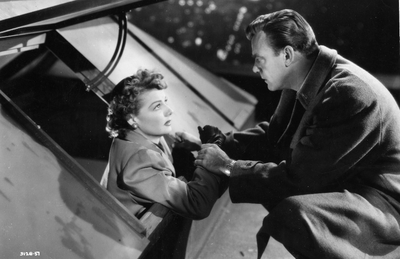
“Woman on the Run” (1950), which opens Noir City 7, is the foundation’s latest rescue effort. Shot largely in San Francisco by director Norman Foster, and starring genre stalwarts Dennis O’Keefe and Ann Sheridan, it’s “one of the great unsung noirs,” according to Muller and Rode. Universal had a print but not the rights to it, and that print was destroyed in a 2007 fire at the studio. Fortunately, a digital scan existed elsewhere, and the foundation put the title on its restoration list. With additional funding from the Hollywood Press Association’s Charitable Trust, and detective work by the FNF to clear film rights, “Woman on the Run” was restored by the UCLA Film & Television Archive.

Though “Woman on the Run” hasn’t been seen on the big screen in years, two Noir City 7 films have never been screened before in the States. Continuing an “Argentine noir” theme introduced at last year’s event, Muller and Rode have programmed two Spanish-language films, both based on Woolrich works, “No Abras Nunca Esa Puerta”/”Si Muero Antes de Despertar” (“Don’t Ever Open That Door”/“If Die Before I Awake”). This double bill will be screened in a newly struck 35mm print. “We didn’t have the funds yet to do a full restoration,” Muller said. “So we decided to preserve the films with English subtitles. Often you have to preserve before you can restore.”

For noir die-hards, however, the festival’s focus on pulp masters Woolrich and Hughes, who wrote the novels and short stories behind several noir greats, might be the biggest draw. Woolrich, whose works provided the basis for “Phantom Lady” (1946), “No Man of Her Own” (1950) and “Rear Window” (1954), “lived the most noir life imaginable,” Muller said. “He toiled in obscurity, and in his later years, never left his apartment [he was wheelchair-bound after losing a leg to diabetes-induced gangrene]. That was grist for the whole genre.” Hughes, whose writings spawned the noir touchstone “In a Lonely Place” (1950) and “The Fallen Sparrow” (1943) — the latter screening at Noir City 7 — influenced many other noir writers and producers. “Her works are so hard-boiled that many are surprised to find out that a woman wrote them,” Muller said.

Joining Muller and Rode, who will introduce films and conduct Q&As afterward at the Music Box, will be Chicago Reader film critic J.R. Jones, whose biography The Lives of Robert Ryan, was published earlier this year. (Ryan grew up in Chicago and still has relatives here.) Jones will help moderate the Ryan screenings on Sept. 1.

Muller and Rode regard Chicago as “a great market for noir.” The turnout is so strong that “we can do a whole week, which allows us to be more eclectic in our programming,” Muller said. “Like offering the day of Edwardian noir this year, that’s not possible in other cities where the festival travels.”

“Chicago is definitely one of the top audiences in terms of appreciation,” Rode said. “People drive in from all over the Midwest, and you develop friendships with them. As dark as noir is supposed to be, it actually brings people together. Coming back to Chicago at the end of summer is like coming home.”

TICKETS: $12 per double bill; $75 for a festival pass (for admittance to every Noir City 7 film. Details at http://www.musicboxtheatre.com/festivals/noir-city-chicago-7

Friday, Aug. 28: Opening Night

“Woman on the Run” (1950), 7 p.m.: This once obscure crime drama returns to screen life, thanks to a Film Noir Foundation restoration. The twisty plot centers on a reporter (Dennis O’Keefe) and the wife (Ann Sheridan) of a man on the lam. Director Norman Foster “definitely had some Wellesian influence in his career,” Rode said, “and this film is outstanding.”

“Abandoned” (1949), 9 p.m.: Dennis O’Keefe — again as a reporter — stumbles on a black-market baby racket in what Rode describes as “an unsung noir, shot all over L.A. by [B-movie helmer] Joseph Newman, complete with smarmy dialogue.” Muller and Rode paired this title with “Woman on the Run,” since both star the now mostly forgotten O’Keefe, whom Rode calls “a very underappreciated actor, especially in noir.” Screening in a 35mm archival print provided by Universal.

Saturday, Aug. 29: The World According to Cornell Woolrich

“The Guilty” (1947), 2:15 and 9:50 p.m.: The Film Noir Foundation has restored this Poverty Row film, directed by John Reinhardt, with Bonita (“Nancy Drew”) Granville as twins, one evil, the other an easy mark (she’s dead by the third reel), opposite Don Castle, “the Clark Gable of Monogram Pictures,” Rode said with a chuckle. “It’s the typical post-war noir, with no sets but lots of terse exchanges.”

“The Chase” (1946), 4:15 p.m.: In this flashback noir, based on Woolrich’s novel The Black Path of Fear, a Navy vet (Robert Cummings) falls in with a gangster (Steve Cochran) and then falls for his sultry wife (Michele Morgan). “Any film with Steve Cochran and Peter Lorre [as Cochran’s sidekick], you know it’s got to be good,” Rode observed. Martin Scorsese’s Film Foundation, along with the Franco-American Cultural Fund, financed the 35mm restoration.

“No Abras Nunca Esa Puerta”/“Si Muero Antes de Despertar” (1952), 6:30 p.m.: Argentine noir, based on the gospel according to Woolrich, and screened in a preserved print courtesy of the Film Noir Foundation. Conceived as an anthology, the films were released separately in Latin America. For Noir City 7, they’re being shown back to back and for the first time with English subtitles.

Sunday, Aug. 30: Edwardian Noir

“ivy” (1947), 2:30 p.m.: A blonde Venus (Joan Fontaine) wants to move up in society by snaring a rich patsy (Herbert Marshall), but first she must eliminate her husband — and lover. Playing against type, Fontaine floats in a cloud of white costumes (by Orry-Kelly) and backdrops (William Cameron Menzies co-produced but most likely also put his touch on the set design, according to Muller and Rode). Muller had wanted to add “Ivy” to the Noir City lineup for years, but it wasn’t available. “Universal finally came through a 35mm archival print,” he said, “and so we have it at last.”

“Hangover Square” (1945), 5 p.m.: The ultimate ’40s “heavy,” Laird Cregar triumphs in his last role as a composer-pianist beset by madness and a maddening music-hall manipulator (Linda Darnell). “This is one of the greats of the ’40s, with an incredible score by Bernard Herrmann,” Muller said. “His ‘Concerto Macabre’ becomes like another character in the film, especially in the way that it illustrates the action.”

“Ladies in Retirement” (1941), 7 p.m.: Based on a Broadway play, this “underappreciated noir,” as Rode describes it, stars Ida Lupino as a housekeeper beset by two mentally imbalanced sisters of an aged actress.

“The Suspect” (1944), 9:15 p.m.: Charles Laughton gives what Muller considers one of his best-ever performances as a tobacconist “of a few peculiarities” trying to escape a shrewish wife. “It’s the greatest Hitchcock film that Hitchcock didn’t make, with [director Robert] Siodmak at his best,” Rode added.

Monday, Aug. 31: Dorothy Hughes Double Bill

“Ride the Pink Horse” (1947), 4:30 and 9:15 p.m.: A mysterious stranger (Robert Montgomery, who also directed), bent on revenge, rides into town. “It’s really like a samurai film,” Muller said. “It’s unique, there’s no other film made in that era quite like it.” Hughes set her story, which was brought to the screen by Ben Hecht and Charles Lederer, in Santa Fe, N.M., where she lived most of her adult life. “She was concerned with issues of race and ethnicity, and that really comes through in the film,” Muller said. “The whole point is that it’s a commentary on how badly the white guys treat the natives.”

“The Fallen Sparrow” (1943), 7 p.m.: A veteran of the Spanish Civil (John Garfield) teeters on the brink of madness in this film based on Hughes’ novel and directed by Richard Wallace, “who is epitomized by the word journeyman,” Rode said. “Still, Garfield is at his best here; he shows how he could take material like this and make you take notice.”

Tuesday, Sept. 1: Robert Ryan x 2

“House of Bamboo” (1955), 4:30 and 9:20 p.m.: “Only Sam Fuller could pull off a tale of American gangsters trying to muscle in on the Yakuza in Japan,” Rode said. Daring for its time, the film has a gay slant, with Ryan as a sexually ambiguous crook; “it also has an interracial marriage that ends happily.”

“The Racket” (1951), 7 p.m.: A crime boss (Robert Ryan) squares off against a police officer (Robert Mitchum), with inevitable results. “Ryan had an incandescent kind of rage that makes you stand up and take notice,” Rode said. “It’s an old-style film, based on a 1928 play. It’s worth watching if only for Ryan and Robert Mitchum, who hated this film. He didn’t like authority in general, and you can tell he wasn’t happy making this movie.”

Wednesday, Sept. 2: Stanwyck Squared

“Crime of Passion” (1956), 5 and 9 p.m.: Muller loves this movie because “it’s right smack-dab in the heart of the ’50s America,” with Barbara Stanwyck (as a newspaper columnist turned avenging housewife) “great in her last noir role.”

“Witness to Murder” (1954), 7 p.m.: Four months before Hitchcock opened the sash of his “Rear Window,” this amazingly similar thriller hit the theaters. After a career woman (Barbara Stanwyck) accidentally spies a murder in the building next door, the Nazi-sympathizing strangler (“George Sanders at his malevolent best,” notes Rode) decides she’s next on his hit list.

Thursday, Sept. 3: Dan Duryea Double-Header

“Criss Cross” (1949), 5 and 9:15 p.m.: “Saving the best for last, here’s one of my all-time favorite noirs and the epitome of what noir should,” Rode said. With Burt Lancaster and Dan Duryea plotting a heist as a dame (Yvonne DeCarlo) runs interference, it’s the best-known title in this year’s lineup. “Burt Lancaster stars in his last go-round as a noir chump. It’s my favorite Siodmak movie, and he’s the greatest of all noir directors, so that’s saying something.”

“The Underworld Story” (1950), 7 p.m.: From director Cy Endfield, a Noir City favorite, here’s a noir with a cause, with a crusading reporter (Dan Duryea) trying to expose the misdeeds of his bosses. “It was released before [the similarly themed] ‘Ace in the Hole,’ and addresses themes that are even more serious,” Rode said, such as racism and the abuse of press power. Screening in a 35mm print preserved by the Film Noir Foundation.

Source:: http://www.rogerebert.com/festivals-and-awards/in-a-lonely-place-noir-city-7-starts-in-chicago


Categories
TV & Movies

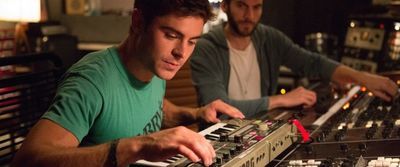
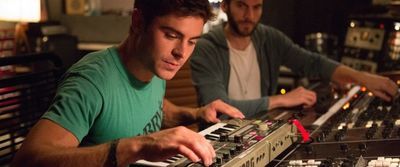
We Are Your Friends

Thumb_weareyourfriends_2015_1

Electronic Dance Music, or EDM as Those Damn Kids call it,
is quite the thing with the aforementioned Damn Kids these days, with their
rave and their Molly and whatever the hell else they’re up to. Its synthetic
trappings notwithstanding—the “Electronic” part—EDM is dance music, just like
Big Band Swing was, just like early rock and roll was, just like disco was. All
musics that were initially reviled, and to some extent (with the arguable
exception of Big Band Swing) initially misunderstood by Hollywood.

“We Are Your Friends,” directed by Max Joseph, from a script
by Joseph and Meaghan Oppenheimer (based on a story by producer Richard
Silverman), makes a big deal out of “getting” EDM. There’s the sleek,
visual-format flexible manner of the filmmaking, which mixes graphic design
tropes with animation and such for some of the movie’s most engaging sequences.
There’s a scene in which the protagonist, a fledgling EDM DJ named Cole Carter,
explains the science of EDM as he rocks a dance floor, elaborating on getting
the magic BPM (Beats Per Minute) count that makes the music control the dance
floor subjects, almost zombie like in the grip of the pulsating bass. There’s a
little music-wonk name dropping, with a mentor DJ showing off a rare Buchla
synthesizer and comparing his possible protégé, unfavorably, to one Juan
Atkins.

Joseph recently made a documentary about the EDM production
team/record label DFA, so he’s got some genuine knowledge under his belt. And
while EDM is an area of music in which my expertise doesn’t extend far past
that of an interested dabbler/dilettante, the EDM soundtrack of this movie
sounded pretty credible/hot to me. Too bad that the movie’s character dynamics
and plot are as cheesy as that of, oh, I dunno, “Don’t Knock The Rock.” How’s
this for cliché: talented, eager, but unseasoned DJ gets taken under the wing
of older, popular, but jaded and close-to-washed-up genre star, who shows him
the ropes, opens his ears, and who also happens to…wait for it…have a gorgeous
girlfriend with whom Mr. Talented And Eager gets entangled in a bad way. Yeah,
that kind of plot.

What’s worse is that said DJ, Cole Carter, comes complete
with a contingent of San Fernando Valley tatted BroDouche pals, kind of out of
the “Diner” handbook but even more belligerent, clueless, and sexist. And minus
any charm. There’s super-brash Mason (Jonny Weston), self-proclaimed “movie
star” Ollie (Shiloh Fernandez), and Squirrel (Alex Shaffer). In the event you
haven’t guessed, Squirrel is the shy, sensitive one.

As for Cole, he’s played by Zac Efron, getting a tad edgier
after “Neighbors.” I had, a few months ago, come upon a bit of misinformation:
I read somewhere that Zach Braff was playing the role of the EDM DJ in this
movie. I had a great observation prepared, something along the lines of, “Zach Braff trying to pass himself off as a
guy who’s even HEARD any EDM, let alone an EDM DJ, is about as plausible as
Bruce Hornsby jamming with The Melvins.” But, as I said, I was misinformed.

Efron, however, often looks nearly at sea as Braff would
have. Part of it has to do with his character being a bit of a cipher to begin
with. His mentor-girlfriend triangle, while entirely rote and predictable in
most of its particulars, also constitutes one of the more watchable overall
portions of the movie (the stuff with Cole and his pals is very nearly
insufferable, and the detour these career-challenged millennials take with a
coarse real estate vulture in a subplot constitutes several varieties of
nadir), because the mentor DJ is played by Wes Bentley, who brings a humming
undercurrent of sardonicism to his role, and the assistant/girlfriend is played
by Emily Ratajkowski who is just…delightful to look upon. A scene at a Vegas DJ
fest wherein her character gives Cole a tab of Ecstasy, or whatever it is, and
they “roll” together made me wish I was a much younger man, a man with hair,
and a tolerance for recreational drugs. I should say ALMOST made me wish, as I
happen to be happily married to a beautiful woman who doesn’t care that I’m
bald. I should also mention that aside from having Major Presence, Ratajkowski
navigates her character’s three crucial (actually only) nodes, Sweet, Sexy, and
Sensible, very well.

But I digress. Lest the viewer come to the conclusion that
this movie’s portrayal of the EDM drug culture is too cavalier, there does kick
in near the end a Cautionary Tale Plot Point, which is arbitrary to the point
of insulting. Except it’s too late to be really insulted, because one is
already painfully aware of how unsuccessful the movie has been. And then, when
the movie makes one more flashy attempt to get lay viewers to “grok” EDM, it’s
too late, despite the sequence being kind of not bad. While I might actually go
out and buy the soundtrack album, the last thing I’m gonna say about the movie
is friends shouldn’t let friends pay money to see “We Are Your Friends.”

Source:: http://www.rogerebert.com/reviews/we-are-your-friends-2015