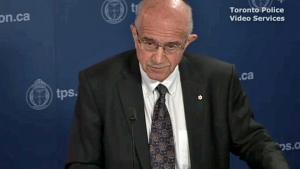

Thursday’s Supreme Court of Canada decision about Aboriginal representation on juries in Ontario is “bad news” for the relationship between the province and First Nations, says lawyer Julian Falconer.
In reinstating the manslaughter conviction of a Grassy Narrows man, the Supreme Court ruled that Ontario is making reasonable efforts to include First Nations people who live on reserve in the jury selection process. The majority decision said it’s not the responsibility of the province to ensure First Nations people fill out jury duty forms.
Falconer represented the Nishnawbe Aski Nation as an intervener in the case and calls the decision “a set back.”
“This is very bad news for what has been a long and protracted journey to start to mend fences and create real partnerships in addressing the relationship between Aboriginal people and the Canadian justice system,” he said.
Problems revealed in 2008
Nishnawbe Aski Nation first identified problems with the representativeness of the jury roll during the 2008 inquest into the deaths of two First Nations men in the sub-standard police holding cells in Kashechewan First Nation on Ontario’s James Bay coast.
It turned out no one from Kashechewan was eligible to serve on the jury for the inquest because no one from the community had ever been included on the district’s jury roll.
Nishnawbe Aski Nation, which represents 49 First Nations in northern Ontario, has been pressuring the province through the courts and political activism for more inclusion since 2008.
Progress appeared to be made in 2013 with the release of an independent review of First Nations representation on Ontario juries commissioned by the province and written by former Supreme Court Justice Frank Iacobucci.
The province says it is committed to following through on the recommendations in a 2013 report on First Nations representation on Ontario’s juries written by former Supreme Court Justice Frank Iacobucci. (CBC)
Falconer said Thursday’s Supreme Court decision puts any progress in jeopardy and he said some of the language used in the decision is disturbing.
“This case, frankly, casts First Nations in what I say, with respect, is an offensive light,” Falconer said. “By that I mean, when the Court describes First Nations as simply a ‘small societal group,’ that’s troubling.”
Province responds
Ontario’s Ministry of the Attorney General said it is reviewing the court decision. It’s not clear yet what impact it will have on other cases where the validity of the jury roll has been questioned.
“With this decision, the majority of the Court established a different analytical framework regarding the legal test for jury representativeness,” a Ministry spokesperson said in an email to CBC.
But the province remains “firmly committed” to the recommendations in the Iacobucci report, according to the Ministry. The province’s new Assistant Deputy Attorney General of Aboriginal Justice will oversee the implementation of the recommendations.
“As recommended by Mr. Iacobucci, the approach that will produce enduring results is a collaborative process between the government and First Nations partners,” the written statement said.


