Paul Schrader is one of those filmmakers that some cinephiles will never stop rooting for, even though a good number of his films (the recent ones especially) are better in concept than execution. “Auto Focus,” “Dominion: Prequel to The Exorcist,” “Adam Resurrected” and “Laurel Canyon” had the spiky energy and fascination with fringe-dwellers that’ve been Schrader hallmarks since the 1970s, when he rose to fame as an independent writer-director and regular collaborator with Martin Scorsese (“Taxi Driver,” “Raging Bull,” “The Last Temptation of Christ”). But they felt stubbornly theoretical in certain ways: filled with good ideas that often felt more illustrated than well and truly dramatized.
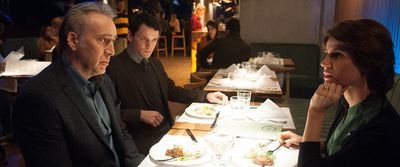
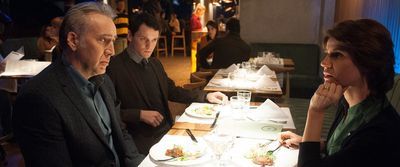
If only “Dying of the Light” had broken Schrader’s recent close-but-no-cigar streak. This story of a career CIA operative (Nicolas Cage) doggedly pursuing a terrorist who once imprisoned and tortured him is not a good movie. It is impossible to know which percentage of its failures are attributable to Schrader, who wrote and directed the movie, and which to his producers, who allegedly took it away from him and reworked it to the point where Schrader decided he wanted nothing more to do with it. Schrader is contractually barred from discussing what happened, maybe because he’s been blisteringly vocal about past instances in which his films were re-edited or reshot without his consent. He and his lead actors, including Cage and costar Anton Yelchin, did appear in photos online recently wearing t-shirts that read, “I have no comment on the film or others connected with the picture,” which isn’t, strictly speaking, a criticism but sure doesn’t feel like an endorsement. But here’s the problem: Gene Siskel famously said that his litmus test for giving a movie thumbs up or thumbs down was asking himself whether he thought the film he’d just seen was probably more interesting than watching a hypothetical documentary of its lead actors having lunch. A similar question here might be, “Which would I rather watch, this movie or a documentary about the creative battles that happened while it was being made?”
Option #2 seems instantly preferable. “Dying of the Light” is an oxymoron: a shrill and bombastic slog, with an all-over-the-map collection of tones that never cohere into a credible or even especially compelling vision. From its opening credits sequence onward, the film’s editing, music and overall tone evoke a hard-R action thriller, or perhaps a bloody TV series in that tradition, such as Fox’s “24,” but the hero, Cage’s former field agent turned greying, embittered desk jockey Evan Luke, seems a George Smiley type, more an intellectual than physical threat, but the film still has him getting in brutal hand-to-hand fistfights with people, running them down while firing guns at them, and otherwise carrying on as if he’s Liam Neeson in one of the “Taken” films.
The story begins with a flashback that the movie will revisit periodically: circa 1994, Luke is imprisoned, beaten and mutilated by Islamic terrorists in an Al Qaeda vein, and is about to be killed when US forces storm the place. Twenty years later, Evan still bears the scars from that encounter, including a maimed ear. He gives a fire-and-brimstone speech to a bunch of new, young agents, then settles in at his desk in CIA headquarters, where he’s treated like a professor emeritus that nobody particularly wants to learn from, because he’s so peevishly angry and difficult to know. Then his young coworker Milton (Yelchin) gives him information indicating that his chief torturer, Muhammad Banir (Alexander Karim), might be alive in Bucharest, seeking treatment for his rare blood disease. (This twist echoes an aspect of the Osama bin Laden bio: the Al Qaeda figurehead had kidney problems.) Long story short: Luke goes rogue, as they say, and wanders around Romania with Yelchin in tow, chasing the ghost of his tormentor until he finally catches up with him.
On paper, this story feels very Schrader-ish, evoking key images and themes from earlier in the writer-director’s long career. Chief among these is sight of an emotionally or physically tormented and socially maladjusted loner, partly modeled on Ethan Edwards in “The Searchers,” who embarks on a mission of vengeance that is ultimately less about justice than about feeding the hero’s obsessions so that he doesn’t have to face himself, a task for which he’s ill-suited anyway. Travis Bickle in Schrader’s “Taxi Driver” script is emotionally scarred by his Vietnam experience, while the ‘Nam vet in the Schrader-penned “Rolling Thunder” loses his hand when local criminals feed it into a garbage disposal; in both stories, the hero’s “mission” seems an elaborate and bloody distraction from the storm of misery raging in his mind.
There are fleeting hints of that kind of psychological acuity in “Dying of the Light.” Evan spirals into self-pitying rage when his bosses tell him to forget about Banir and force him to retire. Things get worse when he’s diagnosed with frontotemporal dementia, an Alzheimer’s-like condition that might account for his more unpleasant behavior, which is abrasive even in the film’s early scenes. How much of Evan’s desire for vengeance or justice is really about vengeance or justice, and how much is about distracting himself from feelings of age and irrelevancy? (He rails against the cluelessness and incompetence of the post-9/11 CIA in a way that turns the United States’ foreign policy misadventures in to a sort of coded parable for dementia and maybe impotence, too.)
There’s a weird poignancy in the sight of two brutal adversaries, Evan and Banir, both of whom are in physical decline, chasing each other around Romania—the terrorist is basically the Comanche chief Scar to Luke’s long-deskbound Ethan Edwards—but the movie explores it in the most clumsily rhetorical terms, via speeches and subtext-as-text dialogue and action scenes that are intriguingly small-scaled (such as a pistol-toting Evan chasing a man through hotel grounds on foot) but over-edited and over-scored to the point where the movie seems to be trying to force a level of “awesomeness” that one rather doubts that Schrader aspired to. Again, though, it’s impossible to lay blame for all the things that went wrong here, and it’s ultimately a pointless exercise anyway. What matters is what’s on the screen. What’s on the screen is frustratingly unrealized, often tone-deaf, and much more painful to watch than a deliberately trashy or stupid film might have been. Every know and then you can hear murmurs of ambition and daring, but they’re faint and and agonized, like the voice of a gangster movie foe being strangled with a pillow.
Source:: http://www.rogerebert.com/reviews/dying-of-the-light-2014


