
The deadline for residential school survivors to apply for funds to help pay for education passed last week, but a former student in the Sault Ste Marie area is part of a group trying to get what they see as a deeply flawed process stopped entirely.
The Personal Credits under the the Indian Residential Schools Settlement Agreement allow former students to apply for up to $3,000 to pay for everything from college courses to programs that preserve language and culture. Survivors can also give the credits to children or grandchildren.
There has been too much confusion over how to apply, said Mike Cachagee, a survivor of the Shingwauk Indian residential school in Sault Ste Marie and a member of the Chapleau Cree First Nation.
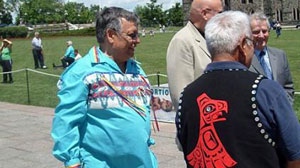
Mike Cachagee, a former student of the Shingwauk residential school in Sault Ste Marie, is part of a court action to suspend the distribution of Personal Credits under the Indian Residential Schools Settlement Agreement. (American Public Media)
There are also too many restrictions on how the credits can be used, Cachagee said.
“I have three of my grandchildren attending post-secondary institutions,” he said. “Under the structure of the personal credits I can only transfer those credits to one of them. So how do you do that and still maintain peace in the family?”
People had until Oct. 31 to apply for the personal credits. Last week, Cachagee and several other survivors filed a court action asking an Ontario Superior Court Justice to suspend the distribution of the personal credits until issues with the process can be resolved.
Surplus too large, critics say
There is also concern about the more-than-$300-million surplus that remains in the Indian Residential Schools Settlement. That money was what remained after compensation cheques were sent to almost 80,000 former students aimed at resolving claims of abuse at more than 130 Canadian residential schools.
The court application asks the justice to consider whether the surplus, which is being redistributed to the education credit, should be that high. Cachagee contends that some Common Experience Payments were not paid out properly and may have been reduced for some people because of missing documentation.
Anyone who is a party to the Indian Residential Schools Settlement Agreement can file with the courts with complaints about the way the settlement is being administrated.
In his application, Cachagee notes how few people have applied for the education credits. As of the end of September, just over 6,000 former students had applied for a personal credit, with 3,200 of those being approved so far. That’s less than 10 per cent of the nearly 80,000 eligible survivors across the country


