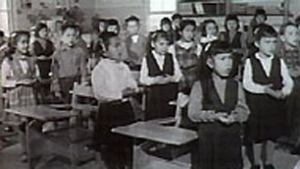

Many former students of residential schools say they were abused and had their culture and language taken away from them. The federal government eventually agreed to a multi-billion-dollar settlement (CBC)
Tens of thousands of former Indian residential school students could miss out on receiving an education credit if they don’t get their application in soon.
The deadline is Oct. 31.
Former students are eligible for a $3,000 credit, paid directly to their school or cultural program of choice.
It’s designed to cover tuition, school fees, books, or equipment.
It can also be used by the child or grandchild of a former residential school student.
Carolyn Pelletier of Regina is among those scrambling to get their applications in. She originally thought she couldn’t use the credit, but later learned otherwise.
“As you read through it and learn more about it, you get to know what you can do with it to take advantage of this opportunity, because knowledge is power,” she said.
‘The wording was very confusing to understand, but I studied it, I took my time.’- Deanna Keewatin
Pelletier is still deciding whether to use the credit for a traditional beading class or apply it to her daughters’ university tuition.
For some, like Deanna Keewatin, 69, of Regina, filling out the application form hasn’t been easy.
“The wording was very confusing to understand, but I studied it, I took my time. And I said ‘this is for me. I’m going to use this. I’m going to use it for one of my grandchildren.'”
Small portion of larger settlement
Residential schools operated for more than a century. They were generally run by churches under the supervision of the federal government.
Thousands of lawsuits resulted from former students who said they had been abused and were robbed of their language and culture.
The federal government eventually apologized for residential schools and agreed to a multi-billion-dollar settlement, of which the education credit was a small part.


