Categories
Uncategorized

Canada’s top educators receive Prime Minister’s Awards for significant impact made in their communities


November 19, 2021 – Ottawa, Ontario

Prime Minister celebrates inspirational educators who are empowering the next generation of Canadians

Day in and day out, educators across Canada are nurturing a culture of curiosity and encouraging young people to ask questions, to dream and to think outside the box. Teachers and early childhood educators have shown unparalleled resilience, determination and compassion in the face of COVID-19, continuing to keep children safe while equipping them with the skills, tools and experience they need to succeed to the fullest.

Today, on the eve of World Children’s Day, the Prime Minister awarded 68 of Canada’s top educators with the country’s highest honours for Teaching Excellence, Teaching Excellence in Science, Technology, Engineering and Math (STEM) and Excellence in Early Childhood Education. These award recipients are an inspiration to us all as their diverse and innovative approaches to teaching are helping shape the youth who will be building the Canada of tomorrow.

Today also marks the launch of the nomination period for the 2022 Prime Minister’s Awards for Teaching Excellence, Teaching Excellence in STEM and Excellence in Early Childhood Education. Canadians across the country are encouraged to nominate an inspirational educator who is making a real difference in their community.

The nomination period will be open until 11:59 p.m. (PT) on February  8, 2022. 


Source link

Categories
Uncategorized

Indigenous Services Canada providing funding to support First Nations in British Columbia affected by recent flooding


November 22, 2021 — Ottawa, Traditional Algonquin Territory, Ontario — Indigenous Services Canada

The Government of Canada is committed to ensuring that First Nations affected by recent flooding in British Columbia are safe and secure, that a coordinated emergency management response is supported, and that communities are positioned for a strong recovery.

Today, the Honourable Patty Hajdu, Minister of Indigenous Services, announced that Indigenous Services Canada has received and approved a funding request through the Emergency Management Assistance Program for $4.4 million in additional funding to the British Columbia First Nations’ Emergency Services Society. Funds will be used to support the First Nations’ Emergency Services Society as they assist First Nations in their response to the widespread flooding caused by the recent atmospheric river event.

Additionally, the Government of Canada will provide $330,000 to the First Nations Leadership Council, to be divided equally among its member organizations (i.e., the British Columbia Assembly of First Nations, the First Nations Summit and the Union of British Columbia Indian Chiefs) to address immediate response needs in the wake of this ongoing emergency.

Indigenous Services Canada will continue to work in close partnership with impacted First Nations in British Columbia, provincial partners and federal departments, including the Department of National Defence and the Department of Emergency Preparedness. The safety and security of First Nations is the top priority of Indigenous Services Canada and we stand ready to provide further resources as needed.


Source link

Categories
Uncategorized

Government of Canada continues to help protect North Atlantic right whales


November 24, 2021                                                                                                       

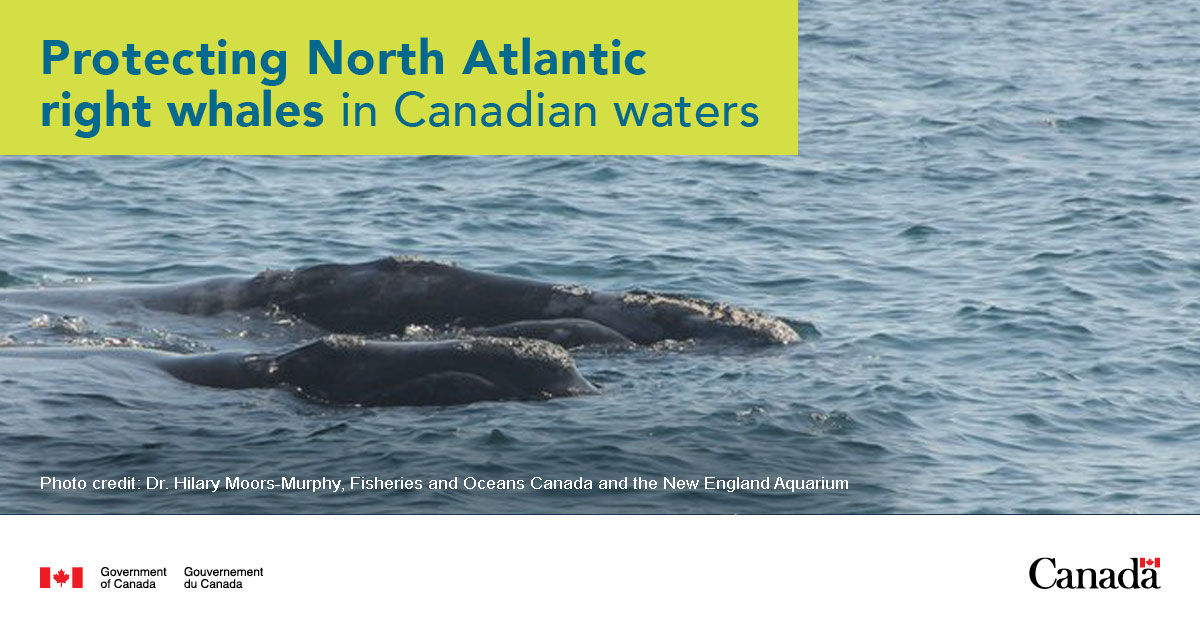
Ottawa, Ontario – The Government of Canada continues to take action to protect the endangered North Atlantic right whale. For the second year in a row, there have been no reported deaths of North Atlantic right whales in Canadian waters. However, with recent estimates that only 336 North Atlantic right whales remain in the world, the Government of Canada continues to work with scientific experts, industry, Indigenous and non-Indigenous harvesters, environmental groups, and the United States’ National Oceanic and Atmospheric Administration to protect and support the recovery of this species.   

In 2021, the Government of Canada took the following measures:

  • To help protect the whales from entanglements in fishing gear, Fisheries and Oceans Canada adjusted the times of fishing seasons and continued to implement seasonal and temporary fishing area closures when and where whales were detected. In 2021, approximately 38,325 square kilometres (an area almost seven times the size of Prince Edward Island) was closed to fishing based on right whale detections. In this overall total, 26,764 square kilometres was closed for the season.
  • To help protect the whales from collisions with vessels in the Gulf of St. Lawrence, Transport Canada continued to implement vessel traffic management measures, including speed restrictions and a restricted access area, that covered approximately 72,000 square kilometres. These measures aimed to reduce collision risks to the whales from vessel traffic over the course of the season, without jeopardizing the safety and security of mariners. This year, there was an over 99.9% compliance rate with the mandatory vessel traffic measures.

The Government of Canada uses a variety of tools to monitor and detect North Atlantic right whales, such as aerial surveillance, at-sea surveillance, and underwater acoustic technologies. Fishery officers will continue to watch for North Atlantic right whales in our waters throughout the year through aerial surveillance. Given recent detections of North Atlantic right whales in the Gulf of St. Lawrence, Transport Canada is asking mariners to remain vigilant and to continue, voluntarily, to maintain a maximum speed of 10 knots over ground whenever safe to do so.

In 2021, at least 120 individual North Atlantic right whales were identified in Canadian waters, representing approximately one third of the estimated global population. 


Source link

Categories
Uncategorized

Economic growth in Quebec’s Indigenous communities—The Government of Canada announces the renewal of the True North Treasure and Forest Full Value initiatives


November 26, 2021 — Ottawa, Traditional Algonquin Territory, Ontario — Indigenous Services Canada

The inclusion of Indigenous Peoples in key sectors of the Canadian and Quebec economies is an important part of our post-COVID-19 economic recovery.

While the Grand Economic Circle of Indigenous People and Quebec is taking place in Montreal, the Honourable Patty Hajdu, Minister of Indigenous Services, announced the renewal of two key Strategic Partnership Initiatives (SPIs) that contribute to the economic self-sufficiency of Indigenous communities in Quebec, specifically the True North Treasure Initiative, with a contribution of $4.5 million, and the Forest Full Value Initiatives, with a contribution of $4.5 million.

Mining is an important part of Quebec’s economic growth. The True North Treasure Initiative aims to support Indigenous participation in this key economic sector by facilitating partnerships between Indigenous communities and the private and public sectors. Renewing this initiative will help Indigenous communities build on the momentum of recent years to continue to train qualified workers, create jobs in the mining sector and develop business opportunities.

The Forest Full Value Initiative aims to help Indigenous communities take advantage of a growing number of opportunities in forest bioeconomy in Quebec thanks to targeted investments that will allow them to leverage forest resources in a sustainable manner. The renewal of this initiative will help First Nations communities establish important partnerships, create jobs and improve their economic activities related to the food and energy sectors while honouring their cultures and traditions.


Source link

Categories
Uncategorized

Canada and Long Plain First Nation reach settlement agreement on 1916 Surrender – Mismanagement of Sales Specific Claim


November 30, 2021 – Long Plain First Nation, Treaty One Territory, Manitoba – Crown–Indigenous Relations and Northern Affairs Canada

Honouring Canada’s legal obligations to Indigenous Peoples and working collaboratively to resolve historical grievances is fundamental to advancing reconciliation in Canada.  

Today, Chief Dennis Meeches and the Honourable Marc Miller, Minister of Crown–Indigenous Relations, announced that Long Plain First Nation and the Government of Canada have reached a settlement on the 1916 Surrender – Mismanagement of Sales Specific Claim. This achievement marks a significant step toward addressing the wrongs done to the community and rebuilding Canada’s relationship with Long Plain First Nation.

Submitted by Long Plain First Nation in November 1999, this specific claim concerns the sale of First Nation reserve land in 1916, whereby Canada failed to administer the land sales according to the terms of the surrender. Canada accepted the claim for negotiations in September 2011 and has worked alongside the community to achieve a settlement. The First Nation held a successful ratification vote on August 1, 2021. The settlement agreement was executed by Minister Miller on November 8, 2021, formally concluding the claim.

In the settlement agreement, Canada agreed to provide $31,942,680 in compensation, and to provide the option for the First Nation to acquire up to 1,750 acres of land and apply to have that land added to reserve.

Through mutual collaboration and the community’s engagement, this agreement between Long Plain First Nation and Canada represents a mutual understanding to rectify the error in our history for the members of the community, and for the generations to come. The successful resolution of this settlement, which is due to Long Plain First Nation, is a key step in Canada’s commitment toward reconciliation—one that demonstrates our commitment to rebuilding trust and one that acknowledges and respects the Treaty relationship and helps build a better future for all Canadians.


Source link

Categories
Uncategorized

Transport Canada announces up to $300K in new funding to support local and Indigenous community-based rail safety engagement


December 8, 2021         Ottawa              Transport Canada

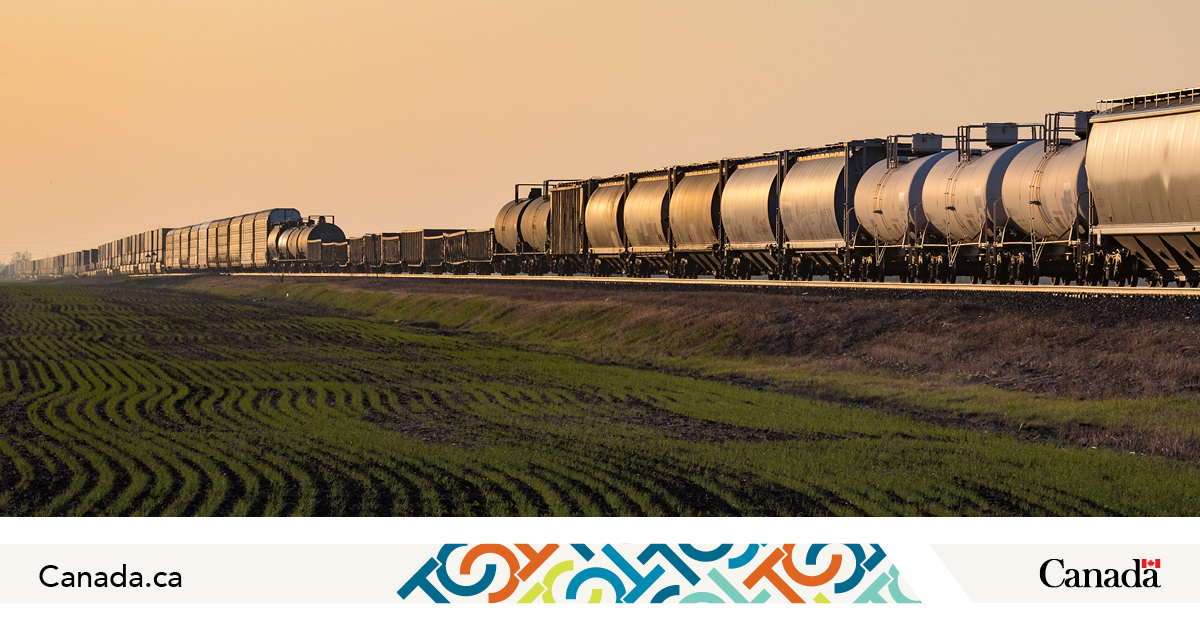
The Government is committed to strengthening engagement with local and Indigenous groups as part of broader efforts to strengthen the safety of Canada’s railway system and better protect those living and working near Canada’s rail corridors.

Today, the Minister of Transport, the Honourable Omar Alghabra, announced a new rail safety component under the Community Participation Funding Program and launched a call for proposals for 2021-22 with up to $300K available in funding.

The objectives of the Community Participation Funding Program-Rail Safety Component include:

  • supporting the participation of, and collaboration with, local and Indigenous communities and organizations in Transport Canada’s engagement processes; and
  • increasing awareness and improving information sharing regarding risks and mitigations associated with railway safety.

The Community Participation Funding Program-Rail Safety Component aims to provide short-term grants with the goal of supporting the participation of eligible communities and organizations in the development and improvement of Canada’s rail safety transportation system. Recipients will be encouraged to share their knowledge and expertise of local environments to help inform rail safety initiatives and future programming.

Those interested in learning more about the Community Participation Funding Program-Rail Safety Component are invited to consult Transport Canada’s website.

Transport Canada recognizes the importance of supporting opportunities for local and Indigenous communities and organizations to participate in the development and improvement of Canada’s rail transportation system in Canada that may impact their daily activities and communities. 


Source link