Categories
TV & Movies

Thumbnails 7/14/14

Thumb_screen_shot_2014-07-13_at_2.16.54_pm

1.

“Miss American Dream”: Medium‘s Taffy Brodesser-Akner tells the tale of “how Britney Spears went to Vegas and became a feminist role model.”

“What if [‘Work Bitch’] is a personal song? The song’s sentiments are certainly the only ones in current pop that I can relate to. Its message is that nothing comes easily, that you can’t keep your kids in private school and your community gated and your ex-husband in his nation-building ambitions without work. Britney isn’t the f–k-up we decided she was during a relatively short but well-publicized period of her life. She drops off her kids and picks them up from school just about every day. She shows up on time, hits every mark, is polite and soft-spoken. She rehearses five or six hours every day, saying, ‘Let’s run through it one more time.’ Britney works. So, are we prepared to dismiss our preconceived notions of her as some sad gum-chewing has-been to make room for another interpretation? What if Britney has somehow become a feminist role model for single working mothers here and everywhere?”

2.

“Guillermo del Toro Reveals ‘Hellboy 3’ Plot, But Doesn’t Think It Will Get Made”: Russ Burlingame of ComicBook.com reports on the …read more

Categories
TV & Movies

‘Apes’ Goes Bananas

With strong reviews and goodwill from its well-liked predecessor, Dawn of the Planet of the Apes easily ruled the domestic box office this weekend.Overall, though, it was another slow weekend at U.S. movie theaters: the Top 12 earned $139.7 million, which is down 26 percent from the same weekend last year.Debuting at 3,967 theaters, Dawn of the Planet of the Apes earned an estimated $73 million this weekend. That’s a 33 percent improvement over the last movie’s $54.8 million opening, and is… …read more

Categories
TV & Movies

Boyhood

Thumb_boyhood-2014-1

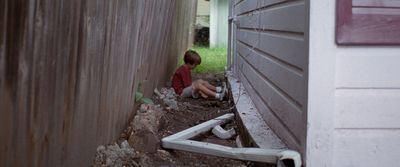
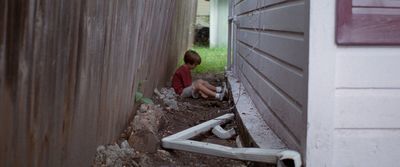
The second shot of “Boyhood” doubles as the movie’s poster image: a young child named Mason, Jr. (Ellar Coltrane) lying on his back in green grass, staring at the sky. He does not speak and there is no voice-over narration, so we cannot know what’s in his head. But the movie is contemplating, among other things, the fleeting nature of existence—the way that time, to quote “Life Itself,” slips through your fingers like a long silk scarf.

“Boyhood” became the instant subject of media buzz last year when Linklater revealed that he’d been working on the project for 12 years, following the same actors (including Patricia Arquette and Ethan Hawke as the hero’s parents, Olivia and Mason, Sr., and the director’s daughter Lorelei Linklater as his sister Samantha) through the early part of the 21st century. We watch the children grow up and the adults thicken and grey. We see Olivia and Mason, Sr. in various relationships. Olivia is looking to replace her ex-husband and make her “broken” family intact again, and this search leads her into a series of arrangements that are wrong for her, sometimes horribly so. Mason, Sr., goes the other way, acting the role of bohemian free-spirit even as he works a series of rather typical jobs. The kids get taller and become interested in particular subjects, and in sex, and after a while they start to think about college and what they want to do with their lives.

It’s all a blur. The blur is indescribably moving. We’ve seen people age in movies and on TV programs—the kids in the “Harry Potter” and “Up” series, for instance, and little Ronny Howard on “The Andy Griffith Show,” and Kiernan Shipka on “Mad Men”—but we’ve never seen it happen in such a compact span of screen time. That’s what makes “Boyhood” singular. There is no other work to which one can directly compare it without distorting pop culture history. This movie is truly its own thing, as eccentrically unique as Linklater’s breakthrough “Slacker,” another Austin-set feature to which “Boyhood” feels (curiously) like a companion piece, or perhaps a bookend.

Mason is a child of divorce. He and his mother and his sister move around a lot, all over Texas, a U.S. state as big as France. Mason’s dad does not have custody, so has to accommodate his wife’s shifts in geography over the years, sometimes driving hundreds of miles to see his children. Even though Olivia and Mason, Jr. love their kids, there are moments when they resent them, because once they had them they were locked into a particular track and had to put their kids first, always. The trick, though—and this is where Linklater the writer shows how generous and kind he is—lies in realizing that sometimes when parents think they’re putting their kids first they’re really responding to conditioning, or doing what their society or their gender or their parents told them was the correct thing to do.

The movie’s about social conditioning as well as time. It asks basic, deep questions. What makes us “normal”? Is there such a thing as “normal”? What makes us identify as men, as women, as children? Is the traditional domestic arrangement—a wife, a husband and kids living in the same house—really desirable for every person, and genuinely good for society, or does it inflict distress on those whose personalities and desires cannot function within it? Two important men in Olivia’s life have drinking problems; alcoholism is a disease, but it’s also a means of forgetting, of numbing pain, of denial. Do we really change over time? Can we decide to change ourselves? Or is free will an illusion? Do we seize moments or do moments seize us? (“You are responsible for your own actions,” warns a sign hanging in the hero’s elementary school.)

Olivia seems, like many single moms, dispirited by the the responsibilities she bears. Early on we hear her arguing with her boyfriend, a single man who resents that she can’t just come and go as she pleases, as he does. (“I was somebody’s daughter, and then I was somebody’s fucking mother,” she says.) She’s chasing an idea of normalcy that may not be right for her. In an intense scene that occurs in a car outside of a school, not long after a period of domestic strife, Olivia asks for understanding because she’s trying to build “a family” with a new boyfriend, and Mason exclaims, “We already have a family!”—and he’s right. Olivia is a college professor and a liberal feminist, but she’s still bought into the husband-and-wife-and-two-kids-equals-a-real-family thing. She studies “unconditioned response” in one of her grad school courses but it takes a few years for her to figure out, in practical terms, what the phrase means.

There are points near the end of “Boyhood” when Olivia might remind you of George Bailey, the hero of “It’s a Wonderful Life.” Of the movie’s two parents, she is nearly always the responsible one—the “boring” one. Even her worst decisions were made for noble reasons, but the constraints that motherhood placed on her freedom always gnawed at her. Over time, though, she grows by leaps and bounds, finishing grad school and becoming a teacher and then a person of considerable influence in her community. We start to see the profound, lasting impact that her moral rectitude has had on the world. She evolves, as surely as her ex-husband and children evolve, but the process is subtler. It’s not right out there, like her ex-husband’s delayed maturation.

The film’s title and choice of protagonist have been criticized (gently but firmly) for unthinkingly confirming that heterosexual men are at the center of the universe. But this reading ignores the movie’s constant (if empathetic) critique of American manhood, or what passes for American manhood: an entitled mental state that is really just boyhood with money and a driver’s license. Mason, Sr., for all the love that he shows his kids, is an example of this. He’s a great natural playmate for his son and daughter, joining them on the floor as they futz with toys and taking them on camping trips and trying to purchase their love with gifts as if every visitation were a miniature Christmas. But he doesn’t express much real wisdom until his kids edge toward adolescence and become tight-lipped and undemonstrative, and he pulls the car over during a family trip to demand that they have real conversations (amusingly, Samantha makes the same request of him).

He has to learn to give in as well as to give—and that giving in doesn’t always have to mean giving up. Even when Mason, Sr. is 30 or 40 he still lives like a 19-year old who just got his first place. He resents his ex-wife as a killjoy, and clings to his GTO the way little boys cling to their loveys. And yet he matures onscreen along with his kids, mellowing over the years and becoming less strident and arrogant and more generous, learning that it’s possible to be a person of integrity even if you aren’t insisting that every single thing go your way at every single moment (a pattern of behavior that only narcissists mistake for freedom). We get the sense that in some ways Mason the elder is un-learning what he learned during the first part of his life—an experience that his kids are now going through, with different details. It’s rough, this process. It’s emotional boot camp, with versions of hazing. And I love how “Boyhood” admits that, in certain ways, growing up stinks. Every character has a least one moment in which they have to heed the advice of Corinthians and put away childish things. None of them like it.

The adults in Mason, Jr.’s orbit (including his mother and father and various teachers and authority figures) all want to parent or mentor him by turning him into reflections or extensions of themselves. In high school, a photography teacher tells the budding shutterbug hero that he needs to move away from arty compositions and learn to shoot sports so that he can make a living, advice which assumes that Mason, Jr. wants to earn a living with photography rather than treating it as an avocation, or as the visual version of a diary. The manager of a restaurant where Mason, Jr. works as a dishwasher wants to groom him as a fry cook. The man’s eyes light up as he describes this arc, as if he’s moved by his own generosity.

At various points during the boy’s life he’s pushed toward bad decisions by other boys who warn him that failure to act a certain way makes him a “fag” or a “pussy.” You sense the kid pushing back against these pressures. You realize that, for all their faults, and despite the geographical and emotional obstacles that they were up against, his parents did a good job raising him. Or maybe he absorbed their better qualities as if by osmosis. (Did he seize their better qualities, or did their better qualities seize him?) Linklater doesn’t explain any of this—the storytelling and filmmaking are intuitive; things that look like pointers or labels aren’t—and yet it’s all there in the movie. You can feel it. Perhaps without meaning to, the film exemplifies the best piece of advice that anyone gives the hero: “We’re all just winging it.”

“Boyhood” is broken into discrete dramatic chunks—this is really an anthology of short movies with a recurring cast—and there are no timestamps telling us that we’ve passed from 2002 into 2003 or from 2009 into 2010. We realize where we are on the timeline when we hear somebody talking about the Iraq war, or hear a song on the soundtrack that was big during a certain year, or realize that the boy has changed his haircut or gotten a little bit taller. The simultaneously nourishing and corrosive effects of time make the film quietly moving and humble-seeming, despite its three-hour length and conceptual audacity. Time is what makes the film cohere even when particular scenes, images or performances seem clunky or undernourished. Fixating on imperfections while discussing “Boyhood” would be as petty as criticizing the sculpting of individual stones in a cathedral. The totality matters. Even more important is our recognition that the totality is as fleeting as life.

Time, and our interaction with time, and the way in which we are all ultimately overmatched and worn down by time, and the notion of cinema as a means of sculpting with time: these and other aspects of temporality are at the heart of “Boyhood.” Time is the core around which all of this movie’s musings on childhood and parenthood are woven. It’s the river down which the scenes and characters travel without consciously realizing that they are on individual journeys that all have the same ending. If life is “about” anything, it’s about realizing and accepting that fact: that everything is fleeting. Time gives birth and nourishes and then obliterates as it moves ahead, like the family which, in an early scene, prepares to move out of a house by covering murals and hand-lettered height charts with white paint. The film ends and the credits come up and you ask the same question that you ask at the end of an evening spent with old, dear friends: where did the time go?

Categories
TV & Movies

Dawn of the Planet of the Apes

“Dawn of the Planet of the Apes” is loud, smart and ferociously committed to its premise, and it leaves an intriguingly bitter aftertaste. Like its predecessor, 2011’s “Rise of the Planet of the Apes,” it borrows situations and images from the 1960s and ’70s “Apes” films and re-creates them as epic dramas. These new installments in the series aren’t as satirical as the original “Apes” movies, but they’re just as playfully political; the biggest difference is the sense of intimacy. The politics are personal, and they play out through the character of Caesar (Andy Serkis). “Rise” portrayed Caesar as a victim turned rebel. His backstory fused the title character of “Flowers for Algernon”—about a simple man implanted with extraordinary intelligence by a scientist—with Spartacus. There were political elements in the script, mainly having to do with the ethics of animal testing. But for the most part “Rise” was a traditional hero’s journey. It was about an ordinary ape realizing his extraordinary potential and becoming, pun intended, a guerilla warrior, inspiring his brothers and sisters to overthrow their human oppressors and make a homeland in the Northern California forest. The film’s insistence on anchoring every event in strong, simple emotions—most of them originating in the constantly evolving character of Caesar—made “Rise” surprisingly intimate and wrenching. Caesar was your entry point into the story. You identified with him completely, as you did with King Kong, Frankenstein’s monster and Dumbo. You felt his pain, and cheered when he stood up for himself. The mostly excellent “Dawn” expands and complicates Ceasar’s story by showing the aftermath of revolution, when the romance of rebellion has faded and boring old reality sinks in. Caesar and his fellow apes have settled in the forest amid remnants of a civilization cast into ruin by simian flu. A small group led by Gary Oldman, Jason Clarke and Keri Russell appears. These humans ask Caesar if they can please reactivate the dormant hydroelectric plant in the woods to restore power to San Francisco, where a few hundred plague survivors have settled amid stone-age squalor. They claim to seek nothing but peace and comfort. The humans’ request sparks torment in Caesar and sets the plot in motion. I’ve seen a few critics insist that “Dawn of the Planet of the Apes” is an allegory for the Israel-Palestinean conflict, and certain echoes of that real world tragedy may indeed be present; but for the most part, the film’s allusions struck me as more general, like the contours of a fable intended to spark dreams and eventually lead to wisdom. There are echoes of the Old Testament (particularly the story of Cain and Abel) and the New, as well as post-Vietnam westerns that showed what happened when isolated bands (or tribes) of European settlers and Native Americans found themselves in the same territory, more or less evenly matched. In such situations, the groups were usually torn apart by internal conflicts, and that’s what happens here. Caesar is a hero who led an ape uprising and has been canonized by his followers as sort of Geronimo or Fidel Castro of simian autonomy. But deep down he’s more human-sympathetic than many of his kind, because his human “father” (James Franco, seen in “Rise”) truly loved him. (Caesar is also gun-shy, or fist-shy, because his wife was injured in childbirth and can’t heal without human medicine.) In time, Caesar’s divided soul becomes a metaphor for two families of sentient mammals angling for global dominance. Ape reflects man in these movies, and man ape. There’s even a brazenly corny but effective bit of silent-film cross-cutting that draws correlations between characters that represent the diplomatic (or “accommodationist”) attitude toward resolving conflict and the hardline approach. Caesar grapples with these conflicting impulses within himself even as they’re externalized through his ape foil, Koba (Toby Kebbell), a scarred, bitter survivor of laboratory torture who once was loyal to Caesar but now thinks he’s gone soft and is at risk of becoming a species traitor. Their conflict is mirrored in the struggle between Clarke’s Malcolm (the human Caesar) and Oldman’s Dreyfus (who seems reasonable at first, but reveals himself as Koba’s counterpart). The direction, by Matt Reeves of the soulful vampire remake “Let Me In” and the half-magnificent, half-lame found footage monster flick “Cloverfield,” strikes a marvelous early Spielberg vibe, alternating humor and terror with plot-motivated directorial flourishes (including a “Children of Men”-style tracking shot through an ape-infested warehouse and a hair-raising ride atop the turret of a tank). The script, credited to Mark Bomback, Rick Jaffa and Amanda Silver, makes for muddy allegory, perhaps purposefully so (though its attitude toward guns is less editorial-page modern than many have claimed), and it has major flaws, including a too-typical things-crashing-into-other-things summer movie climax, flat human characters (compared to the apes), and a dearth of notable females (this is biologically defensible on the apes’ side of the story—maybe—but certainly not on the humans’). And yet the script satisfies because it’s fair to every character. You understand Caesar’s and Koba’s and Malcolm’s and Dreyfus’s points-of-view even when they’re making destructive choices. And when you trace the chain of events that leads to the third act’s man/ape showdown, you realize it’s impossible to say for sure which side “started it.” Fans of the collaborative performance between Serkis and the special effects wizards of “Rise” might think it impossible that we could be drawn deeper into this character’s heart. Amazingly, that’s what happens. Serkis is a towering figure in screen acting who is to 21st century cinema what Lon Chaney, Sr., was to the early 20th. Chaney deformed his face and body with masochistic makeup effects, while the CGI artists distort Serkis’; otherwise the sorcery is similar. It would be wrong, though, to downplay Serkis’ personal charisma and craft. He’s made specific, clever choices here, and they help you see a unique person—or creature, or being—behind the digital facade. Caesar’s energy is so 1960s samurai-picture that I wouldn’t be surprised to learn that the actor had Toshiro Mifune’s face tattooed on his back. You sense the character’s tangled and volatile feelings even as he presents himself to his followers as a strong/silent warrior-statesman. The CGI gorilla-face on Serkis is one kind of mask. Caesar’s tactical self-presentation is another. (Koba shows off a similar false front in scenes where he does a simian shuck-and-jive routine to throw stupid humans off-guard.) “Dawn” shows Caesar grappling with the irritations and agonies of leadership. During moments of impending and erupting violence, some of which have an almost midnight-movie ugliness, the film’s pop-operatic boldness and orange-brown torchlighting fuse with the weirder parts of composer Michael Giacchino’s score (like a calliope heralding a circus in hell) to suggest that we are watching the simian cousin of Francis Ford Coppola’s mob trilogy. If “Rise,” about the unlikely savior of an endangered clan, was “The Apefather,” then this sprawling, messy, often sad sequel is “The Apefather, Part II,” turning brother against brother (on both the human and ape sides of the dramatic fence) in a war for resources and turf. The film starts and ends with rhyming closeups. The first promises a gentle and hopeful future, the second certifies that the tribe’s survival must be purchased at the cost of its soul. Heavy hangs the furry head that wears the crown.

Categories
TV & Movies

Closed Curtain

Thumb_closedcurtain-2014-1

Most films require little or no knowledge on the viewer’s
part of the filmmaker’s likeness or personal history. But folks who walk into
“Closed Curtain” unfamiliar with Iranian director Jafar Panahi and his recent
travails are sure to find themselves utterly baffled and confounded. A kind of
“film a clef,” the movie (co-credited to Kambozia Partovi) is essentially a
psychological self-portrait that depends on the viewer’s knowledge of Panahi’s
past work and the strange limbo he has existed in since the Iranian government
banned him from working for 20 years—and then tacitly allowed him to go on
making films “in secret.”

With films such as “The White Balloon,” “The Circle” and
“Crimson Gold” to his credit, Panahi was one of Iran’s most successful and
internationally lauded filmmakers when his outspokenness and political activism
in the wake of Iran’s contested 2009 presidential election got him in trouble
with the government. He was arrested and jailed for a time, and has credited
international protests with his eventual release. Nonetheless, he was
subsequently put on trial, convicted and given a draconian sentence that
included being banned from making films for two decades.

Living under house arrest (and barred from leaving the
country) since then, he has used digital cameras to make two films that have
been smuggled out of Iran and gained acclaim at film festivals and art houses
around the world. In the droll “This Is Not a Film,” he showed himself cooped
up in his Tehran apartment and dealing with his de facto imprisonment by
reflecting on his past work and continuing to film.

Filmed in Panahi’s Caspian Sea vacation home, “Closed
Curtain” at first seems a very different kind of film. A middle-aged writer
(Partovi) arrives at a seaside villa bearing luggage, and immediately begins
covering the house’s many picture windows with heavy black curtains. One of his
bags contains the reason for his secrecy: his dog Boy (played by a personable
pooch who gives the best canine performance in recent memory), a pet the man is
determined to keep hidden from the authorities who have declared dogs “impure”
in Islamic law and therefore subject to confiscation and slaughter.

The solitude of man and dog, though, is short-lived. Going
out at night to empty Boy’s litter box, the writer leaves the door open just
long enough for a young man and woman to rush inside breathlessly. They say
they are a brother and sister who were at a party that was broken up by police
who are now pursing them. The writer hears the police as they poke around
outside and, thinking the house empty, leave. The young man himself then
departs, saying he will get a car and return, and quietly warning the writer
that his sister is suicidal.

Something definitely seems amiss with the girl. With her
sing-song voice and inexplicable smile, she gets under the writer’s skin from
the first moments they are together, invading parts of the house that he
doesn’t want her in and making cryptic, insinuating remarks. At first he
suspects she may be a police plant, but then sees that she’s too weird for
that. After annoying him for a while, she seems to have left the house. Then
she reappears and aggressively begins ripping the black curtains from the
windows.

At which point, roughly halfway through the film (inevitable
spoiler alert here), Panahi himself walks into the frame, and we see that, in
addition to baring the windows, the removal of the curtains also reveals
Italian and French posters for some of his earlier films. This startling moment
recalls a similar one in the middle of Panahi’s “The Mirror” when the little
girl playing the film’s main character suddenly declares she’s not acting any
more and runs away from the film location, to be followed by other cameras.
That “coup de cinema,” though, took us from fiction to something closer to
documentary, whereas this one transitions to a kind of subjective surrealism—call it a documentary about the inside of Panahi’s head in recent years.

What follows resembles a narrative broken into shards.
Sometimes the focus stays on Panahi as he moves around the house and interacts
with visiting neighbors. Sometimes we return to the writer, his dog and the
girl. Sometimes the filmmaker seems aware of these “characters,” sometimes not.
Occasionally, the tone is gentle and affirming, as when a good-hearted neighbor
assures Panahi, “You’ll be able to work again,” while also counseling, “There
are more things to life than work.”

Yet there are also darker moments, as when characters are
seen walking into the sea to commit suicide, a la Norman Maine in “A Star Is
Born” and Roger Wade in “The Long Goodbye.” The girl does this first, yet later
reappears. Then we see Panahi do it, but before the action is completed, the
film reverses and he moves out of the sea again—one of several instances
where we are reminded of the mechanics of filmmaking.

If the dominant mood of “This Is Not a Film” was defiant,
the main feeling here is melancholic. In implicitly confessing to suicidal
impulses (as his mentor Abbas Kiarostami did in “Taste of Cherry”), Panahi
shows how low his confinement has brought him. He still works in order to stay
engaged with life and cinema, and this film’s graceful framing, lighting and
camera movement testify to his skills as a stylist, yet the movie also raises
the question of how many more films he can make about himself and his
frustration before hitting a creative wall.

Kiarostami pioneered the Iranian tradition of films about films
and filmmakers with movies including “Close-Up” and “Through the Olive Trees.”
After venturing into the same territory with “The Mirror,” Panahi’s work grew
more political, and politics eventually landed him in a situation where the
only ready subjects were a filmmaker (himself) and his work, which has been
drastically delimited by the government. He responded with imaginative films
that are invigorating and courageous, yet one wishes that he would soon gain
the freedom to make other kinds of movies again.

Categories
TV & Movies

Deliver Us from Evil

Thumb_deliverusfromevil-2014-1

Despite a series of jarring jump scares, “Deliver Us From Evil,” the latest horror film from “Sinister” director Scott Derrickson, is little more than an ugly collection of tropes stolen from “The Exorcist” and “Seven.” Ostensibly about the importance of family, and Christ-like man-saviors that will do anything to protect their children (and sometimes women), Derrickson and co-writer Paul Harris Boardman fixate on the tacky, and tawdry, details of their “based on a true story” exorcism tale and never interrogate their characters’ motives beyond stock posturing.

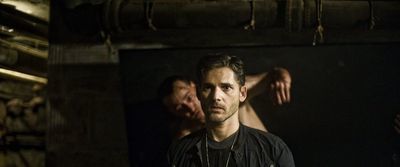
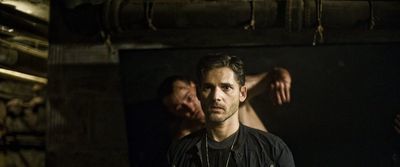
Many of “Deliver Us From Evil”s creative shortcomings result from Derrickson and Boardman’s lazy articulation of their film’s interest in spiritual doubt and penance. For example, Eric Bana’s Sergeant Ralph Sarchie, a haunted member of the New York Police Department, simply knows when bad things are going on around him because he has an intuitive “radar”-like sixth sense. Sarchie’s supernatural radar leads him and wise-ass partner Butler (Joel McHale) to a string of related domestic abuse cases. In each case, parents abuse their children while a mysterious string-bean of a man (Sean Harris) hovers nearby, painting over ominously legible graffiti written entirely in Latin. In each case, rebellious, Sarchie finds that hard-drinking Jesuit priest Father Mendoza (Edgar Ramirez) is already on the case, waiting to nudge skeptical Sarchie toward a no-man-is-an-island acceptance of his limitations. These two tough (but fair!) men inevitably team up, but only after more children are threatened, pets are abused, and women are treated like accessories.

Derrickson and Boardman’s film is more than just a sympathetic representation of Sarchie’s paranoia. If this film were even semi-critical of Sarchie’s testimony, it would acknowledge that, in any other context, Sarchie’s version of events is “Taxi Driver”-levels of deranged. Instead, whenever he enters victims’ homes, we see omnipresent crucifixes, a comically vampish Italian woman, a bloated corpse, creepy basement junk, and enough crumbling fixtures to make Bob Villa cry. The only recognizably human domestic-minded person in this film is Sarchie’s wife Jen (Olivia Munn), but she’s mostly sad that Sarchie’s “never here, not even when you’re home.”

The world of “Deliver Us From Evil” needs a real man to clean up all the messes that demon-possesed, absent fathers have left behind. The film’s casual chauvinism is established early on when Derrickson and Boardman make table-setting jokes at the expense of women met by Sarchie and Mendoza. First, there’s the stranger that drunkenly hits on Mendoza at his regular bar: “You’re sweaty” she gasps before Mendoza wearily remarks that drinking is just like medicine. Then there’s Jane (Olivia Horton), the first possessed parent Sarchie stumbles across. When he arrests her, Jane mocks Mendoza by calling him a “specialissssst.” Horton hisses this line with such unholy comic vigor that she sounds like a Peter Lorre-esque Gollum pull-string doll. But Jane isn’t funny since she’s obviously unwell. In this scene, before tragic events later humanize her in the worst way imaginable, Jane is little more than a scary punchline.

Admittedly, there’s something inherently fascinating about a mediocre horror film that nakedly insists that women are plot devices, fathers always know best and dead kids are inherently the best way to an audience’s heart. But Derrickson and Broadman spend so much time fetishistically focusing on grisly generic junk like an eviscerated cat and a possessed, rolly-polly toy owl that they wind up neglecting even the tropes of their shallow characters. It’s not just that “Deliver Us From Evil” is blunt and kind of vile; it’s so hysterically incompetent, and mindlessly excessive, that I found myself cheering on a demonic toy that benignly coos “Aa-oo-oo, aa-oo-oo.” “Deliver Us From Evil” is scary, but only because it can’t even make a possessed stuffed animal creepy.