Categories
Sports

Putin suggests U.S. drugged whistleblower who exposed Russia’s Olympic doping regime


MOSCOW — Russian President Vladimir Putin accused U.S. agencies of manipulating evidence from the main whistleblower on doping at the 2014 Sochi Olympics.

Putin said Thursday that former Moscow anti-doping laboratory director Grigory Rodchenkov — who is under witness protection after fleeing to the United States last year — is “under the control” of the American agencies, including the FBI.

Rodchenkov being in the United States “is not a positive for us, it’s a negative. It means he’s under the control of American special services,” Putin said. “What are they doing with him there? Are they giving him some kind of substances so that he says what’s required?”

Putin added that Rodchenkov should never have been appointed to run Moscow’s anti-doping laboratory in the first place.

“It was a mistake on the part of those who did it, and I know who did it,” he said, but didn’t name names or say they should be punished.

Dr. Grigory Rodchenkov. Emily Berl / New York Times

Testimony from Rodchenkov played a key role in International Olympic Committee investigations which led last week to Russian athletes being required to compete under a neutral flag at the upcoming Pyeongchang Games.

Rodchenkov said he was ordered by the sports ministry to oversee steroid use by Russian athletes in many sports, and to cover up their doping by falsifying test results and swapping dirty samples for clean ones.

The IOC’s decision to trust Rodchenkov’s evidence is “nonsense,” Putin said, portraying the scientist as mentally unstable and referring repeatedly to Russian criminal investigations against him.

The Russian government has denied it had any involvement in doping, particularly around the Sochi Olympics, which is seen as a key prestige project.

Russian officials have previously said they accept some drug use occurred, but on a much smaller scale than alleged, and that Rodchenkov tricked some clean Russian athletes into taking banned substances by claiming they were legitimate dietary supplements.

In this Jan. 17, 2014 file photo, Russian President Vladimir Putin speaks with Olympic volunteers in Sochi. Alexei Nikolsky / AP / RIA-Novosti

Putin also reiterated previous claims that Russian doping scandals are an attempt to smear the government as he runs for re-election in March, a month after the Pyeongchang Olympics.

“The scandal is being created ahead of the domestic political calendar,” he said. “Whatever people say, I’m convinced, I just know this is the case.”

Russian sports officials and athletes across numerous sports have said they will accept the IOC demand that they compete as “Olympic Athletes from Russia.” That means they will compete in neutral-colored uniforms under the Olympic flag, with the Olympic anthem played at medal ceremonies instead of the Russian anthem.

However, the IOC says the ban could be lifted in time for Russian athletes to march at the closing ceremony under their own flag, if Russia complies with IOC conditions.

An IOC commission found no evidence that Russia’s “highest state authority” was involved in doping, but that sports ministry officials knew of the doping scheme.


Source link

Categories
Sports

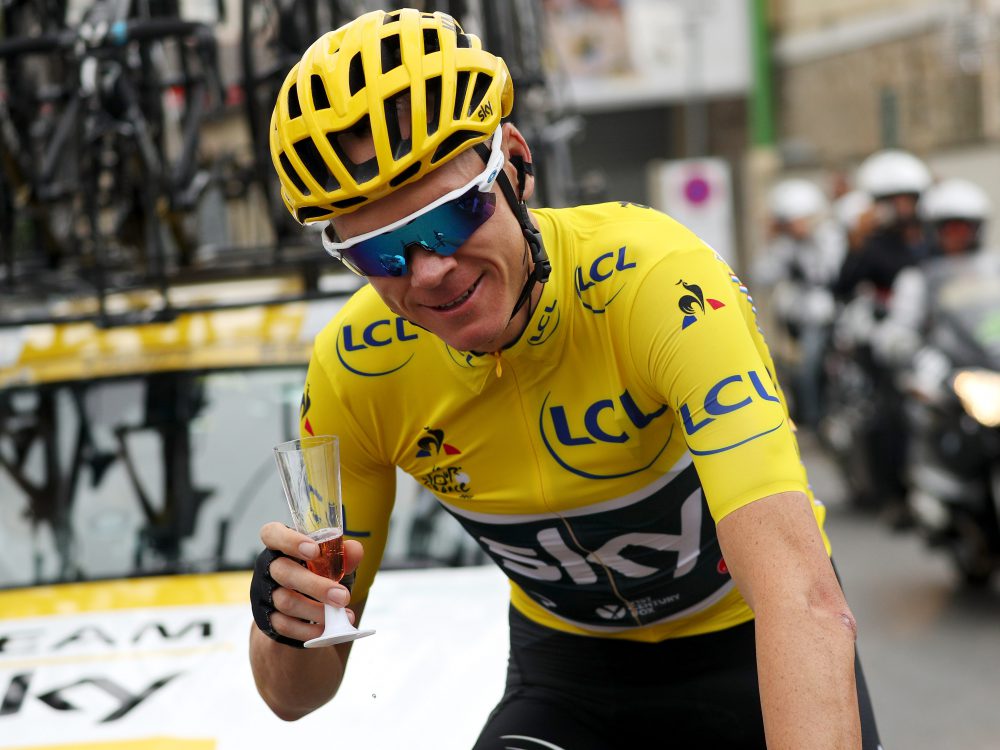
Cycling’s grandest tradition: Chris Froome fails doping test, joins growing list of infamous champions


Admit it: You had a feeling it would happen. I had a feeling it would happen.

How could anyone not?

Chris Froome, the four-time Tour de France winner, confirmed Wednesday that he tested positive for excessively high amounts of the asthma drug salbutamol during the Vuelta a España in September, on his way to victory in that Grand Tour. The level of the drug found in his urine was twice the amount allowed by anti-doping rules.

This news comes as no surprise. Not necessarily because it was Froome, the 32-year-old rider for Britain’s Team Sky who has dominated cycling in recent years. But because the revelation fits right in with a Tour tradition.

So Froome’s name now goes on the growing list of cycling champions turned infamous for failed drug tests or doping admissions: Lance Armstrong. Floyd Landis. Jan Ullrich. Alberto Contador. And on and on.

The last time there were back-to-back Tours de France without the winner becoming entangled in a doping scandal was 1995, when Miguel Induráin of Spain won his fifth and final Tour. (Yet he, too, once failed a test for an asthma drug but was not punished.)

That’s an entire generation of embarrassment for a sport and its biggest stars. Three of those riders — Armstrong, Landis and Contador — have been stripped of some or all of their victories, but those falls from grace didn’t happen without a fight. And it looks as if Froome is preparing to dig in for one, too.

Froome, who has had asthma since childhood and has often used inhalers in public, may face a suspension of a year or more. But don’t think for a second that he and his powerful, often sanctimonious team are going to roll over and accept a ban.

Be prepared for explanations and excuses, and they had better be good, because cycling investigators have heard some doozies. Tyler Hamilton once blamed a doping positive on a vanishing twin in his mother’s womb. Landis once attributed a suspicious surge in testosterone on too many swigs of whiskey.

For the moment, Froome is free to continue racing, and he isn’t panicking. At least not publicly.

He told The Guardian and Le Monde that his asthma had worsened during the Vuelta, so he just followed a Team Sky doctor’s orders to increase the amount of salbutamol he was already taking. The drug opens airways — an undeniably helpful result in a sport like cycling — and some argue that if a handful of riders can take it for asthma, then every rider should be allowed to do the same. And why wouldn’t they? Salbutamol has been used to increase endurance, burn fat and increase lean muscle mass — basically the reasons the World Anti-Doping Agency affixed a limit to the amount an athlete could have in their system.

But even if a doctor told Froome to take more of the drug, Froome should have known better — he must know better — because that isn’t going to fly with anti-doping experts.

To be even clearer: If Froome’s version of events is true, he made a rookie mistake. It would also be a surprise if Froome couldn’t feel the difference between the regular amount of salbutamol he takes and twice that amount. And the consequences of getting caught doing so should have been obvious to an athlete who — as he admitted — knew he was going to be tested repeatedly.

So right now we know this: Something went very wrong for Froome at the Vuelta, and that something, now and perhaps forever, has put a black mark next to his name in every record book.

“I am confident that we will get to the bottom of this,” Froome wrote on his Twitter page. “Unfortunately I can’t share any more information than I already have.”

As you read this sentence, Dave Brailsford, Team Sky’s principal and founder, is becoming an expert on salbutamol, which is a twist. Over the years, he has talked a lot about drugs, but only about how none of his riders use them, and often — despite increasingly unexplainable incidents — with how-dare-you-insinuate-that-they-are-not-clean indignation.

In 2016, he brushed off the revelation by Russian hackers that the 2012 Tour winner, Bradley Wiggins, had gotten official clearance to use more than his fair share of otherwise restricted or barred drugs. That same year, he dealt with the fallout from the delivery of a mysterious medical package to Wiggins at the 2011 Critérium du Dauphiné, a critical Tour de France warm-up race.

Froome’s failed test could be different, though. Team Sky was founded in 2009 on the pompous premise that the organization had zero tolerance for performance-enhancing drug use and that it would fire anyone with a doping past. It was quite a bold and somewhat ridiculous idea, and the sideways glances only multiplied as Froome and Team Sky ascended mountain after mountain with improbable ease.

We’ll find out now if Team Sky’s stated zero tolerance applies to its best rider. If Froome can’t wiggle out of a suspension with an acceptable explanation, does it mean his time with Sky is over? My guess is it won’t — at least not if Brailsford can help it. After all, cycling’s rules are often broken or, at the very least, bent to fit the needs of a team or its star.

But if history has taught us anything, it is that the most dominant riders in cycling are the ones who fall the hardest.


Source link

Categories
Sports

Toronto Maple Leafs scoring tracker, 1917-2017: Every goal (and the 10 biggest) in the franchise’s century of hockey


Reg Noble scored the first. Mats Sundin had the most. The Detroit Red Wings allowed the most. And, in our eyes, a 24-year-old from northern Ontario potted the very biggest of them all.

The Toronto Maple Leafs have spent the past 68 games commemorating their centennial season; they’ve hosted the Red Wings in an outdoor stadium and honoured legends from Charlie Conacher to Wendel Clark. On Saturday night, they’ll wear white-and-green St. Patricks jerseys at home against the Chicago Blackhawks, paying homage to their early years in the NHL.

Toronto’s 100 years of hockey have been galling and glorious. The Leafs have won 13 Stanley Cups, retired the numbers of 19 players and sent more alumni to the Hall of Fame than anyone. They have also scored a lot of goals.

Here, Postmedia Sports has teamed with Qlik, an analytics and data visualization company, to produce an interactive application that tracks and categorizes every goal in Maple Leafs history. You can use the drop-down menu controls or click on bars within the visualizations to sort the data in a variety of ways. Selecting multiple seasons or decades allows you to compare those years directly.

Delve into all 100 seasons below, followed by our choices for the franchise’s top 10 goals.

***

THE TOP 10 GOALS IN MAPLE LEAFS HISTORY…

Bonus selection: Auston Matthews
Oct. 12, 2016 vs. Ottawa Senators

[embedded content]

He couldn’t have faced a much tougher path to the net. But 14 minutes into his NHL career, Auston Matthews swiped the puck from Mark Stone, the league leader in takeaways. He wheeled away from Mike Hoffman, one of hockey’s fastest players. He picked the pocket of Erik Karlsson, a two-time Norris Trophy winner. And he slid home his second goal of the game, with two more to come as the night elapsed.

It was enough to merit an honourable mention on this list, even if the goal was less significant for its immediate effect — Ottawa still won 5-4 in overtime — than for what it portends. No rookie’s debut has ever been so scintillating. With Matthews headlining the offensive charge, Toronto’s future may finally be bright.

10. Reg Noble
Dec. 19, 1917 vs. Montreal Wanderers

[embedded content]

The only players to ever one-up Matthews and score five goals in their NHL debut were Joe Malone of the Montreal Canadiens and the Montreal Wanderers’ Harry Hyland, both of whom did so on this day, the first in league history. Hyland, as it were, victimized the Toronto Arenas for his five as the Wanderers won 10-9 — the only win in their fleeting six-game history.

Arenas centre Reg Noble, whose 30 goals placed him third in the league by season’s end, netted four against the Wanderers that night, including the franchise’s very first, trimming a 2-0 deficit in half at 3:05 of the first period. (A decade later, the Arenas/St. Patricks became the Maple Leafs.)

9. Steve Thomas
Feb. 20, 1999 vs. Montreal Canadiens

[embedded content]

It was, for a night, The House that Steve Built. One week after losing 6-2 to the Chicago Blackhawks in the final game at Maple Leaf Gardens, Toronto opened play at the Air Canada Centre. Leaf winger Todd Warriner christened the barn with a goal after six minutes, but the real dramatics were saved for the end.

With the game tied 2-2 late in overtime, Mats Sundin sprung AHL call-up Ladislav Kohn out of the Toronto zone with a cool backhand flick. Kohn, a swift winger, lured his defender to the corner and fired a pass through the slot. There, it met the stick of Thomas, who had chugged up the weak side in search of his 22nd goal of the season. The Leafs were unbeaten in their new home.

8. Rick Vaive
March 24, 1982 vs. St. Louis Blues

[embedded content]

Vaive is often remembered for the company he kept from 1981-84: Mike Bossy and Wayne Gretzky, the only NHLers to score more goals over those three seasons. Indeed, the bruising winger from Ottawa made an otherwise feeble Toronto offence appear somewhat respectable.

True to form, Vaive was within spitting distance of the St. Louis crease 15 minutes into this game, when centre Bill Derlago whipped a backhand pass across the slot. Blues goalie Mike Liut was slow to react. All Vaive had to do to bang the puck home, becoming the first Leaf to ever score 50 goals in a season.

7. Mats Sundin
Oct. 14, 2006 vs. Calgary Flames

[embedded content]

No Maple Leaf scored more goals than Sundin, the powerful Swede who captained Toronto through its last stretch of what could conceivably be called glory years. Those days were over by 2006-07, but Sundin still hit a remarkable milestone in dramatic fashion early that season.

The Leafs were seconds away from playing in their fourth straight overtime game when Darcy Tucker was whistled for hooking. The penalty carried through to the extra period, when Sundin, deployed up top on the kill, wrested the puck away from a Flame, moseyed up ice and ripped a screened slapshot past goaltender Mikka Kiprusoff. It was his third goal of the game, and the 500th of his storied career.

6. Darryl Sittler
Feb. 7, 1976 vs. Boston Bruins

[embedded content]

The Maple Leafs of the 1970s were decidedly average: they lost in the quarter-final stage of the playoffs no fewer than seven times. But throughout that decade, they were led by a game-breaking centre named Sittler, who became a 100-point scorer for the first time in 1975-76.

A full tenth of his scoring output came on this night at Maple Leaf Gardens. Sittler entered the third period with a hat trick and four assists, then scored three more times consecutively. His sixth goal — a banked shot from behind the goal line — gave him an NHL-record 10 points, and effectively ended the career of Dave Reece, the rookie goaltender who endured the entire barrage and never played another NHL game.

5. Nikolai Borschevsky
May 1, 1993 vs. Detroit Red Wings

[embedded content]

Weeks before Wayne Gretzky sliced Doug Gilmour’s chin open without reprimand, Red Wings goaltender Tim Cheveldae was under siege. It was overtime in Game 7 of a Western Conference quarter-final, and the Maple Leafs were intent on leaving Joe Louis Arena with a series win.

First, Gilmour nearly beat Cheveldae on a backhand from in close. Then he almost spun loose when the Wings failed to clear the puck. And then a Bob Rouse slap-pass found a friendly stick at the goalmouth: that of Borschevsky, a 28-year-old rookie who had previously starred for years in Moscow. The Russian had a tap-in, and Detroit’s season was over.

4. Nick Metz
April 12, 1942 vs. Detroit Red Wings

The 1930s were promising and agonizing in equal measure at Maple Leaf Gardens. After a breakthrough Cup victory in 1931-32, Toronto reached the final in six of the next eight years — and lost every single one. A 3-0 deficit in the 1942 championship series, then, seemed like a precursor to the inevitable.

It took the greatest comeback in hockey history to end the drought, sparked by a goal from an unheralded depth winger in Game 4. Metz, an eight-year veteran from Wilcox, Sask., broke a 3-3 tie with just over seven minutes remaining, saving Toronto’s season in the process. Six days later, the Leafs were champions for the first time in a decade.

3. Ted Kennedy
April 19, 1947 vs. Montreal Canadiens

[embedded content]

No team won three consecutive Stanley Cups in the NHL era until the tail end of the 1940s, when Hap Day’s Maple Leafs were the toast of hockey. Kennedy, a prodigious 21-year-old centre, led the team in goals and points in 1946-47, the first season of that unprecedented run.

After a dismal 6-0 loss to the Canadiens to open the Cup final, Toronto rebounded to pull off three straight victories. Montreal survived in Game 5, and took a lead just 25 seconds into Game 6 at Maple Leaf Gardens. From there, Vic Lynn tied the game on a pass from Kennedy, who then slotted home the Cup winner with 5:21 left to play in the third period.

2. Bobby Baun
April 23, 1964 vs. Detroit Red Wings

[embedded content]

It didn’t look good for the Maple Leafs. Toronto was on the brink of elimination late in Game 6 of the Cup final, when Baun, a tenacious defenceman, took a Gordie Howe shot flush in the right leg. He collapsed off a face-off a few minutes later, and lay limp on a stretcher as he was carried off the ice.

The game, tied 3-3, soon went to overtime — and Baun, his fractured fibula numbed by Novocaine, strode back into play and fired a one-timer toward the Wings goal, more so to keep the puck in the offensive zone than anything. The shot nicked a Detroit stick and sailed over baffled netminder Terry Sawchuk, prolonging the series. Toronto won the Cup in Game 7, 4-0.

1. Bill Barilko
April 21, 1951 vs. Montreal Canadiens

[embedded content]

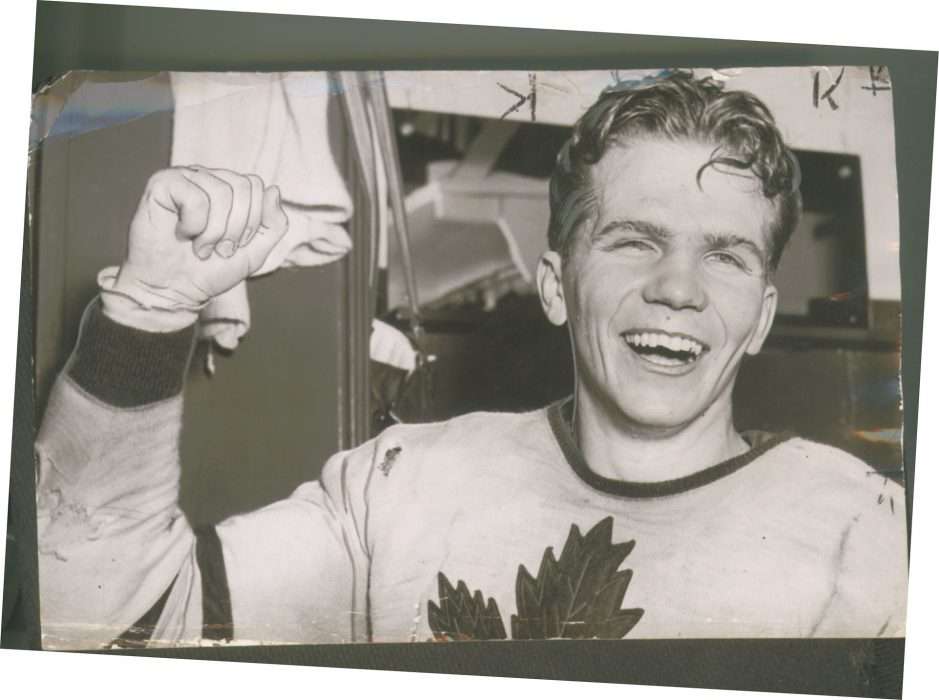
At a time when few defencemen made regular jaunts up ice, Barilko was a middling offensive threat, though he led the 1950-51 Leafs’ blueline corps with six goals in 58 games. The 24-year-old from Timmins, Ont. scored three more times in the playoffs: twice against Boston in the semifinals, plus the biggest point of his life in the Cup final against Montreal.

All five games of that final were decided after regulation, the first four on goals from more expected sources: Sid Smith, Maurice Richard, Ted Kennedy and Harry Watson. A few minutes into overtime in Game 5, a pinching Barilko spotted a loose puck, dove forward from the face-off circle and — his body momentarily still in mid-air — backhanded the clinching shot over Canadiens goalie Gerry McNeil.

It was, of course, the last goal he ever scored.

Postmedia Network



Source link

Categories
Sports

A century of Montreal Canadiens goals: These legendary plays launched dynasties and helped define the NHL


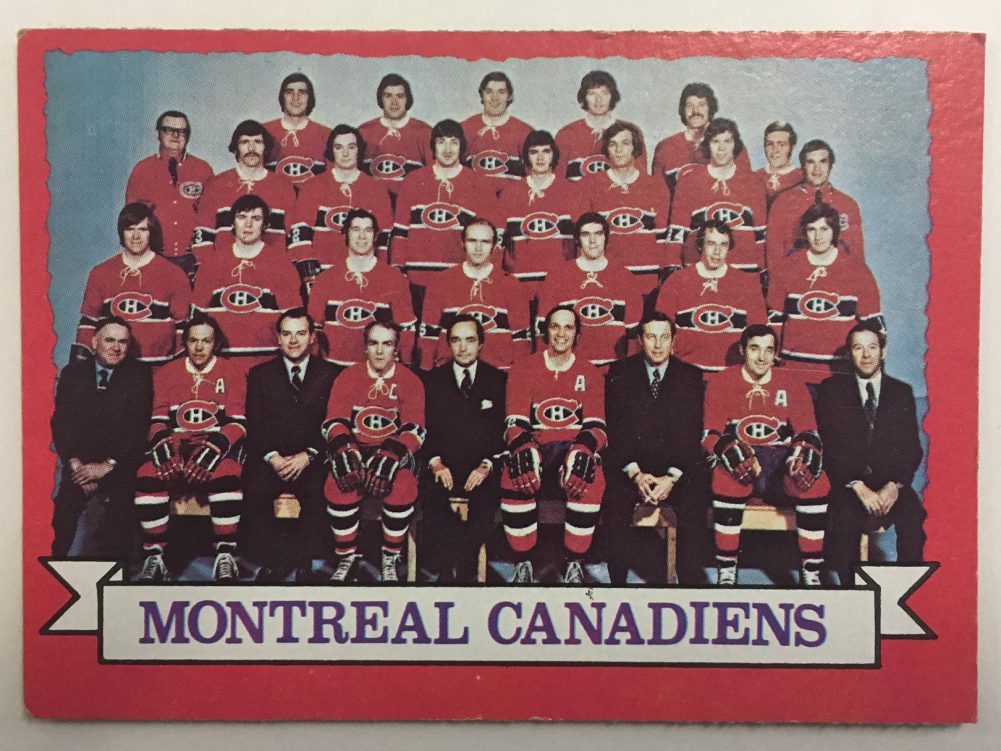
The Montreal Canadiens 1973-74 O-Pee-Chee hockey card.

Photograph by: Guy Spurrier

The history of the National Hockey League can hardly be written without large swaths of text devoted to the legends of the Montreal Canadiens. The mythology built up around the team, starting in its city and its province, then exported across Canada, throughout the league and across generations is arguably the foundation on which the league could grow from a quaint winter pastime into a business that now generates more than $4.5 billion in revenue.

Windsor, Ont., my hometown, sits at an odd nexus of Original Six hagiography. The Detroit Red Wings played across the river. The Toronto Maple Leafs were beamed into homes by the CBC on Saturday night. But that area of the country carries a deep connection to French culture, which helped create Detroit — gave it its name, le détroit du lac Érié, and its spokes-on-a-wheel street pattern. Connections to French culture survived around Windsor and Essex County when I was growing up, including pockets of abiding love for the Canadiens.

Although my allegiance was rooted in the geography of access to the Red Wings, one’s imagination in the 1970s couldn’t help but be invaded by those other players in far-flung metropolises. The Maple Leafs had their interesting players and Maple Leaf Gardens was a cathedral, but it was the Canadiens who employed the gods of the game. The Lafleur-Lemaire-Shutt line; that endless supply of defencemen: Guy Lapointe, Larry Robinson, Serge Savard, Jacques Laperierre. I used to like to draw goaltenders — even back in the less-padded days they were still just rectangles and ovals — and the Canadiens’ logo was easier to render for a child than the incredibly detailed winged wheel or that angular blue foliage.

My favourite Canadiens player was Yvon Cournoyer, the Road Runner. Why? Who knows now. Maybe it was the cartoon nickname. He was just a little guy with a round face. There might have been something magical about his name, which looks unapproachably French but sounded fun when Danny Gallivan said it on TV: CORN-WHY-EH.

The end of this 100th year of the NHL is a good time to reflect on its bleu-blanc-et-rouge foundation. Through the end of last season, there had been 329,514 regular-season NHL goals scored, another 24,370 in playoff and Stanley Cup competition. Players for the Canadiens had accounted for 20,902 of the regular-season goals, 2,248 in the post-season. Dozens of the most storied goals in the league’s history were scored by the Canadiens. Those 20,902 are greater than a 6.54-per cent representation of the league’s output. You could pick out a small handful of Canadiens goals and show how they support the entire weight of the league’s history, upon which stand Gretzky, Lemieux, Crosby and the rest.

That’s a taller task than this is meant to do. Below is an interactive graphic from our friends at Qlik accounting for every one of those Canadiens goals scored, the goals that won championships and launched dynasties. You can even look at some congregations of the 19,223 they allowed. You can see who had the most goals in the decade of the 1930s. You can see how many even-strength goals Steve Shutt scored. You can look at the distribution of Lafleur’s goal scoring across the 14 seasons he spent in Montreal. You can see how many goals were scored on both sides of the fence in the Montreal-Boston feud. Immerse yourself in the names.

Below that, we’ve attempted to highlight 10 of the most dramatic or meaningful goals in Canadiens history (with a bonus selection). Better fans of the team might have other favourites, but here’s an appreciation from outside of the culture that gave birth to the team that defines the NHL.

Maurice Richard | March 18, 1945 vs. Boston Bruins

With only six teams in the NHL, there were only 50 games in the regular season back in the 1940s. So the length of the schedule added the significance to the idea of scoring 50 goals in one campaign.

Montreal had already locked up first place and had an 11-point lead in the standings on second-place Detroit on the final night of the season. Despite being down 2-1 late the third period, getting that 50th goal for Richard was the objective that kept the Canadiens pushing forward. With 2:15 left in the game at the Boston Garden, on a pass from linemate Elmer Lach, Richard tied the game. Bolstered by the achievement, his linemates, Toe Blake and Lach, scored in the final two minutes to win 4-2.

[embedded content]

Jean Beliveau | Nov. 5, 1955 vs. Boston Bruins

It was the goal — or, more precisely, the three goals — that prompted the NHL to make a profound rule change. Beliveau scored a natural hat trick in the span of 44 seconds with two Bruins in the penalty box, a feat made easier by the fact each player was only allowed to leave the box after sitting out for a full two minutes.

Of the league-leading 222 goals the Canadiens scored in 1955-56, 66 came with the man advantage, and 19 of those were credited to Beliveau. By the time the NHL dropped the puck on the 1956-57 season, the league had taken a step to limit Montreal’s edge, decreeing that minor penalties would now end the moment a power-play goal was scored.

[embedded content]

Maurice Richard | Oct. 19, 1957 vs. Chicago Black Hawks

The Rocket turned 36 the August before the 1957-58 season, and he came into the campaign needing seven goals to reach 500 for his career. No one had ever dreamed of such a number, since he was the only one ever to eclipse 400. Gordie Howe only had 353 at that point, and his Red Wings teammate Ted Lindsay was still three short of Nels Stewart’s previous NHL career record of 324 goals.

Richard only needed six games to get the seven goals, scoring the 500th in a 3-1 win at the Forum against Chicago. It would take Howe another six seasons to eclipse the Rocket’s final career total of 544.

[embedded content]

Henri Richard | April 14, 1960 vs. Toronto Maple Leafs

Henri Richard’s goal wasn’t notable in itself: it was the second goal of a 4-0 win that finished Montreal’s back-to-back playoff sweeps of Chicago and Toronto. It’s notable for a couple of other reasons: it contributed to the Canadiens’ record fifth consecutive Stanley Cup championship, and it was set up by the Rocket, his final point in his final game.

[embedded content]

Bernie Geoffrion | March 16, 1961 vs. Toronto Maple Leafs

It had been 15 years since the Rocket had his 50-goal campaign, and even though the NHL season had now grown to 70 games, no one had repeated the 50-goal feat. Howe had reached 47 in 1951-52 and upped that to 49 in 1952-53; Beliveau had tied Howe’s total 47 in 1955-56. Even the Rocket hadn’t been able to replicate what he had done at the age of 23.

Geoffrion had been a 30-goal scorer twice in his career and he’d won the scoring title in 1954-55, but he might not have been the player expected to crack that hallowed 50-goal plateau. He trailed teammate Frank Mahovlich for much of the season. But a month after his 30th birthday, he did the trick, beating Bobby Hull to it by a year.

[embedded content]

Jean Beliveau | Feb. 11, 1971 vs. Minnesota North Stars

Beliveau became the second player in NHL (and Canadiens) history to reach 500 career goals on this night. What’s more, he did it in style. Midway through the last of his legendary 20 seasons in the league, Montreal’s captain scored goals 498, 499 and 500 against North Stars goalie Gilles Gilbert, firing a screened slapper and tucking near-identical dekes into the net to key a 6-2 win.

In the dressing room after the game, Beliveau posed for photos at his stall with a fedora and a jersey emblazoned with the number 500, the milestone puck clenched between his smiling teeth. He scored seven goals over the rest of the regular season and retired as the franchise’s all-time points leader.

[embedded content]

Yvon Cournoyer | May 10, 1973 vs. Chicago Black Hawks

The Canadiens had won five Cups in a row earlier and would win four in row again at the end of the 1970s, but it’s sort of overlooked that they won six of the nine Cups contested between 1965 and 1973. The 1973 final came down to Game 6, which was tied 4-4 going into the third period at Chicago Stadium.

Mahovlich had set the NHL playoff record with 14 goals in 1971, but Cournoyer broke that mark with his 15th of the 1973 post-season, breaking the tie at 8:13 of the third. The Road Runner set up Marc Tardif 4½ minutes later to seal Montreal’s 18th NHL championship. (The goal comes about eight seconds into the video.)

[embedded content]

Guy Lafleur | April 8, 1978 vs. Detroit Red Wings

Phil Esposito scored 76 goals in 1970-71 to obliterate Hull’s single-season record of 58, and the Bruins centre topped 60 goals three more times in the next four seasons. Other than Esposito, only three players scored 60 goals through the end of 1978: Philadelphia’s Reggie Leach in 1975-76, the Canadiens’ Steve Shutt in 1976-77 and Lafleur in 1977-78. In 1978-79 Mike Bossy would shatter that 60-goal plateau a little more with his 69-goal season and 68 more the next season.

Lafleur gets the glory here because there’s video of the accomplishment, but let’s give Shutt a little shoutout as well. Amazingly, of his 60 goals in 1976-77, 52 were at even strength, eclipsing Leach’s 51 the season before, and it was a record that stood for five more years before Wayne Gretzky laid waste to it in 1981-82 during his 92-goal season, with 68 at even strength. Still, today only five players have scored more even-strength goals in a season than Shutt that year.

[embedded content]

Guy Lafleur | May 10, 1979 vs. Boston Bruins

The darkest night of Don Cherry’s coaching career doubled as one of the best in Lafleur’s playing days. The Flower capitalized on Boston’s notorious too-many-men penalty late in the third period of Game 7 of the Stanley Cup semifinal, wiring a drop pass from Jacques Lemaire past the aforementioned Gilles Gilbert, now with the Bruins, to tie the game at 4-4.

Lafleur’s goal with 1:14 left in regulation was his third point of the period; he’d already helped erase one Boston lead by assisting on two earlier goals. His late blast from the top of the right circle forced overtime, where Yvon Lambert’s series-winning tap-in sent Montreal to its fourth straight final.

[embedded content]

John LeClair | June 7, 1993 vs. Los Angeles Kings

This might be the ugliest goal on the list, and yet it represents something only the Canadiens have ever managed to do. In the 1993 playoffs, the Canadiens codified what’s now known on hockey telecasts as Overtime Magic. That post-season, they won 10 straight overtime games, including Games 2, 3 and 4 of the final against the Kings.

In Game 2, defenceman Eric Desjardins scored all three Montreal goals, including the OT winner. Two days later, LeClair scored in overtime to win Game 3. Then he repeated the task in Game 4 by stomping through the crease to beat Kelly Hrudey and set up Montreal for what remains the last championship in team history.

[embedded content]

Bonus: Andrei Kovalenko | March 11, 1996 vs. Dallas Stars

Of all the goals scored in the 72-year history of the Montreal Forum, Kovalenko saved one of the very finest for last. The journeyman forward only spent two-thirds of a season with the Canadiens after being acquired from Colorado in the Patrick Roy trade, but he ensured his name would be remembered by capping an end-to-end rush in the second period with a wrister that eluded Stars goalie Andy Moog.

The Canadiens won that game 4-1 and held an elaborate on-ice ceremony after the buzzer, during which Maurice Richard received a seven-minute ovation and a procession of former captains delivered a torch to then-captain Pierre Turgeon. Two days later, the Canadiens moved into their new digs, the Molson (now Bell) Centre, with a 1-1 tie against New Jersey.

[embedded content]

With files from Nick Faris

Original source article: A century of Montreal Canadiens goals: These legendary plays launched dynasties and helped define the NHL


Source link

Categories
Sports

Grey Cup champion Toronto Argonauts to join MLSE stable of sports franchises


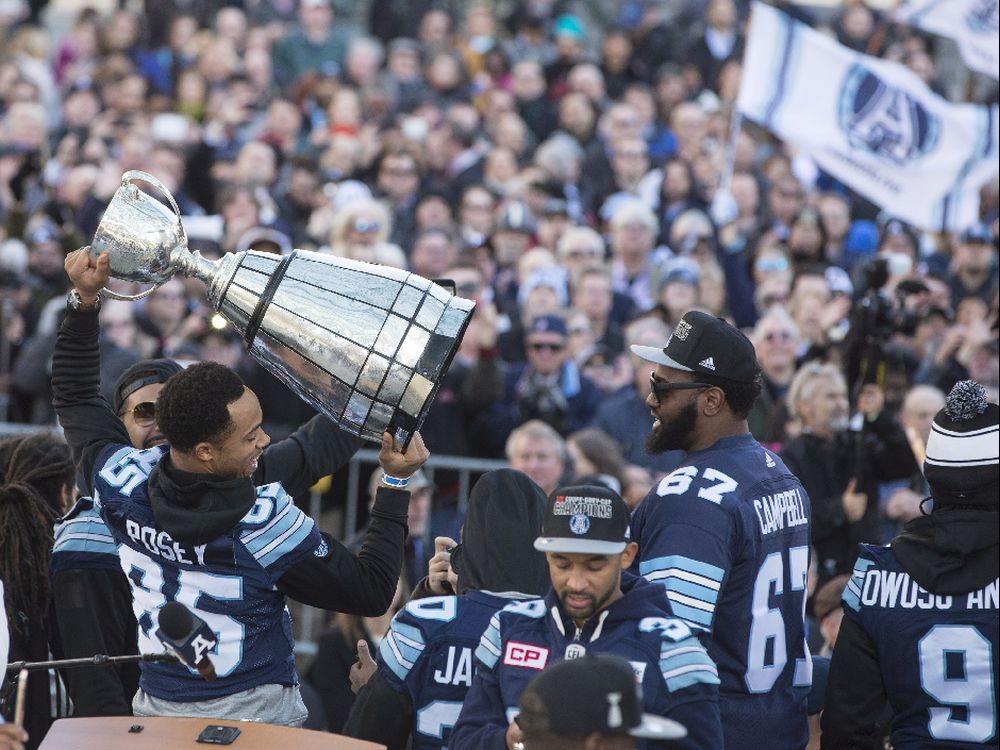
TORONTO — Maple Leaf Sports and Entertainment, which already owns the Maple Leafs, Raptors and Toronto FC, is adding the CFL’s Argonauts to its portfolio.

MLSE announced Wednesday it has an agreement to buy the Grey Cup champions.

There was already some cross-ownership. MLSE chairman Larry Tanenbaum’s holding company, the Kilmer Group, jointly owned the Argonauts with Bell Canada. Bell also owns 37.5 per cent of MLSE, the same share as Rogers Communications. Tanenbaum controls the other 25 per cent.

Plus the Argos play at MLSE-operated BMO Field, home to the newly crowned MLS champion Toronto FC.

“Under its current ownership, a transformed Argonauts football club enhanced its presence and fan base in Canada’s largest sports market and ultimately marched to the CFL championship,” MLSE president and CEO Michael Friisdahl said in a statement. “We look forward to building on the Argos’ strong momentum as we welcome the team to the leading provider of sports and entertainment experiences in Canada.”

The sale is expected to close in January, according to MLSE.

Approval from the CFL board of governors would not seem to be a problem.

“On the heels of a stunning Grey Cup showdown with the Calgary Stampeders that highlighted the sheer excitement of Canadian football, we’re thrilled that the Argonauts will be joining the MLSE roster,” CFL commissioner Randy Ambrosie, said in a statement. “We welcome MLSE to the CFL and look forward to working with them to further enhance the experience for Canadian football fans.”

Founded in 1873, the Toronto Argonauts are North America’s oldest continuously operated professional football club.


Source link

Categories
Sports

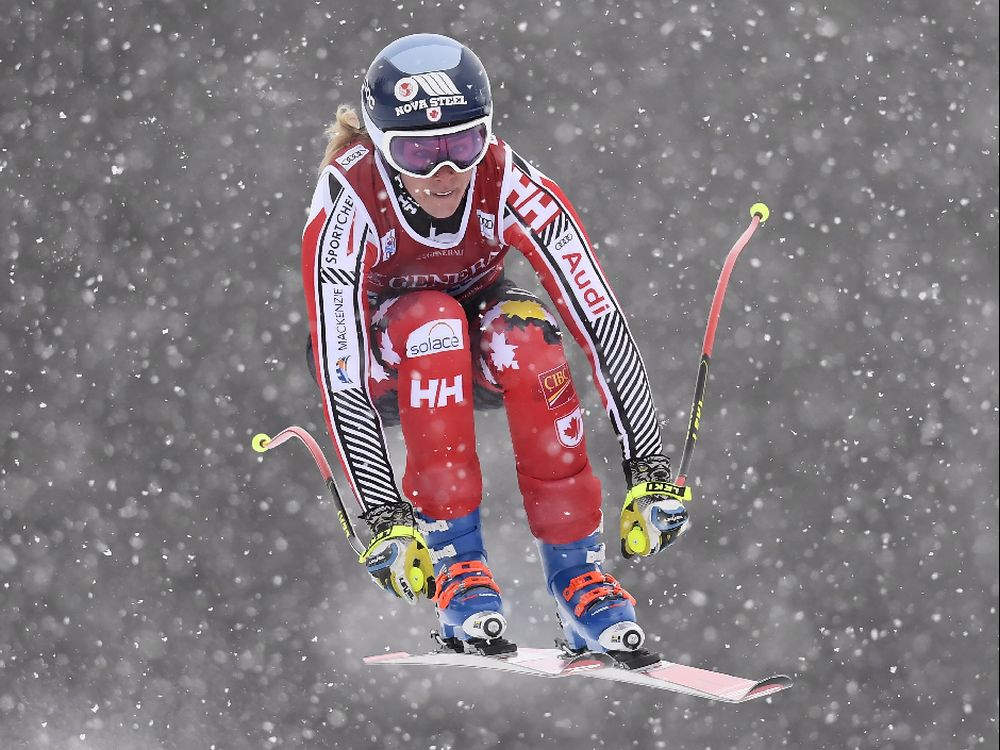
Injured Canadian skier Marie-Michele Gagnon focuses on next Olympics


Marie-Michele Gagnon has already wrapped her head around the fact she will miss the Winter Olympics in South Korea.

In fact, though she is just getting into rehab from knee and shoulder surgery, the Canadian alpine skier sounds upbeat and looking ahead at her long-term future rather than dwelling on the current setback.

The 28-year-old from Lac Etchemin, Que. tore the anterior cruciate ligament in her right knee and dislocated her left shoulder in a Nov. 30 crash during training for the women’s World Cup downhill in Lake Louise.

“I’ve definitely had some time to ponder it,” she said during a conference call on Wednesday. “For sure it’s disappointing to be hurt at any time, for sure in an Olympic year even more disappointing.

“I would say we are lucky that our sport, alpine skiing, it’s not just about the Olympics. It’s a sport that has been ingrained in the culture in Europe for many, many years. I would say all the World Cups are very, very important and overall World Cup titles and everything, those are still dreams I have.

“For this time, I have to give up my Olympic dream for this cycle but I have four more years after that and I want to make it to the next Olympics, so it’s not over as far as the Olympics goes for me.”

Her season is done, however, and it held some real promise. She finished 10th in a slalom in Levi, Finland and 24th in a giant slalom in Killington, Vermont. And she was putting down a top-five training run when she caught an edge and wound up in the safety net.

She popped her own shoulder back into place following the crash — she has injured it several times — and following an initial exam by doctors, she didn’t think the knee injury was too severe. A subsequent MRI in Calgary revealed the complete tear. Because she would need surgery to repair the knee, she also decided to have surgery on the shoulder at the same time rather than wait until the spring.

Email: dbarnes@postmedia.com | Twitter: @sportsdanbarnes


Source link