Categories
Economic U.S.

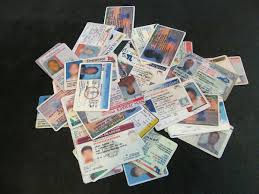
2014 Saw Increase in Fake IDs Presented at Borders by Illegal Immigrants

fake IDs, illegal immigrants

In the USA illegal immigration is a very controversial topic, with people on both sides of the debate. In the last year there was a 25% increase in the number of illegal immigrants who were stopped at American borders who possessed fake IDs. Arizona recently passed legislation that made using a false identity or stealing an identity for any purpose a felony but this legislation has been put on hold by a federal judge for now. Many have accused President Obama of encouraging illegal immigration with his recent executive amnesty actions, and many believe that the fact that the United States President is soft on illegal immigrants caused the child immigration surge seen during 2014. Others point out that the migration pattern of immigrants changes regularly.

Attempts made by illegal immigrants to use fake IDs and other fraudulent documents in order to gain entry to the USA increased by 25% in the fiscal 2014 year, and that gives many US citizens reason for concern. A number of Americans have been the victim of identity theft, and in one case the woman whose identity was stolen was refused a new social security number while the identity thief was issued the new number by the Social Security Administration. The increase is possibly due to the increase in border patrol agents and other security measures that have been implemented, so that fewer illegal immigrants are slipping through the cracks undetected, but it could also signal more interest in getting into American to take advantage of the amnesty that President Obama has offered.


Categories
Economic U.S.

Falling Oil Prices Could Lead to Gas Tax Hike in USA

gas tax hike, falling oil prices

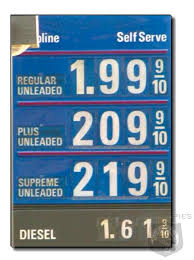
Falling oil prices could lead to a gas tax hike in the USA if some elected officials have anything to say about it. Right now Americans are enjoying prices at the pump that are the lowest seen in half a decade and some see it as an opportunity to raise some revenue and fix the crumbling US infrastructure. It is undisputed that the roads and bridges in many areas of America need to be repaired, and a gas tax hike could help do this as long as prices stay low. Few people want to see new taxes though, especially at a time when many Americans are still struggling financially. The tax on fuels has been flat for the last 2 decades, while the infrastructure of the country has aged and is starting to show wear and damage.

Some who discuss a proposed gas tax hike as a result of falling oil prices do not see things the same way as many politicians though. Lower oil prices are providing a much needed break for American consumers who are faced with rising costs in many other areas. Food prices continue to go up, healthcare costs and insurance premiums have spiraled out of control, and people are feeling pinched of every penny right now. Raising taxes in any form may not sit well with the voters that the politicians depend on to keep their jobs. Another concern voiced is what happens if oil prices go back up? Will any gas tax enacted be eliminated if this happens?


Categories
Economic

Bank of Canada publishes results of consultation on bank note design principles

Available as: PDF

The Bank of Canada today published a summary of the comments it received in an online consultation on the principles guiding the design of the country’s bank notes.

The consultation, which took place from 8 October to 10 November, offered Canadians an unprecedented opportunity to participate in the design of future bank note series by sharing their views on the Bank’s Principles for Bank Note Design. The summary of comments, which was prepared by Pollara Strategic Insights, is available on the Bank’s website.

Of the nearly 2,000 Canadians who participated, about 80 per cent said they support the principles the Bank put forward. There was considerable interest in how bank notes reflect Canada and many respondents said greater emphasis should be put on representing gender equality, multiculturalism and aboriginal culture. Others said bank notes should show iconic Canadian activities and achievements, landscapes and famous Canadians.

The Bank wishes to thank all those who contributed their ideas. The Bank will carefully consider the results of this consultation when it begins work on future series of bank notes.

The Bank is committed to including input from Canadians at every stage of the bank note design process. It recently invited Canadians to propose ideas until 8 January for a commemorative bank note marking the 150th anniversary of Confederation.

Source:: http://www.bankofcanada.ca/2014/12/bank-canada-publishes-results-consultation/


Categories
Economic Ft Mac Politics World

Is Wood Buffalo National Park at Risk of Destruction? First Nation Says Yes!

Wood Buffalo National Park, UNESCO, First Nation

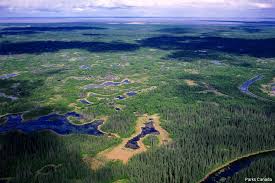
Wood Buffalo National Park, a UNESCO registered location, is at risk of destruction according to the Fort Chipewyan Mikisew Cree First Nation band. The group has forwarded a request to UNESCO asking that the site is reclassified to show that it is at risk. As the largest national park in Canada the Wood Buffalo National Park was first designated as a UNESCO heritage site in 1983, due to the fact that it contains the biggest freshwater delta in the world. It is also the only Whooping Crane resting habitat that is natural, and the bird is already endangered. The First Nation band is concerned about an industrial sector that is encroaching on the 45,000 square kilometer park. According to the group the water levels in the park have gone down considerably in recent years because of industrial development in the area.

There are 2 proposed projects in the works that have heightened the First Nation band’s concerns about the risk to the UNESCO site, and the group is worried that the Wood Buffalo National Park is in danger because of the projects. One of the projects is the Site C Dam in British Columbia, and the other is Teck’s Frontier Oil Sands Mine. The First Nation group is concerned that either of these proposed projects could cause even further water level loss in the park, and affect the natural environment and habitat. According to Chief Steve Courtoreille “The water levels have always been a concern over the years, and we don’t know what the park will look like once the dams are built.I don’t know what it will take for governments to listen and realize what they’re doing by approving these licenses before understanding how it will impact the delta. This place is in danger of disappearing from the world.”

Categories
Economic

Financial reform is essential but must not stifle innovation, says Bank of Canada Governor Stephen S. Poloz

Available as: PDF

Global financial reforms have made the financial system safer, but regulators must ensure that the new rules do not stifle innovation, Bank of Canada Governor Stephen S. Poloz said today in a speech in New York on the future of the financial industry.

“I see such innovation in financial intermediation as essential to fostering regulatory balance between maintaining financial stability on the one hand and facilitating competitive market forces on the other hand,”Governor Poloz told the Economic Club of New York.

Although it is difficult to predict how the financial system will evolve, it is likely that some of the imperfections that exist today will be even more evident under the new regulatory regime.

“It would be surprising if the net effect were not to reduce the availability of credit,” he said, “and those funding gaps will probably be found in all the usual places: lending for young businesses, small- and medium-sized companies, trade finance, and infrastructure.”

The global economy is at a critical juncture. A full recovery from the destruction that took place in the wake of the global financial crisis awaits a resumption of the natural forces of growth – growth fuelled by new product development, new firm creation and expansion, and the addition of new jobs. This rebuilding phase will be less than hoped for without the benefits of innovative financial intermediation.

But competition in finance is like “a force of nature,” he said, speculating on the various ways in which competitive forces might manifest themselves in the new regulatory architecture, including market-based finance, private lending and equity, peer-to-peer finance, innovative public-private-partnership structures, and so on.

While some emphasize the costs associated with new regulation, those costs pale in comparison with the costs of the financial crisis.

“We are still paying for that. Global regulatory reform was absolutely essential.”

With the reforms now in place, the Bank expects that “policies will need to remain stimulative until the legacy headwinds subside and the rebuilding phase truly gets under way.”

The Governor said it will likely be another two years before the Canadian economy returns to steady growth with inflation sustainably on target, but this “simply will not happen without vigorous and innovative financial intermediation. We need to embrace our new regulatory architecture and get on with the job.”

Source:: http://www.bankofcanada.ca/2014/12/financial-reform-essential-but-stifle-innovation/


Categories
Economic

Bank of Canada says household imbalances remain most important risk to financial stability

Available as: PDF

Risks to Canada’s financial system have not increased in the past six months, but high consumer debt loads and imbalances in the housing market remain a concern, the Bank of Canada said today in itsbiannual Financial System Review (FSR).

“We judge that the probability of an adverse shock has eased since our June FSR,” said Governor Stephen S. Poloz. “This mitigates our observation that some financial vulnerabilities appear to be edging higher, leaving our overall assessment of financial stability risk roughly the same as in June.”

While the FSR highlights risks, it is important to remember that global regulatory reform continues to enhance financial resilience in Canada and around the world. Further progress has been made in the past year.

The FSR discusses three important vulnerabilities in the financial system:

Low interest rates and steady income growth have helped keep the household debt-to-income ratio broadly stable and near a historical high.
The anticipated soft landing in the housing market has not yet materialized, in part because mortgage rates have declined in the context of falling global bond yields and also because of regional factors affecting housing demand and supply.
Exceptional monetary stimulus continues to create incentives for increased risk taking in financial markets, both globally and in Canada.

The FSR framework also identifies important risks to financial stability that could expose these vulnerabilities should the risks materialize. The most important risk is the inability of stretched households to service their debt should they face a sharp decline in their incomes or a sharp rise in interest rates, which could trigger a correction in house prices. The probability of this happening is low, but if it did, the effect on the economy would be severe. The Bank maintains its assessment of this risk as elevated, but continues to expect a soft landing in the housing market as the global economy gathers strength and interest rates normalize.

Another risk identified in the FSR is that a sudden shift in market expectations about U.S. monetary policy leads to a spike in global term premiums and long-term interest rates that would be transmitted to Canada through financial markets. In addition, a significant stress event in the euro area could trigger a financial crisis that feeds back to the real economy. Finally, there could be a serious financial disruption in China that causes Chinese and global economic growth to slow significantly. These four key risks to the Canadian financial system are the same as those outlined in June, as is the level of severity assigned to them.

“We are also monitoring other emerging vulnerabilities and risks to the global economic outlook, including the continued weakness in oil and other commodity prices that could cause financial stress in some economies,” Governor Poloz said.

 About the Framework

The Bank of Canada actively fosters a stable and efficient financial system as part of its commitment to promote the economic and financial welfare of Canada. Economic stability and financial stability are interrelated, and the Bank considers the risks to both in an integrated fashion.

The Bank’s risk-assessment framework is not intended to predict the most likely outcomes for the financial system, but to help Canadians better understand the forces at work in the economy. The framework focuses explicitly on the vulnerabilities in the Canadian financial system and how they are evolving. The vulnerabilities, and their interactions, determine the severity of the impact in the event that a particular risk is triggered. The main financial stability risks are then assessed according to their probability and potential impact.

The December 2014 FSR also contains two reports summarizing recent work by Bank of Canada staff on specific financial sector policies:

Cyber Security: Protecting the Resilience of Canada’s Financial System
Exchange-Traded Funds: Evolution of Benefits, Vulnerabilitiesand Risks

Source:: http://www.bankofcanada.ca/2014/12/press-release-fsr-101214/