Categories
Alberta Economic Ft Mac

Pierre River Project Application Nixed by Shell Canada

Shell Canada, Pierre River

The application from Shell Canada for the Pierre River project has been nixed by the company amid economic concerns and falling oil prices around the globe. This project has already been delayed time and time again, and the oil company decided to scrap the application and focus on other projects which are a higher priority instead. Jeff Mann, the spokesperson for Shell Canada, explained “The timing of this decision is about focusing on current priorities. It is unrelated to the current economic environment.” The Pierre River project application was initially filed approximately 6 years ago, but today the energy industry is facing shifting priorities when it comes to the oilsands. According to Lorraine Mitchelmore, the CEO and president of Shell Canada, “Our current focus is on making our heavy oil business as economically and environmentally competitive as possible. We will continue to hold the leases and can reapply in the future when the time is right.”

Shell Canada planned the Pierre River project on paper but the mine has never been built or developed due to project delays. Mann told the media that “We already have regulatory approval to more than double existing oilsands output. Debottlenecking at mines, expansions, all of those things add to opportunities to grow business in our current state.” The withdrawal of the application is celebrated by the Athabasca Chipewyan First Nation band, who opposed the Pierre River project from the beginning. The band members were concerned about the impact that the project could have on the environment and the wildlife in the area.

Categories
Economic

Inflation Control Must Consider Financial Stability Concerns, Says Governor Stephen S. Poloz

Available as: PDF

Policymakers should heed history’s lessons as they reinvent central banking in the aftermath of the Great Recession, Bank of Canada Governor Stephen S. Poloz said today. In the inaugural President’s Lecture at Western University, the Governor discussed the evolution of central bank policy and the need to promote both price and financial stability.

Many central banks began operating in the era of the gold standard, focused exclusively on keeping the financial system stable while operating as lenders of last resort, Governor Poloz said. When this policy framework proved too restrictive for the changing global economy, monetary authorities then tailored their policies toward encouraging better economic performance by controlling inflation, with the Bank of Canada focusing on monetary aggregates.

By the turn of the century, central banks reached a consensus on the need to target inflation directly, while effectively excluding financial stability concerns from monetary policy actions. However, the global financial crisis and subsequent Great Recession taught us that low and stable inflation doesn’t guarantee financial stability, the Governor said. “We need to take account of a wider range of economic and financial consequences while targeting low inflation,” he noted, adding that central banks have begun this work.

“An evolution of central banking is already underway, supported by recent experience and new research,” the Governor said. However, this process “still feels to me like we are adding various rooms onto a house we love, rather than creating a new, elegant, coherent structure.”

The ultimate reinvention of central banking will integrate both inflation and financial stability risks while better capturing the uncertainties policymakers face, the Governor said. “I hope to inspire economists here and elsewhere to join these efforts.”

While the Bank remains committed to inflation targeting, the ultimate goal is to develop “a true synthesis that takes full account of the lessons of the past, both new and old,” the Governor said.


Source:: http://www.bankofcanada.ca/2015/02/inflation-control-consider-financial-stability/


Categories
Economic

International Union of Operating Engineers Local 955 Members Asked to Accept Pay Cut by Trade Union

International Union of Operating Engineers Local 955, pay cut

Some members of the International Union of Operating Engineers Local 955 trade union in Fort MacMurray are being asked to take a pay cut of around 6%. The pay cuts are being requested by the leaders, and this local is the largest trade union which represents mobile equipment operators. The idea will be put to a vote later on in the month, and union members will be able to vote on whether the changes go into effect or not. Trade union leadership sent out a letter on January 25, and union manager and CEO Bruce Moffatt wrote “Your Union leadership has recognized that this is a real crisis in our industry, and that the requests to our contractors for cost cutting are valid, real and immediate. The situation is beyond the control of the oil companies because it is a global crisis of supply and demand. I deeply regret having to ask you to support this letter of recommendation because I know it will have a significant impact on all of you. Based on my experience with this and other commodity-based industries, I know that taking a step back can preserve current and future work opportunities for you and many of your brothers and sisters.” The pay cut proposal for the International Union of Operating Engineers Local 955 will be voted on February 22, although it is too early to tell how most members feel about the request. Falling oil prices had had an impact on almost every type of business and company in Alberta and the Fort MacMurray area.

Categories
Alberta Economic Ft Mac Politics

Government Priorities Continue to Be Infrastructure and Pipelines According to Energy Minister Frank Oberle

Energy Minister Frank Oberle, government priorities

According to recent statements by Energy Minister Frank Oberle one of the top government priorities continues to be infrastructure and pipelines. Recent drops in oil prices have left a hole in the provincial budget which could be as high as $7 billion. This means that wage and budget cuts are virtually guaranteed, and many are concerned that the infrastructure and pipelines will be affected by the coming reductions. When Oberle put in an appearance on MacDonald Island Park for a community breakfast with some PC supporters from the local area he said “We will not see a return to $100 or $120 barrels of oil for years to come. We don’t need to get there either if we’re prudent with our finances. The decisions we make now are for the long-term. We do right now face an infrastructure deficit and I don’t think anyone would argue that. We still need to build roads and schools and hospitals, or suffer the consequences in the future.”

When asked how funding would be supplied for these top government priorities Energy Minister Frank Oberle stated “I can tell you right now that while the government tries to solve its revenue problem, we cannot look to the energy industry to solve this problem,. Our oil production will grow but at a a slower pace. We’ve been through difficult times before, we know we’ll get through this one.” The Energy Minister also discussed the Keystone XL and Energy East pipelines, which he is almost positive will be approved and constructed within the near future. Oberle explained “We still need XL and we’re still going to push for it to and it will happen. We have good Republican friends who are working very hard.”

Categories
Economic

Economy Has Room to Grow, Says Senior Deputy Governor Carolyn Wilkins

Available as: PDF

The Canadian economy still has room to grow, and the sharp drop in oil prices is a setback, Bank of Canada Senior Deputy Governor Carolyn Wilkins said in Ottawa today, adding that monetary policy will support the needed adjustments.

As the Bank assesses the underlying inflation pressures in the Canadian economy, it is critical that it consider a broad range of indicators, including those that go beyond the headline unemployment rate, Ms. Wilkins said. Given the destructive recession Canada experienced, measures of economic slack that focus on the labour market show greater unused capacity than broader measures do.

“Understanding the degree of slack in the economy helps us avoid making policy decisions that could trigger inflationary or disinflationary pressures,” Ms. Wilkins told members of the Ottawa Economics Association. “We don’t want to inadvertently stifle the rebuilding phase of an economy that will need to adjust to a lower price of oil.”

As a net exporter of energy, Canada is now feeling the negative effects of the oil-price shock, which increased the downside risks to inflation. There will be some offsets from a stronger U.S. economy and a weaker Canadian dollar, although these are uncertain and will take longer to materialize.

If low oil prices persist, they will spur a significant reallocation of workers across sectors and regions, as the energy sector cools and non-energy exports take on the mantle of growth.

The labour market and the output gaps will close over time as the economy grows, firm creation and business investment pick up, and as capacity is rebuilt. It is possible that the two gaps will not close simultaneously, as would likely be the case in a more typical business cycle. “An economy pushing up against the limits of its capacity may be just what is required to signal the need for additional investments and to draw workers back into the labour force,” Ms. Wilkins said.

By providing an environment of low and stable inflation, monetary policy is supporting the adjustments needed to return the economy to sustained and balanced growth, Ms. Wilkins concluded. “We’ll get there and it will be a very good thing for Canada.”

Source:: http://www.bankofcanada.ca/2015/02/economy-room-grow-says-senior-deputy-governor-carolyn-wilkins/


Categories
Alberta Economic Ft Mac

Company Profits for Suncor Energy Down 80% Because of Falling Oil Prices

Suncor Energy, company profits

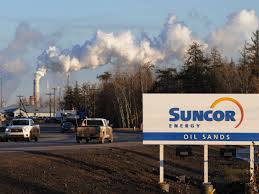
The company profits for Suncor Energy are down by about 80% in the fourth quarter, largely due to falling oil prices but also as a result of poor performance in the oilsands as well. Suncor Energy is the largest energy business in Canada, and according to a recent conference call the net income of the company in the last 3 months of 2014 was just $84 million, and that is far less than the $973 in net income for the last quarter of 2013. The operating earnings dropped around 60% for the same quarter a year earlier, going from $973 million to only $286 million. According to Steve Williams, the CEO and President of Suncor Energy, “Today’s lower oil prices should not come as a surprise. It was the relatively stable prices of the last few years that were an anomaly.”

The lower company profits for Suncor Energy is not an isolated issue, other energy companies may follow suit. At the beginning of 2015 Suncor announced that they would engage in layoffs and budget cuts across their entire base of operations. $1 billion was dropped from 2015 capital spending programs budgets, and 1,000 job cuts were also announced. This move has made the company rely more on Fort MacMurray, with less reliance placed on temporary workers. Williams continued by saying “Our commitment to capital discipline has put us in a better position to weather the price downturn. These efforts will also allow us to continue to advance long-life growth projects such as Fort Hills and Hebron.”