Categories
Economic

BHP Billiton puts brakes on Jansen potash mine


BHP Billiton won’t be asking its board to build the Jansen potash project any time soon.

In its year-end financial results, the global resource company says it won’t be asking the board for approval to go ahead with the Jansen potash project in 2018. The company says it is waiting for better market conditions before proceeding.

“Board approval will be sought for the project only if it passes our strict capital allocation framework tests,” the report reads.

The Jansen project, located 150 kilometres east of Saskatoon, was once called the largest potash project in the world. At one point, it was estimated the cost of building the mine would reach $12 billion US.

The company says it is proceeding with building its production and service shafts, necessary to transport workers and potash. BHP says the shafts were 70 per cent complete, and have been safely excavated and lined through the Blairmore aquifer.

The mining giant says it is looking at diluting its interest in the project by bringing in a financial partner.

BHP posted a $6.7 billion annual profit for the financial year that ended in June, a year after the worst full-year result in the company’s history. The company also says it wants to sell its U.S. shale oil assets.


Source link

Categories
Economic

Big banks set to reveal profits this week against the backdrop of improving economy


Canada’s biggest banks could deliver another profitable season for investors as third-quarter results starting to roll in this week are expected to get a boost from the strengthening economy.

Analysts expect modest improvements from the Big Six banks, which launch their quarterly earnings reports beginning with Royal Bank on Wednesday, but some suggest the industry could outdo the conservative predictions.

“There always seems to be this hesitancy that somehow the numbers won’t be as good,” suggested Gareth Watson, vice-president of investment management and research at RichardsonGMP.

“But we’ve always come out of the results saying ‘Things weren’t as bad as people thought they were going to be’.”

It’s an issue analysts continue to grapple with in this period of intensified questions about the direction of Canada’s housing market and expectations the Bank of Canada could make another move on interest rates later this year. The central bank raised interest rates for the first time in seven years in July, moving from 0.5 per cent to 0.75 per cent, citing “bolstered” confidence about economic growth prospects.

A slight cooling in the real estate sector and the recent interest rate hike could leave a mark on the third quarter, though analysts suggest it would be minimal.

Banks raised their prime rates after the central bank’s 25-basis-point increase, but it happened during the final weeks of the third quarter, meaning it’ll likely have little impact on the results.

Signs of a slowing real estate market could eventually hit the banks’ mortgage portfolios, though Watson suggests it won’t happen this year.

“The housing market becomes more problematic when you start getting interest rate increases and mortgage renewals at higher rates — maybe in 2019 or 2020,” Watson said.

“Eventually it will be a big deal, it’s just not necessarily an immediate concern, especially for the banks who are pretty darn good at mitigating and controlling risk.”

Royal Bank starts off reporting results on Wednesday, followed by CIBC on Thursday. Scotiabank and the Bank of Montreal issue results next Tuesday, followed by National Bank on Aug. 30 and TD Bank on Aug. 31.

“We think there are plusses and minuses that add up to a decent third-quarter reporting season for the banks,” Robert Sedran, an analyst at CIBC World Markets Inc. wrote in a note to investors.

“The plusses include an overall solid operating environment that is supportive of ongoing revenue growth and stable loan losses that should help overcome slowing capital markets revenues and the currency headwinds that have developed.”

A stronger Canadian dollar has some observers weighing how currency conversions will impact the financial results of some of the banks with larger U.S. operations. The consensus suggests it won’t leave much of a dent for now.

Canadian bank valuations have mostly strengthened coming out of the most recent quarter, Barclays analyst John Aiken wrote in a note.

“We anticipate the trend will continue over the back half of the year, buoyed by the steady domestic economy and the strongest employment landscape since the financial crisis,” he said.

Aiken added that “sustainability of earnings growth remains key” as other questions persist, such as the likelihood of another central bank rate hike ahead of slower economic growth expected next year.


Source link

Categories
Economic

Rising old age security spending dampened by CPP increases: report


A mandatory review of the country’s largest seniors benefit program is predicting all-time highs in spending over the coming years with waves of baby boomer retirements — spending levels that could have been even higher if not for changes to the public pension program.

The report is the first glimpse into how the CPP expansion, phased in over the next 40 years, will affect old age security.

The country’s chief actuary writes in his report that program spending is projected to hit about $247 billion by 2060, an almost five-fold increase from planned spending this year, as more Canadians hit retirement and live longer, meaning more beneficiaries drawing payments for longer periods of time.

The projected increase is expected to be cushioned by ongoing economic growth.

Over the same projection period, Canada Pension Plan benefits will increase.

The extra money to be doled out through CPP, funded by an increase in employee and employer premiums, is expected to reduce the number of low-income seniors — meaning $3 billion less in spending on the guaranteed income supplement in 2060 — and reduce overall spending on old age security benefits, which are scaled back as incomes rise.

Paul Kershaw, an associate professor in the school of population and public health at the University of British Columbia, said the report shows that the country is expecting younger adults to rely less on old age security down the road by paying more into CPP, while simultaneously asking them to pay for increases in spending for today’s aging population, noting they are often parents and grandparents.

“Younger generations will (hopefully) gladly do this. But they will be much happier doing so if their aging parents and grandparents contribute to an honest conversation about the fact that today’s aging population didn’t prepay for OAS like they did for their CPP, and that this is having substantial implications for the public resources that are available to spend on all age groups — including their kids and grandchildren,” Kershaw, the founder of the group “Generation Squeeze,” which seeks to engage young people in politics, said an email.

The most recent census figures showed the ranks of seniors grew by the fastest rate in 70 years, with Statistics Canada projecting there could be 12 million seniors by 2061. Declining birth rates mean that without increases in immigration levels, there will be fewer younger workers to replace coming waves of retirees.

The previous Conservative government raised the age of eligibility for old age security by two years to 67 from 65 to save on costs and prod people to work longer. The Liberals reversed the decision in their first budget, but have stuck by the need to keep older Canadians in the workforce longer.

A spokesman for Social Development Minister Jean-Yves Duclos said the Liberals knew reversing the age of eligibility back to 65 would have an impact on program cost, but noted that the parliamentary budget watchdog has reported that spending is sustainable in the long-term.

“Without the changes proposed in Budget 2016, the most vulnerable Canadian seniors would have lost up to $13,000 per year,” Mathieu Filion said.

“We think that it was the best decision to take for our seniors.”

A February presentation to a group of deputy ministers said that if the retirement age stays fixed at 65, and life expectancy increases, there will be relatively more people claiming pension benefits for longer, and fewer people working and paying income taxes.

“Younger generations may be required to pay higher taxes to compensate for higher spending commitments and lower tax revenue,” one slide reads.

“This could create disincentives to work and for firms to invest, and in turn lead to a fall in growth and productivity.”


Source link

Categories
Economic

CGI Group moves to expand in northern Europe with takeover of Affecto


Canada’s largest publicly traded IT services business is moving to expand its presence in Europe through the acquisition of Affecto PLC in a friendly deal that would add about 1,000 staff in northern Europe.

CGI Group Inc.  — which currently has 8,000 employees in the Nordic region — is offering the equivalent of $146-million cash for Helsinki-based Affecto, or 4.55 euros per share.

That’s 29.3 per cent above the closing price of Affecto shares at Monday’s close on the Nasdaq Helsinki exchange.

The Montreal-based company’s offer has several conditions, including that CGI gain control of more than 90 per cent of Affecto’s shares.

CGI chief executive George Schindler says the addition of Affecto is part of a plan to profitably double the size of CGI over the next five to seven years.

CGI currently has about 70,000 employees in the Americas, Europe and the Asia-Pacific region, making it one of the world’s largest independent providers of IT and business process services.


Source link

Categories
Economic

Retail sales inch higher to $49B in June


Sales at clothing stores increased in June, Statistics Canada reported Tuesday. (Shannon Stapleton/Reuters)

Canadian retailers reported higher sales for the fourth straight month in June, as just about everything except cars and gasoline stations saw higher sales.

Statistics Canada reported Tuesday that sales at general merchandise stores rose 2.9 per cent in June, while clothing and accessories stores saw a 2.7 per cent gain. Building material and garden supply stores saw 2.2 per cent higher sales.

On the downside, sales of cars and car parts fell by 1.4 per cent, and sales at gasoline stations went down by 1.8 per cent. That’s the second month in row that gas stations have seen lower sales. But “stripping out both of those items, sales … were up a very strong 1.1 per cent,” Bank of Montreal economist Robert Kavcic noted, “casting a positive tone on the report.”

Provincial breakdown

Just as not all types of stores saw higher sales, so too was there a split along provincial lines. British Columbia, Alberta, Quebec, Nova Scotia, Newfoundland and Labrador all saw higher sales. Everywhere else, the retail sales figure dropped from May’s level, but “the real emerging story has been a turnaround in Alberta,” Kavcic noted. 

Sales in the province have now risen by more than 10 per cent in the past year, second only to B.C.’s figure “as spending has blown past pre-oil shock levels,” Kavcic said. “While strong fundamentals in the big-three provinces are helping to drive solid national trends, the reversal of a major headwind blowing out of Alberta has also helped in a big way.”

Bricks and mortar stores by and large saw higher sales, but online sales grew at a much faster pace.

Canadian retailers sold $1.2 billion worth of merchandise in June, about 2.2 per cent of all sales. But e-commerce is taking a bigger bite of the overall retail market. In the 12 months up to June, e-commerce has grown by 43 per cent, while conventional retail has only grown by about 8 per cent, the data agency reported.


Source link

Categories
Economic

Trump is the elephant in the room at NAFTA talks: Don Pittis


According to pundits, the NAFTA negotiating chambers must constantly smell of peanut breath. Or worse. That’s because there is always an elephant in the room.

In the case of the rules-of-origin discussions, the elephant is U.S. President Donald Trump’s repeated declarations that the U.S. is getting hosed on trade. He wants the NAFTA rules changed so that more stuff is made in the U.S., which would bring more jobs to his country.

But international trade specialist Anoop Madok says it’s not so straightforward now that the continental free-trade area has been integrated for decades.

Where is it made? No one knows

“It’s going to get bogged down because it’s not as clear as it appears on the surface,” says Madhok, a professor at the Schulich School of Business in Toronto. 

“When you say ‘Where is it made?’ — if it goes between the U.S. and Canada 10 times and then to Mexico and back to the U.S., it gets messed up,” says Madhok.

Trump talks about tangible goods being made in U.S. factories, which is complicated enough, but manufacturing is a smaller and smaller part of the value chain.

Cars that move tariff-free across the national borders in the NAFTA area must follow detailed rules of origin meant to assure they are mostly made in the U.S., Canada or Mexico. (Rebecca Cook/Reuters)

“If you’ve got design happening, where did that come form?” asks Madhok rhetorically. “If the design was done jointly between a U.S. and Canadian team, where did that come from?”

Supposedly there are rules for all those things written in the NAFTA documents. But ripping the current deal apart and putting it together again is horrifyingly complicated.

‘Terrible things to deal with’

“Rules of origin are very, very complex,” former Canadian finance minister Michael Wilson once said. “You don’t want to deal with them. They’re terrible things to deal with.”

What came out as a few snappy words from the U.S. president represents interminable pages of complicated documents, says Sandy Monoz, once Canada’s chief negotiator on rules of origin and the one who cited Wilson’s quote above.

While cars and car parts are getting most of the attention this time around, the fact is almost every product or product classification — from textiles to air conditioners — has its own, completely different set of rules of origin.

Most of those rules have been specifically written to protect an individual industry within the three-country NAFTA bloc. For instance, in the U.S. the tariff on clothing is 15 per cent; to escape that tariff, Canadian and U.S. producers must use mostly American-sourced cloth.

Trump Eclipse

Trump, seen here looking at the sun just before Monday’s eclipse, has said NAFTA must be renegotiated to make sure more goods are made in the U.S. (Andrew Harnik/Associated Press)

Under the current NAFTA rules, automobiles must contain 62.5 per cent North American parts to be traded tariff-free within the three-country area.

The logic of that rule is that countries cannot just import cars from a third country, slap a few parts and a ‘Made in Canada” sticker on and then sell the car as Canadian-made.

One idea that might comply with Trump’s demands is to increase the total requirement for NAFTA-area content to, say, 75 per cent. Experts say that would be disruptive and costly as manufacturers struggled to find new sources for parts that simply aren’t made in the NAFTA region, such as back-up cameras.

Of course, if Mexican (or Canadian) manufacturing costs were lower, it could well be that most of the extra 12.5 per cent of manufacturing wouldn’t go to the United States at all. 

Not satisfied

There have been reports that the U.S. will not be satisfied with simply raising the NAFTA-area rules of origin but actually wants to mandate a certain percentage of content made in the U.S.

“Technically, it’s possible,” says Monoz. “But lots of things are technically possible.”

Like Madhok, he says one of the biggest complications will be tracing all that national content in a system that is so deeply integrated. Not only would it be difficult, but just like re-sourcing parts or making thing in the U.S., it would be expensive. Adding costs and complexity means that manufacturers might eventually decide to ignore NAFTA  altogether and just pay the 2.1 per cent U.S. tariff on imported cars.

Besides, says Conference Board of Canada chief economist Craig Alexander, such a plan is contrary to the free-trade principle that goods are best made where they are made best. That is what makes free-trade areas more productive.

TRADE-NAFTA/

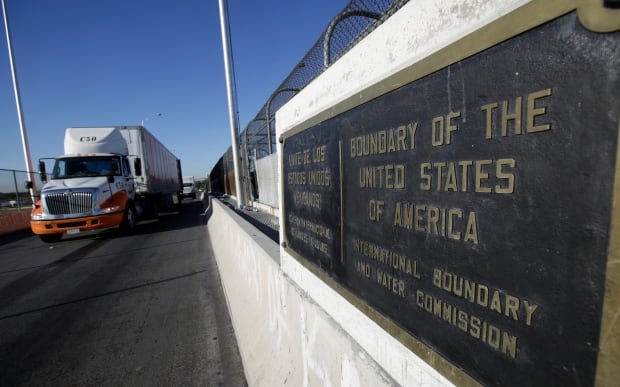
Trucks wait to cross into U.S. at the Bridge of Americas in Ciudad Juarez, Mexico, earlier this month. (Jose Luis Gonzalez/Reuters)

“It isn’t a duty or a tariff; it’s a non-tariff barrier that you must produce things in America,” says Alexander. “A country-content requirement breaks the whole spirit of a North American trade deal.”

While Madhok is doubtful the three countries can leap the hurdles on rules of origin within the deadline, Alexander is optimistic that the talks will continue to be constructive.

“When you hear Trump talk about ripping up NAFTA, you get the sense that there isn’t going to be room for negotiation,” says Alexander. “But in point of fact, the negotiators at the table aren’t Trump.”  

Follow Don on Twitter @don_pittis

More analysis from Don Pittis


Source link