Categories
Canada

TEMPORARY SUSPENSION OF REMOVALS (TSRs)

Why TSRs are sometimes necessary

The Canada Border Services Agency (CBSA) is responsible for removing foreign nationals who are inadmissible to Canada under Canadian immigration law. The Minister of Public Safety and Emergency Preparedness may impose a TSR on a country when the entire civilian population faces a generalized risk as a result of:

An armed conflict within a country or place;
An environmental disaster resulting in a substantial temporary disruption of living conditions; or
Any situation that is temporary and generalized.

When a TSR is in place, individuals who would normally be subject to removal are allowed to stay in Canada temporarily, and are allowed to work and go to school.

TSRs do not apply to people who are inadmissible to Canada for criminality or security reasons, participating in organized crime, or violating human or international rights, or to people excluded from refugee protection as per the United Nations Convention Relating to the Status of Refugees. People subject to a TSR may choose to return to their country voluntarily.

TSR review process

The CBSA, together with Citizenship and Immigration Canada (CIC), reviews country conditions and recommends to the Minister of Public Safety and Emergency Preparedness whether to impose, maintain or lift a TSR. This process includes consulting other government departments, including the Department of Foreign Affairs, Trade and Development, the United Nations High Commissioner for Refugees, and non-governmental organizations.

A TSR is imposed, maintained or lifted based on the generalized risk faced by an entire population. The decision is not based on risk to an individual. People who allege individual risk have access to a full and fair refugee determination system, as well as other avenues of recourse, including judicial review at the Federal Court of Canada.


Why the TSRs are being lifted


A thorough review and consultations revealed that a generalized risk to the civilian population no longer exists in Haiti and Zimbabwe. The review found that:

In Haiti (TSR imposed in 2004):

Haiti is not in a state of war or extreme civil strife.
International humanitarian and security assistance continues, and the Government of Canada has committed more than $1 billion towards Haiti since 2006. That assistance is helping to stabilize the conditions in this country.
Internally displaced persons are being resettled into safer housing.
General living conditions, political stability and the level of security have improved.
Other countries, such as France, Brazil, Peru, Ecuador and French Guiana are removing individuals to Haiti.
There are regular international flights to and from Haiti and a significant number of Haitians travel back and forth between Haiti and Canada.

In Zimbabwe (TSR imposed in 2002):

Zimbabwe is not in a state of war or extreme civil strife.
International humanitarian assistance is available.
Internally displaced persons and refugees are returning to their homes.
Other countries, such as the U.S., Australia, the U.K. and South Africa, are removing individuals to Zimbabwe.
There are regular international flights to and from Zimbabwe.

Canada will continue to monitor the situation in each country.


Measures for affected individuals

Affected individuals will be given an additional six months to stay in Canada, with access to work permits, and for most*, to coverage of health care, to allow them enough time to either return home or apply for permanent residence in Canada on H&C grounds. In support of these measures, the CBSA will defer their removal pending a final decision on their humanitarian and compassionate (H&C) application. In addition, the Government of Quebec can choose to select qualified individuals to be permanent residents if they qualify under alternate immigration streams.

Normally, individuals who have received a negative determination of a refugee claim at the Immigration and Refugee Board of Canada within the last 12 months are barred from applying for H&C consideration. However, these special measures for Haitians and Zimbabweans include an exemption to this 12-month bar for failed refugee claimants who file an H&C application within six months of the lifting of this TSR.

Haiti Special Measures

Haiti Special Measures (HSM) have provided labour market opinion-exempt work permits and access to health coverage under the Interim Federal Health Program (IFHP) to certain Haitian nationals in Canada who were affected by the 2010 earthquake in Haiti. The HSM expired on November 30, 2014, however work permit validity may extend beyond this date. Individuals benefitting from the HSM are eligible to apply for H&C and benefit from the stay of removal while a decision is pending. These individuals will also have access to open work permits and coverage under the Interim Federal Health Program while their H&C application is processed.

*A small number of individuals in Canada under the TSR may not be eligible for coverage of health care. This could include, for example, those who have never made a refugee claim.

Source:: http://news.gc.ca/web/article-en.do?nid=910579


Categories
Canada

Harper Government Committed to Job Creation Through National Shipbuilding Strategy

For Immediate Release

November 26, 2014 – Ottawa, Ont. – Public Works and Government Services Canada

Today, the Honourable Diane Finley, Minister of Public Works and Government Services, spoke at the Shipbuilding Technology Forum about the Harper Government’s commitment to creating jobs and economic growth in Canada by leveraging procurement through initiatives like the National Shipbuilding Procurement Strategy (NSPS), the new Defence Procurement Strategy and the Build in Canada Innovation Program (BCIP).

Minister Finley highlighted that Vancouver Shipyards is on track for full production of the Offshore Fisheries Science Vessels and that steel will be cut in spring 2015, and that Irving Shipbuilding will begin construction of the Arctic Offshore Patrol Ships in fall 2015. Additionally, the Minister highlighted the modernization of Vancouver Shipyards and Irving Shipbuilding, both undertaking infrastructure upgrades by investing $170 million and $300 million respectively, at no cost to the federal government.

The NSPS continues to deliver economic benefits for Canada. As of October of this year, Vancouver Shipyards reported that it had awarded $120 million in contracts to suppliers in Canada. Irving Shipbuilding reported investments totaling $310 million with companies in Canada. In fact, more than 197 companies have already benefitted from these investments.

Quick Facts
The NSPS is a $36-billion 30‑year initiative to renew the fleets of the Royal Canadian Navy and the Canadian Coast Guard and the Canadian shipbuilding and marine industry.
An estimated 15,000 jobs and $2 billion are expected to be generated annually through the NSPS.
The Defence Procurement Strategy has three important objectives: ensuring our men and women in uniform get the equipment they need at the right price for taxpayers; streamlining defence procurement processes; and leveraging the purchase of defence equipment to create domestic jobs and growth.
The Harper Government plans to release the Value Proposition Guide in the coming weeks. This guide sets out an approach for leveraging economic benefits from future defence procurements.
As of September 2014, 156 innovations had been pre-qualified and 79 contracts had been awarded under the BCIP.
Quotes

“Through smart investments like our National Shipbuilding Procurement Strategy, our Government is creating jobs right here in Canada, while laying the foundation for future economic growth. Our shipbuilding strategy is bringing back the Canadian shipbuilding industry, creating an estimated 15,000 jobs across the country and generating $2 billion a year in economic benefits.”

The Honourable Diane Finley
Minister of Public Works and Government Services
Related Products

National Shipbuilding Procurement Strategy

– 30 –

Contacts

Marcel Poulin
Office of the Honourable Diane Finley
819-997-5421

Media Relations
Public Works and Government Services Canada
819-956-2315

PWGSC news releases are also available on our Internet site.

Follow us on Twitter.

Source:: http://news.gc.ca/web/article-en.do?nid=909039


Categories
Canada

Veterans Affairs Canada’s Operational Stress Injury Clinics

An Expanded Universal Child Care Benefit

Starting in 2015, parents can receive up to $1,920 per year for each child under the age of 6 and $720 per year for children aged 6 through 17.

Prevent Teen Drug Abuse

Get the facts and talk with your kids about the dangers of drugs

Can we talk about cyberbullying?

Cyberbullying. Start a conversation with your child, today.

Source:: http://news.gc.ca/web/article-en.do?nid=907409


Categories
Canada Entertainment U.S.

Edge of a Revolution by Nickelback Inspired by Michael Brown Case

Edge of a Revolution by Nickelback Inspired by Michael Brown Case
Nickelback, Michael Brown

Chad Kroeger, the front man for the band Nickelback and a Canadian by birth, has said that the latest hit for the band titled Edge of a Revolution was inspired by the Michael Brown case as well as politics in America today. The band was working on the latest album called Fixed Address when the Michael Brown case hit the news. Media saturation on the case was very high when unarmed black teenager Michael Brown was shot and killed by a white police officer in Ferguson, Missouri, and the attention has not dies down since the incident. After the shooting the streets of Ferguson were full of rioters, and many were upset that police used what appeared to be military vehicles and equipment to stop the protests.

The grand jury in the Michael Brown case is expected to release the results of their investigation soon, and many believe that officer Darren Wilson will not be indicted and that further protests will occur. The court has promised to alert police to the verdict when it is delivered, and to keep the verdict secret from the public for 48 hours so that police have time to prepare for any expected protests. According to Nickelback member Chad Kroeger in an interview with Yahoo Music “The issue of the black boy who was shot by the white cop in Missouri was a major story and there was rioting like crazy. This was all happening right when we were working on the music. It definitely seemed like the seeds of revolution were being planted, and I wanted it to feel that way in the song.”

Categories
Canada Economic

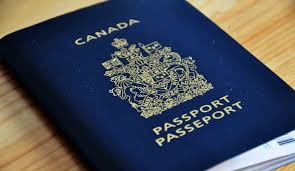
Fee Hikes for Canadian Passports Brings in Millions

Fee Hikes for Canadian Passports Brings in Millions
Canadian passports, fee hikes

The fee hikes for Canadian passports has managed to bring in millions of dollars for the government, but Canadian citizens should not expect the fees to decrease any time soon. Figures which were recently released by the Canadian government show that Canadians paid a total last year of $462.5 million in passport fees, but the government only spent $256.5 million in order to create the documents necessary for issuing passports. The funds paid to Passport Canada are managed differently than government agencies, and the law allows the entity to bank any surplus funds that are generated from the fee hikes on Canadian passports. According to Nancy Caron, a spokesperson for the Citizenship and Immigration entity “We are not forecasting any change to passport fees to cover revolving fund requirements at this time.”

Some are upset with the fee hikes enacted for Canadian passports, and these individuals point out that the program generated more than $200 million dollars and that the passport fees should be adjusted accordingly. The fee hikes for Canadian passports were substantial. A 5 year passport used to be $87 but that increased to $120, and those who want a 10 year passport now have the option of paying $160. In the fiscal year 2013-2014 Canada issued almost 5 million passports. When the fee hikes for Canadian passports were first introduced the reasoning was that these increases were essential. Canada Passport outlined the new structure for passport fees and explained that “At a time when Canadians are increasingly concerned about identity fraud, Passport Canada is quickly reaching a point where not only will new advancements be impossible, but the organization’s ability to maintain current operations will be jeopardized.”

Categories
Breaking News Canada

No Charges Brought Against Speeding Quebec Police Officer for 5 Year Old Killed in Crash

No Charges Brought Against Speeding Quebec Police Officer for 5 Year Old Killed in Crash
Quebec police officer, 5 year old killed

Officials recently announced that the Quebec police officer who was speeding and caused a crash that resulted in a 5 year old killed and an older sibling being seriously injured will not face charges for the incident, something that many Canadians are upset about. To add insult to injury not only will no charges be brought but no explanation will be offered to the public about the lack of charges. The family of the 5 year old killed and the teenager injured are very unhappy with the outcome. The officials in the case did say that the family will be told why there will be no charges against the Quebec police officer, but no explanation will ease the pain of the family members or bring the yoiung boy back.

The Quebec police officer responsible for the crash that ended with the 5 year old killed was speeding, and was doing 120 km/h in a zone that is posted at 50km/h. The officer slammed into the car carrying the 5 year old and his family, and the impact was hard enough to knock the vehicle off the road. Witnesses who saw the crash have stated that the police officer did not have his sirens or lights on even though he was traveling at a very excessive rate of speed, and the department has said that the Quebec police officer was on routine patrol when the accident occurred. The 5 year old killed in the crash suffered massive head injuries, and he succumbed to these injuries 4 days after the crash occurred. Renel Bellance, who is the boy’s grandfather, told Quebec Morning “Since my little son died, I no longer live. It really hurts. I wonder what happened to life.”