
The second trailer for ‘Gone Girl’ has debuted – something fans of Gillian Flynn’s bestselling novel have been dying to see.
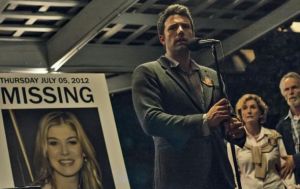
The second trailer for ‘Gone Girl’ has debuted – something fans of Gillian Flynn’s bestselling novel have been dying to see.
Despite a series of jarring jump scares, “Deliver Us From Evil,” the latest horror film from “Sinister” director Scott Derrickson, is little more than an ugly collection of tropes stolen from “The Exorcist” and “Seven.” Ostensibly about the importance of family, and Christ-like man-saviors that will do anything to protect their children (and sometimes women), Derrickson and co-writer Paul Harris Boardman fixate on the tacky, and tawdry, details of their “based on a true story” exorcism tale and never interrogate their characters’ motives beyond stock posturing.
Many of “Deliver Us From Evil”s creative shortcomings result from Derrickson and Boardman’s lazy articulation of their film’s interest in spiritual doubt and penance. For example, Eric Bana’s Sergeant Ralph Sarchie, a haunted member of the New York Police Department, simply knows when bad things are going on around him because he has an intuitive “radar”-like sixth sense. Sarchie’s supernatural radar leads him and wise-ass partner Butler (Joel McHale) to a string of related domestic abuse cases. In each case, parents abuse their children while a mysterious string-bean of a man (Sean Harris) hovers nearby, painting over ominously legible graffiti written entirely in Latin. In each case, rebellious, Sarchie finds that hard-drinking Jesuit priest Father Mendoza (Edgar Ramirez) is already on the case, waiting to nudge skeptical Sarchie toward a no-man-is-an-island acceptance of his limitations. These two tough (but fair!) men inevitably team up, but only after more children are threatened, pets are abused, and women are treated like accessories.
Derrickson and Boardman’s film is more than just a sympathetic representation of Sarchie’s paranoia. If this film were even semi-critical of Sarchie’s testimony, it would acknowledge that, in any other context, Sarchie’s version of events is “Taxi Driver”-levels of deranged. Instead, whenever he enters victims’ homes, we see omnipresent crucifixes, a comically vampish Italian woman, a bloated corpse, creepy basement junk, and enough crumbling fixtures to make Bob Villa cry. The only recognizably human domestic-minded person in this film is Sarchie’s wife Jen (Olivia Munn), but she’s mostly sad that Sarchie’s “never here, not even when you’re home.”
The world of “Deliver Us From Evil” needs a real man to clean up all the messes that demon-possesed, absent fathers have left behind. The film’s casual chauvinism is established early on when Derrickson and Boardman make table-setting jokes at the expense of women met by Sarchie and Mendoza. First, there’s the stranger that drunkenly hits on Mendoza at his regular bar: “You’re sweaty” she gasps before Mendoza wearily remarks that drinking is just like medicine. Then there’s Jane (Olivia Horton), the first possessed parent Sarchie stumbles across. When he arrests her, Jane mocks Mendoza by calling him a “specialissssst.” Horton hisses this line with such unholy comic vigor that she sounds like a Peter Lorre-esque Gollum pull-string doll. But Jane isn’t funny since she’s obviously unwell. In this scene, before tragic events later humanize her in the worst way imaginable, Jane is little more than a scary punchline.
Admittedly, there’s something inherently fascinating about a mediocre horror film that nakedly insists that women are plot devices, fathers always know best and dead kids are inherently the best way to an audience’s heart. But Derrickson and Broadman spend so much time fetishistically focusing on grisly generic junk like an eviscerated cat and a possessed, rolly-polly toy owl that they wind up neglecting even the tropes of their shallow characters. It’s not just that “Deliver Us From Evil” is blunt and kind of vile; it’s so hysterically incompetent, and mindlessly excessive, that I found myself cheering on a demonic toy that benignly coos “Aa-oo-oo, aa-oo-oo.” “Deliver Us From Evil” is scary, but only because it can’t even make a possessed stuffed animal creepy.


Solange Knowles has finally spoken about her infamous elevator attack on Jay Z, which occurred in May at the Standard Hotel in New York City.
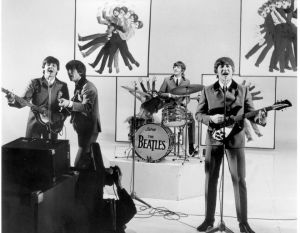

A perfect example of pure, delirious, irresistible joy…


Mila Kunis is about to marry Ashton Kutcher, but the actress confesses the desire to tie the knot is a new thing for her.
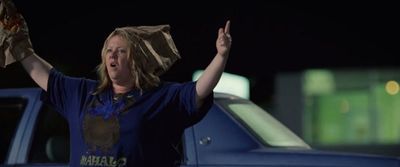
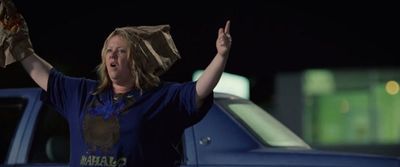
Melissa McCarthy has enough clout in this town and in this industry, following standout performances in the massive box-office hits “Bridesmaids,” “The Heat” and even “Identity Thief,” to make pretty much any movie she wants. She’s used it to make “Tammy,” a comedy she stars in, produced and co-wrote with her husband, Ben Falcone, who’s directing his first feature.
“Tammy” provides McCarthy with the opportunity to do yet another version of the persona she’s honed: a brash, trash-talking woman whose seemingly over-inflated sense of self masks a vulnerability and a need for acceptance and love. That this type of character also has a subversive sense of humor keeps us on our toes and keeps the shtick somewhat fresh. McCarthy has a way with a tossed-off ad lib—an aside or an observation or an insult—that provides some clever surprises when you think you’ve got this person all figured out.
I wonder what else she has in her bag of tricks, though. She’s clearly a gifted and fearless comedian, both verbally and physically. “Tammy” offers glimmers of greater dramatic depth, but while it’s much funnier than it looks, it also features moments of attempted poignancy that don’t always feel earned.
The quality of the cast—which includes Susan Sarandon, Kathy Bates, Allison Janney and Mark Duplass, in a further sign of McCarthy’s power—certainly elevates the premise, which is essentially your standard, desperate road-trip comedy.
When we first meet Tammy, she hits a deer while driving her junker car to her lousy job at a third-rate fast-food restaurant. Arriving in a more late and slovenly state than usual, she promptly clashes with her uptight assistant manager (Falcone himself, who’s been her frequent co-star). He fires her, which means she goes home early, which means she finds her husband (Nat Faxon) having a romantic, home-cooked dinner with next-door neighbor Missi, played by a woefully underused Toni Collette. (Seriously, she gets maybe three lines. It’s a massive waste of a huge talent.)
And so, as she’s done so many times before, Tammy packs up her random belongings and her hideous wardrobe and threatens to leave her small Illinois town, a place so insular and stunting that her mother (Janney) and grandmother (Sarandon) live two doors down. This time, she makes it past the city limits, though, with the help of Grandma Pearl’s Cadillac, Grandma Pearl’s wad of $6,700 in cash and Grandma Pearl herself. Desperate for an adventure, Pearl offers to go along for the ride. She’s also a diabetic who’s forgotten her meds as well as a full-blown alcoholic, which complicates matters.
If you’re not distracted by the fact that Sarandon is a mere 24 years older than McCarthy and that her sexy, sly demeanor still shines through beneath her scruffy, silver wig, perhaps you’ll feel encouraged to go along for the ride, too. “Thelma & Louise,” this is not, but the two actresses do have a sparky chemistry with each other. McCarthy is aggressive and foul-mouthed while Sarandon is sensible and laid-back. And they’re clearly destined for trouble, which leads to solid if scattered laughs.
Their convoluted circumstances include the promiscuous Pearl’s sexual connection with a randy, older barfly (Gary Cole), while Tammy unsuccessfully flirts with his sweet, shy son (Duplass). While it’s always a joy to see the versatile, natural Duplass, his character feels frustratingly underwritten here, rendering hollow the supposed romance that develops between him and Tammy.
A Jet-Ski accident, a fast-food restaurant robbery, some brief jail time and a lavish July 4 party at the home of a wealthy lesbian (a no-nonsense Bates) and her partner (a barely-there Sandra Oh) also await. But between these antics, Pearl and Tammy must work though decades-old resentments and failures in order to get both of their lives back on track. The attempt at achieving both zany comedy and emotional depth requires a light touch that sometimes eludes Falcone. But the intention is admirable, as is the focus on flawed female characters and the way they relate to each other.
“Tammy” passes the Bechdel test, for those of you keeping score at home. But while Tammy herself is a meandering mess with no real purpose in life, there’s clearly a good heart beneath the disheveled exterior. At least, there are hints at it. McCarthy has made sure that her movie is kind enough to its characters to try and find that out.