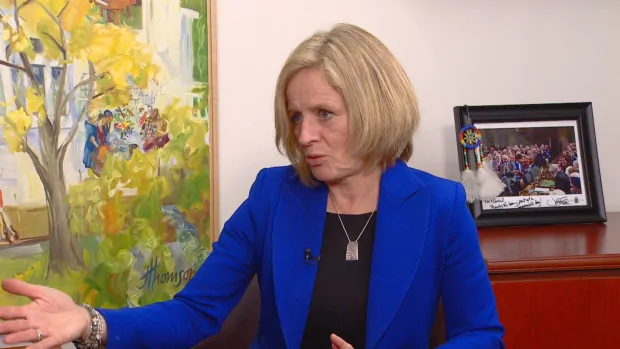
Voters in rural Alberta can expect more attention from the provincial NDP in the years ahead, says party leader Rachel Notley.
In a year-end interview with CBC News, Notley admitted the Alberta New Democrats failed to capitalize in last spring’s provincial election on the support it had earned in 2015 among rural Albertans.
In April, the party lost every one of its rural seats to Jason Kenney’s UCP, which formed government with 63 or 82 seats. The NDP elected 24 MLAs, representing constituencies in Edmonton, Calgary, Lethbridge and St. Albert.
Notley cited the challenges of forming the government and leading the resource-dependent province through the dramatic drop in the global price of oil.
Those issues held much of the NDP’s attention during its term, she said, and took priority over building on the new rural support it had picked up in northwestern Alberta and west of Edmonton, she said.
“We hadn’t really done the work to reach out to those folks and build from there,” she said.
“As a party, we need to work off of what we’ve been able to build and really now capitalize on it when we have a bit more time and bandwidth, for lack of a better term, to do that kind of work.”
The NDP has formed a rural caucus, tasked with organizing and building support in rural Alberta constituencies, which traditionally vote for conservative candidates.
The rural caucus held a conference in November and is developing a rural economic strategy.
Efforts are underway to talk to rural voters and learn how the NDP can do a better job representing them, Notley said.
She said rural residents have told her the NDP’s carbon tax — repealed in May by Premier Jason Kenney and the UCP government — hit them harder financially than it hit urban residents.
The federal carbon tax is coming into effect Wednesday. But if Alberta was ever to return to its own carbon pricing system, the NDP would look at ways to make it more fair for rural people, Notley said.
Farm safety law backlash
During the spring election, the UCP framed the NDP as being uncaring or unknowledgeable about the needs or rural Albertans.
In addition to the carbon tax, Notley’s government was hurt by the 2015 farm safety act and the ensuing backlash from ranchers and farmers. The UCP government repealed the law this fall, replacing it with legislation that relaxes some employment standards for smaller operations.
But Notley believes the UCP is also losing ground with rural Albertans. She said her party has heard concerns about deep budget cuts and the lack of new jobs created since Kenney won the spring election.
A plan recently unveiled by the UCP will see rural municipalities paying more for additional RCMP officers, which rural politicians say will necessitate a hike in property taxes.
And Alberta Health Services has raised the notion of “reconfiguring services provided at some smaller sites,” creating fears that services at rural hospitals may be cut or privatized.
Notley said these moves demonstrate the UCP government’s disregard for the needs of rural Alberta.
“The UCP is taking the rural vote very much for granted because the vast majority of their cuts have a hugely disproportionate impact on rural Alberta,” Notley said.
“I think as people more and more see the consequences of these cuts, I think you’ll also start to see a little bit of room open up in rural Alberta.”
Notley bucked Canadian political tradition by staying on as NDP leader and embracing her role as the Official Opposition leader after her party lost power to Kenney and the UCP in the April election.
She confirmed in an interview with CBC Calgary that she intends to lead the party into the next election in 2023, with the intent of returning to the premier’s office.