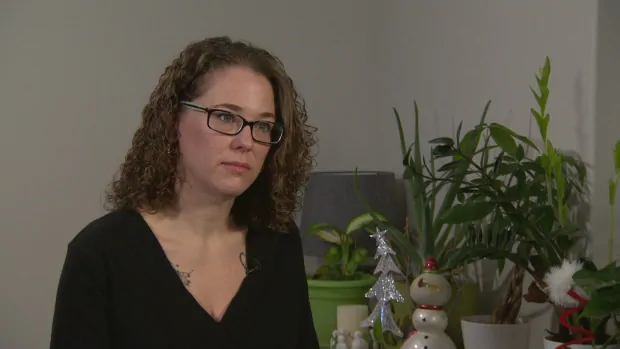
A former teacher who left the profession after being bullied by a colleague is questioning the Alberta Teachers’ Association ability to fairly represent its members in situations of professional conflict.
Erin Mitchell filed a complaint with the ATA against her principal in the fall of 2018 for not taking action after she was bullied by a fellow teacher at Hardisty School on Edmonton’s east side.
Mitchell was employed by Edmonton Public Schools at the time of the bullying. An internal investigation by the school district determined that the other teacher was acting in a harassing manner. Mitchell was diagnosed with PTSD around the same time.
Mitchell later asked for the other teacher’s classroom to be moved away from hers. But her principal didn’t make the change.
Mitchell then went to the ATA with her complaint against the principal. The association assigned an investigator who interviewed witnesses, including Mitchell and the principal.
The investigator found there was insufficient evidence to refer the matter to a hearing.
I don’t see how one organization can represent one body that disciplines the other body.– Erin Mitchell
Mitchell maintains that her complaint wasn’t handled fairly because the investigator failed to interview a key witness — a local ATA representative.
She had asked that the local ATA representative be interviewed because he had been present when a school board official allegedly told Mitchell that her colleague’s classroom would be moved.
The investigator decided not to do that interview.
“I thought I had perfect evidence and that if I launched the complaint it would be taken seriously,” Mitchell said. “My side was not represented.”
She chose not to appeal the ATA’s decision, feeling it was a lost cause.
Mitchell told CBC the process felt like being in a courtroom where both sides are represented by the same lawyer.
“I feel I was given advice as to what steps to take, but at no point was I actually represented,” she said.
She is now advocating for principals and vice-principals to be part of a professional association separate from the one teachers belong to.
“You never know what you’re going to come up against in a career like education,” she said. “Both sides deserve fair representation.”
Principals and vice-principals are considered teachers by the ATA, said Jonathan Teghtmeyer, a spokesperson for the teachers’ association.
Complaints involving a teacher and a principal are handled the same way as those that involve two teachers, he said.
“The term principal refers to the first educator, the principal teacher in the school,” Teghtmeyer said.
“They are instructional leaders, but they are not managers as would be the case in more traditional employment centres.”
Conflict of interest?
Mitchell believes the ATA places itself in a conflict of interest when it represents a principal who is in a position of authority over a teacher who has made a complaint.
“I don’t see how one organization can represent one body that disciplines the other body,” she said.
But Teghtmeyer said the ATA has safeguards in place to ensure a fair investigation.
We ensure that no staff who has dealt with, or frankly knows that teacher, is involved in the professional conduct investigation.– Jonathan Teghtmeyer
“We ensure that no staff who has dealt with, or frankly knows that teacher, is involved in the professional conduct investigation or in the hearing side of things as well.”
Manitoba teacher Michael Zwaagstra, who has written several books on the Canadian education system, makes the case for separate professional associations for teachers and principals.
Principals make decisions within the school that have an impact on teachers, he said.
The interests of principals and teachers do sometimes end up in conflict with each other,” Zwaagstra said.
Having separate associations would allow both groups to represent their own interests in collective bargaining agreements, he added.
“Those respective organizations would be free to fully and strongly reflect the interests of their members.”
Different models across country
Principals and vice-principals have their own associations in British Columbia, Ontario, Quebec and Nova Scotia.
Each of those provinces has its own model. Some principal associations are still part of the teachers’ bargaining agreement, while others negotiate separately.
The separate associations were created through provincial legislation.
There are no plans to do that in Alberta, said Ministry of Education spokesperson Colin Aitchison.
“While both teachers and principals have raised this idea with our office, it is not currently under consideration,” Aitchison said in an emailed statement.
“However, we encourage all educators to continue sharing their ideas as to how they believe we can strengthen our education system.”
But teachers are afraid to speak out, said Mitchell.
Since going public with her own story of being bullied, she’s received dozens of messages from teachers who have gone through similar experiences.
“I’d say at least 90 per cent of the messages that I got involved principals bullying teachers,” she said.
“Most of the teachers that contacted me had not made any complaints. They haven’t spoken to anybody about it.”
She’s encouraging the ATA to launch a provincewide survey to assess the scope of bullying between colleagues.
“Give them a platform where they feel safe to actually talk about what they’re facing every day at work and how they’re coping,” she said.