Oil prices dropped sharply on Tuesday after a top Saudi Arabian source told Reuters production could be fully back on line within weeks, quicker than initially thought following weekend attacks that halved the kingdom’s output.
Saturday’s attacks raised the specter of a major supply shock in a market that in recent months has been preoccupied with demand concerns and faltering global growth. Oil surged as much as 20 per cent at one point on Monday.
Production could be fully online within two to three weeks and the kingdom was close to restoring 70 per cent of the 5.7 million barrels a day lost after the attacks, a top Saudi source briefed on the latest developments told Reuters.
Brent crude was down $3.72 US, or 5.4 per cent, at $65.30 a barrel by 8:50 a.m. ET. West Texas Intermediate was down $2.40, or 3.8 per cent, at $60.50 a barrel.
In the immediate fallout from the attacks, state-owned producer Saudi Aramco told some Asian refiners it would meet its oil commitments, albeit with changes, sources said.
Saudi energy minister Prince Abdulaziz bin Salman will hold a news conference at 12 p.m. ET.
We need a proper damage assessment, we need to see a recovery plan.– Samuel Ciszuk, analyst
“All eyes will be on the Saudi news conference,” said Samuel Ciszuk, founding partner at Stockholm-based ELS Analysis.
“We need a proper damage assessment, we need to see a recovery plan. Before that, we don’t really know how much oil will be offline for how long and that’s the basic question people having been posing since Saturday.”
Biggest single oil disruption in 50 years
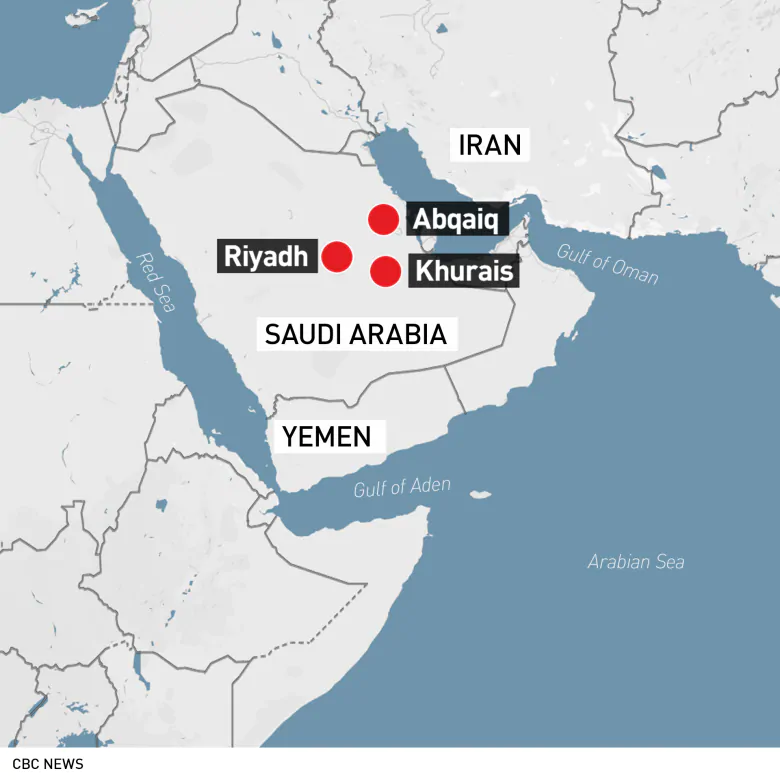
The attacks on crude-processing facilities at Abqaiq and Khurais resulted in the largest single supply disruption in half a century, and threw into question Saudi Arabia’s status as supplier of last resort.
Some Asian refineries are expected to receive their allocated volumes for October, while other importers are being told of delays or being offered alternative grades.
The prospect of oil releases from strategic inventories in the United States, the International Energy Agency and countries such as Japan have weighed on prices, but the geopolitical threat of retaliation is causing concerns.
U.S. President Donald Trump said on Monday it looked like Iran was behind attacks, but stressed he did not want to go to war.
Relations between the United States and Iran have deteriorated since Trump pulled out of the Iran nuclear accord last year and reimposed sanctions on its oil exports.
Tehran rejects the charges it was behind the strikes and on Tuesday ruled out talks with Trump. Saudi King Salman meanwhile called on governments around the world to confront the threats to oil supplies.
Washington also wants to pressure Tehran to end its support for regional proxy forces, including in Yemen where Saudi forces have been fighting Iran-backed Houthis for four years. The Houthis claimed responsibility for Saturday’s attacks.
“It is fair to say that a price floor of around $60 a barrel [for] Brent has been placed under the market over the weekend,” oil broker PVM said.