Lightning strikes: A CBC photographer offers some tips on getting a great lightning shot
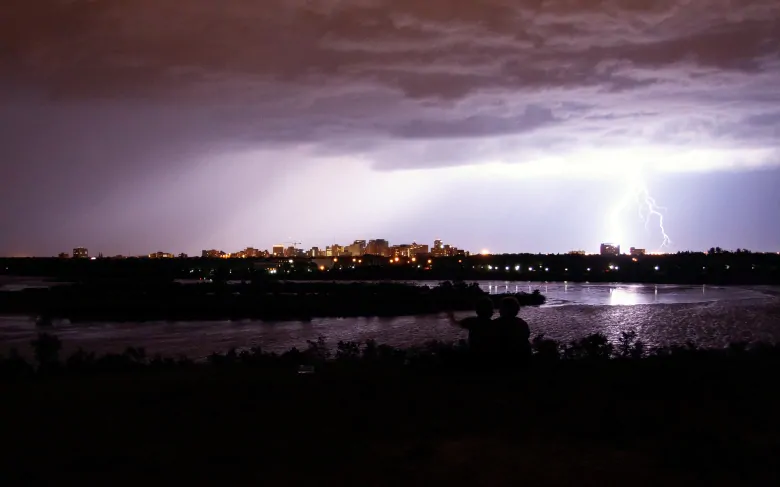
If there’s anything I’ve learned while watching storms across this country, it’s that taking photos of lightning is tricky — but the results can be very rewarding.
My first chance to shoot a storm came in 2012, when Canada Day fireworks at Wascana Park were cancelled due to severe weather. I had brought my camera along and decided I’d stick around to shoot the storm as it rolled into Regina.
From the moment I took that shot, I was hooked.
Chasing storms is a thrill that’s nearly unmatched to me on a personal level, and editing photos in the aftermath is an exhilarating game of “did I get that shot or not?”
I’m not a hardcore or professional storm chaser like the ones you see on television, including Regina’s own Greg Johnson, but I enjoy getting a chance to take photos of storms whenever the opportunity presents itself.
Safety first
Personal safety is always top of mind when I’m working in severe weather.
Environment Canada weather warnings about severe weather typically include lines about staying inside or encouraging people to get to safety if they find themselves in severe weather, and with good reason.
“Canada averages over two million lightning strikes each year. And, despite our relatively short lightning season, nine to 10 people are killed and between 100 and 150 people are injured each year by lightning in Canada,” a statement on Environment Canada’s website says.
To avoid becoming one of these statistics while working outdoors, find some kind of shelter in a low-lying area, like a valley or ditch to operate from.
I tend to stay away from trees while working in wild weather. They can be struck by lightning and can be toppled by high winds.
People out shooting lightning in particular should also avoid being near anything that conducts electricity, like metal fences.

Environment Canada also reminds people that if you can hear thunder, you’re within striking distance of lightning. The agency said people should wait roughly 30 minutes after hearing the last rumble of thunder before heading out.
A safe bet, if all else fails, is to operate out of your vehicle — which is typically a safe place to be — but be aware of any downed power lines that could be touching your car.
Fast or slow shutter speeds?
Shutter speed plays a big role in how your storm photos will come out.
Slow shutter speeds potentially allow you to capture multiple lightning strikes in one shot, but require a tripod for stability. You also tend to lose the sharp appearance of lightning when shooting at lower shutter speeds.

Faster shutter speeds can allow you to capture more dramatic-looking shots of individual lightning bolts, but often require a dash of luck to get the shot.

It all boils down to personal preference, but play around with either option if you have the time to do so, and see how slower or faster shutter speeds can alter the end result.
Spray ‘n’ pray
I shoot with a Canon 5D Mark III DSLR, which allows me to dictate my shutter speeds. I can shoot a single frame, three frames per second or six frames per second.
I prefer to shoot at six frames per second when working on lightning photos, which tends to give me a good selection during the edit process.

A quick note on this strategy — you will run your camera’s shutter count through the roof very quickly and often you’ll head to the edit process with tons of photos to sort through. Don’t expect them all to be winners.
While shooting in late July, I took about 300 images and walked away with four that I was happy with.
I’ve found shooting at three frames per second wasn’t allowing me to capture the peak moments I wanted from the storms I was shooting.
Shooting single frames of storm action is near impossible, or at least incredibly challenging, and requires a lot of luck — but it is doable when the stars align.
Don’t forget the landscape
While your subject may be the light show in the skies, your foreground is just as important as what the storm is doing.

We are blessed in Saskatchewan with many options to include in the foreground of shots.
From grain elevators to small towns in the distance to fields of crops and abandoned cars and homes, there are a plethora of options to consider for a frame.