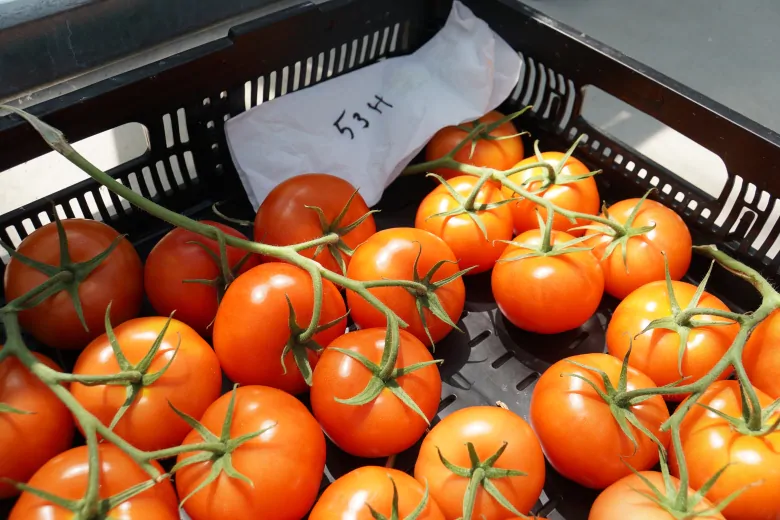
Valerio Primomo grasps a cluster of five red tomatoes in his hand. It took nine years — and hundreds of tomato trials — to get here. But he thinks he’s perfected it.
“We’re almost there,” said Primomo, a vegetable breeder at the Vineland Research and Innovation Centre. “With breeding, there’s always room for improvement.”
Primomo has spent nearly a decade trying to develop tomatoes for Ontario greenhouses. The initial request came from the Ontario Greenhouse Vegetable Growers, who were looking for a better tomato variety that suited Ontario’s tastes while able to adapt to the province’s varied weather. Many of the current varieties come from the Netherlands.
Primomo has landed on three unnamed varieties — scrawled on a napkin as 53H, 13H and 10H — that he thinks can do just that.
In testings, he said, these tomatoes have had yields between five to 18 per cent more than the Dutch varieties currently being used.
“That’s huge for a tomato producer. They’re happy with only a one [or] two per cent increase.”
Hear how Ontario tomatoes came to be by clicking on the audio below.
Tomatoes tested by tomato panel
The testing goes on inside the muggy greenhouses in Vineland Station, near St. Catharines, Ont., in what’s become a test lab for tomatoes. Primomo has used the greenhouses to collect data, looking for diseases on the tomatoes and tracking their adaptability.
He took a lot into consideration while developing them — everything from flavour to looks.
Perhaps most important was the need to be able to grow tomatoes year-round. It’s a complex task given Ontario’s heat in the summer and low light in the winter.
Here’s how Primomo described his ideal tomato
- Sweet flavour.
- Able to withstand summer heat, cold winters.
- “Perfect” green leaves.
- Equal sizes on the cluster.
- Consistent yield.
- No changes of colours.
Along the way, he’s taken to tasting the tomatoes and sharing them with friends and family.
“We have crates and crates of these every day,” he said. “I actually give a lot of it to my parents. They’re of Italian origin so they like to make tomato sauce with it.”
The tomatoes are tested by an in-house group of trained tomato panelists, who look for traits like saltiness and bitterness and describe any odours the tomato may have. That’s used to give Primomo feedback.

He thinks it will take another two years until the tomatoes go commercial — and then you could be eating them too.
“I’m all about numbers. Once I get the numbers that back up what we see, then I’ll feel great that we’re able to help the growers and consumers enjoy better tomatoes.”