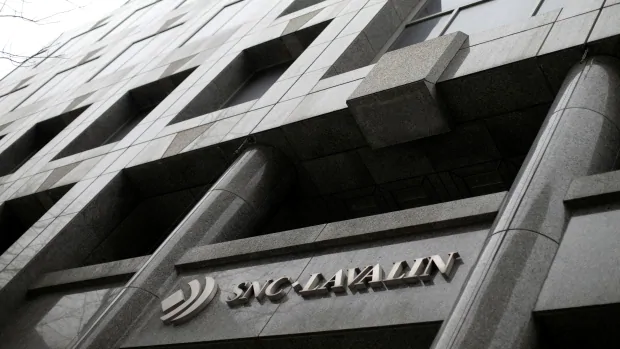
There is enough evidence against SNC-Lavalin for the engineering corporation to be tried on fraud and bribery charges, a Quebec court judge has ruled.
SNC-Lavalin spent months lobbying the federal government to avoid finding itself in this position. It hoped to use a new legal mechanism — a deferred prosecution agreement (DPA) — to pay a fine rather than risk conviction.
But its efforts ignited a major political scandal in Ottawa when the former attorney general, Jody Wilson-Raybould, accused the Prime Minister’s Office of pressuring her to arrange a deal for SNC-Lavalin.
The court’s decision was handed down in Montreal on Wednesday. It followed an extended preliminary inquiry into accusations from federal prosecutors in 2015.
They allege SNC-Lavalin paid around $48 million in bribes to Libyan officials between 2001 and 2011, a violation of the Corruption of Foreign Public Officials Act.
Federal prosecutors also allege SNC-Lavalin defrauded a number of Libyan institutions out of $130 million over the same period.
During the preliminary inquiry, which began in the fall, prosecutors laid out their evidence before a Quebec Court judge in Montreal.
They had to demonstrate a reasonable prospect of conviction, which is a lower burden of proof than they’ll have to meet at trial.
Lawyers for SNC-Lavalin argued the government’s case didn’t merit a trial. The proceedings are covered by a publication ban.
Justice Claude Leblond had the option of halting the proceedings against the company if he determined the evidence was insufficient to merit a trial.
If SNC-Lavalin is found guilty of the charges, it could face a 10-year ban on receiving federal government contracts.
SNC-Lavalin CEO Neil Bruce has said that such a penalty would devastate the company, which has struggled since it was enveloped by a series of corruption scandals in 2012.
The corporation lost around $2.2 billion in market value after federal prosecutors announced last fall they would not be offering a DPA.
Its price on the Toronto Stock Exchange was down nearly three per cent by 11 a.m. Wednesday.
More to come.