Three First Nations chiefs in British Columbia have taken Canada to court to stop a celebrated First Nations health agency from wiping out a smaller counterpart serving 29 First Nations on Vancouver Island.
The lawsuit is the latest battle between the First Nations Health Authority (FNHA), which took over health funding and service delivery from Health Canada in 2013, and the Inter Tribal Health Authority (ITHA).
The lawsuit was filed Jan. 24 in Victoria by Gwa’sala-‘Nakwaxda’xw Nations Chief Paddy Walkus, Tseycum Chief Tanya Jimmy and the ITHA against Canada and the FNHA. The Kwikwasut’inuxw Haxwa’mis First Nation has also joined the lawsuit.
The lawsuit came in response to an announcement last month by the FNHA that it was terminating two funding agreements that would shut down the ITHA.
The ITHA depends on about $8.8 million in FNHA transfers for about 85 per cent of its funding.
The statement of claim argues that Canada would breach its fiduciary responsibility to the First Nations served by the ITHA if funding stopped flowing to the health agency.
“FNHA was in the position of a delegated fiduciary or agent for Canada in exercising the fiduciary duty,” said the statement of claim. “Canada is thereby bound to provide funds to the plaintiff ITHA for the health services of the First Nations.”
An Indigenous Services Canada spokesperson said in an emailed statement the department needed to review the lawsuit and could not comment.
FNHA says audit triggered termination
The ITHA was created in 1998 to deliver health services to 29 First Nations.
The ITHA received its funding directly from Health Canada until the FNHA took over for the department following the signing of the Tripartite Framework Agreement on First Nations Health Governance between B.C., Ottawa and B.C. First Nations.
Under the agreement, which came into force in 2013, the FNHA took over funding and program delivery for all First Nations in B.C. from Health Canada’s First Nations and Inuit Health Branch—which is now under Indigenous Services.
The FNHA publicly announced on Jan. 11 it was terminating the two funding agreements with the ITHA effective March 31.
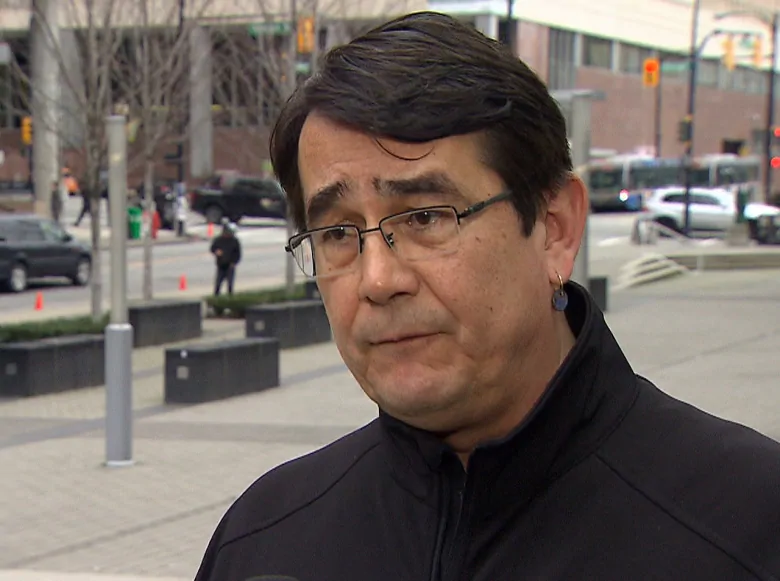
Kwikwasut’inuxw Haxwa’mis First Nation Chief Councillor Bob Chamberlain joined lawsuit against Canada and the First Nations Health Authority. (CBC)
The FNHA also put the ITHA under third-party management. The FNHA announced in a letter Thursday to ITHA-member First Nations that it was redirecting all funding to the ITHA through the third-party manager.
The FNHA said in an emailed statement to CBC News that all First Nations “served by ITHA will continue to receive all the benefits and services they are entitled to.”
The FNHA said it terminated the agreements because the ITHA had refused to co-operate with an audit of its operations, breaking the terms of its funding agreements.
The FNHA said in an emailed statement to CBC News that it launched the audit after receiving service failure complaints from “one third of communities receiving services” from ITHA.
The alleged “complaints included recurring failure of the ITHA health service providers to show up for appointments, the use of unqualified health-care providers and a lack of transparency… about the services and funding that communities are entitled to,” said the statement.
An audit of the ITHA, marked “draft” and dated January 2018, was posted by the FNHA on its website.
The draft audit alleged a number of issues with the ITHA’s operations, including governance issues with the board and potential conflicts of interest “amongst senior management and staff,” missing documentation for petty cash use and incomplete paper trails for mental health and medical equipment claims.
Long-running dispute
The draft audit said there were concerns with the “quality of the audit evidence” it received from ITHA and that there were “significant delays in receiving information from ITHA.”
The ITHA disputed the findings of the draft audit and public statements made by the FNHA about the termination of the funding agreements.
ITHA sent a letter on Jan. 21 to the FNHA alleging the FNHA was posting “defamatory” statements on its website.
The ITHA also sent a complaint last year to the Chartered Professional Accountants of B.C. against the auditor, but the regulatory body chose not to investigate saying it was a matter between the two organizations.
The ITHA argued in its lawsuit that the audit went beyond the scope set out in the funding agreements and was designed to undermine the existence of the organization.
Kwikwasut’inuxw Haxwa’mis First Nation Chief Councillor Bob Chamberlain, whose community has also joined the lawsuit against the FNHA, said he believes the aim of the FNHA’s audit was to “be rid of this blemish on their authority in this province.”
The lawsuit is the latest in a long-running dispute between the FNHA and the ITHA that includes an assault complaint filed with the RCMP.
ITHA’s executive director Patricia Cassidy alleged last week, in a criminal complaint and lawsuit, that FNHA chief operating officer Richard Jock assaulted her during a heated meeting on May 11, 2018, held to discuss the audit.
Chief says ITHA understands community’s needs
The impending demise of the ITHA worries Tseycum First Nation Chief Tanya Jimmy.
“Our people will suffer,” said Jimmy, whose community sits about 30 km north of Victoria.
When a suicide ideation case involving a 10-year-old triggered a crisis in Tseycum First Nation over a year ago, Jimmy immediately turned to the ITHA for help.
The health authority sent a mental health team the next day to help the small Vancouver Island First Nation grapple with the crisis, said Jimmy.
She said the ITHA has also taken a holistic approach to health services that meets the needs of the member First Nations at the grassroots level.
“They are from our communities and they understand our needs,” said Jimmy. “They are understanding and supporting of our ways.”
Jimmy said the demise of the ITHA could mean an up to 50 per cent cut in health funding for her community because the funding arrangement the health agency helped craft would also end.
The ITHA helped pull together 11 small First Nations—with memberships between 200 and 500 people—so they could qualify to receive increased health funding that increased their budgets by 50 per cent, she said.
Jimmy said the end of the ITHA would also mean the end of the arrangement. She said this extra money helps to pay for more health staff and enhances services available to their members.
Jimmy said she doesn’t want her community to fall under the FNHA.
“Why would I let our band be part of something that is so oppressive?” she said.
Chamberlain said he’s also worried about potentially losing 50 per cent of his community’s health funding if the ITHA shuts down.
“We are in a dark place and wondering where our health services are going to come from,” said Chamberlain, whose fly-in community of about 300 people sits about 245 km north of Nanaimo, B.C.
“It doesn’t feel right.”