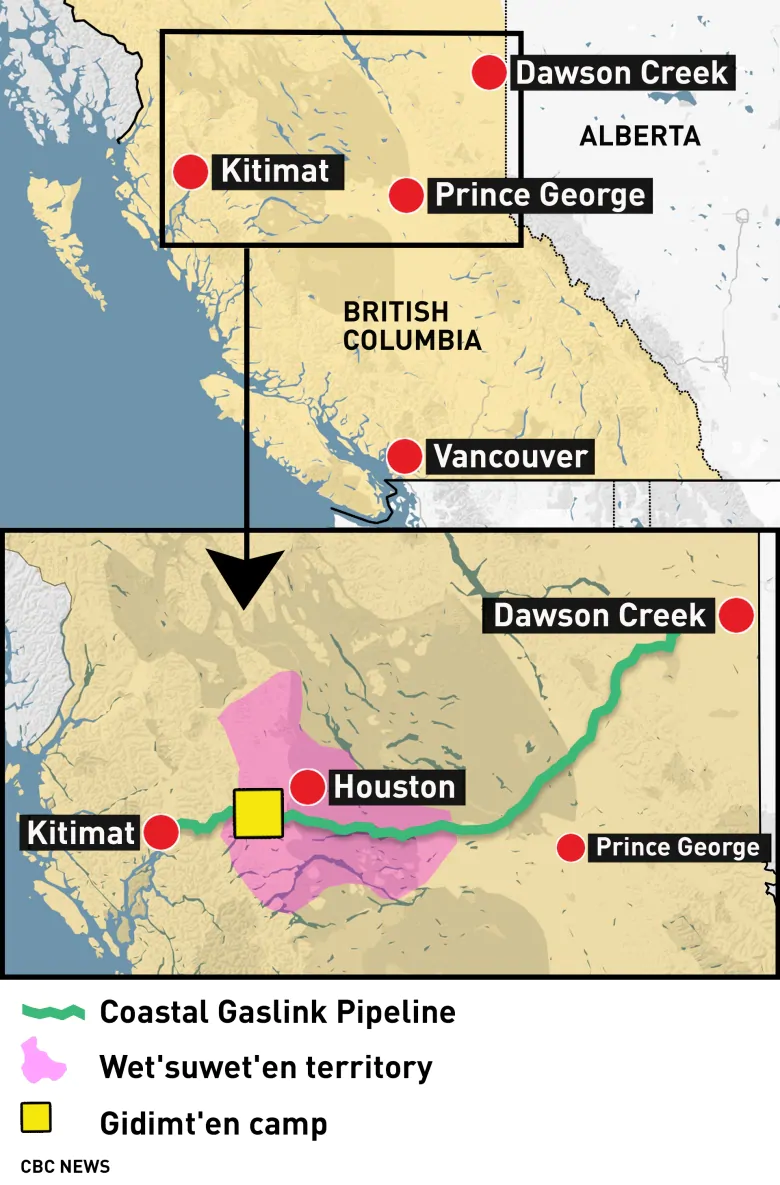
RCMP intend to enforce an injunction Monday to allow a pipeline company access to a forest service road in northern B.C. where people at the Gidimt’en camp have established a fortified checkpoint.
In a news release Monday morning, B.C. RCMP said temporary exclusion zones and road closures will be established “for police and public safety reasons.” The RCMP said no one would be allowed to enter the exclusion zones.
The release said residents would notice an increased police presence in the Houston, B.C., area.
“We are very hopeful that there will not be violence or disorder as we enforce the court order; however, the safety of the public and our officers is paramount when policing demonstrations, particularly due to the remote area in which the bridge is located,” the release said.
The Coastal GasLink pipeline is meant to transport natural gas from northeastern B.C. to the coast where an LNG Canada facility is scheduled for construction.
Members of the Wet’suwet’en First Nation have been preventing company workers from getting through their checkpoints, asserting they can only pass if they have consent from hereditary leaders.
An injunction was issued last month ordering people to stop preventing the company from gaining access to the area.
Coastal GasLink calls the camps along the route blockades. The Gidimt’en group says they are checkpoints where people can get through, if they have consent.
Group here has no intention of removing barriers on the road and bridge here. Not without consent from hereditary chiefs says Wickham. <a href=”https://t.co/ULNut758L7″>pic.twitter.com/ULNut758L7</a>
—@pieglue
There are increasing obstructions being placed on the bridge and road; people at the camp describe this as fortifying the space for protection.
The protesters have been anticipating the arrival of the RCMP since the injunction.
Safety a concern in enforcing injunction
TransCanada has said it signed agreements with all First Nations along the proposed pipeline route to LNG Canada’s $40-billion liquefied natural gas project on the coast. But the hereditary leaders say those agreements don’t apply to the traditional territories.
“We want them right off Wet’suwet’en territory,” Chief Madeek said Sunday, referring to the proposed Coastal GasLink project.
On Sunday, police said their main concerns in enforcing the injunction are “public safety, police officer safety, and preservation of the right to peaceful, lawful and safe protest, within the terms set by the Supreme Court in the injunction.”