Two men have been fatally shot by Edmonton police within a week. The loved ones of the men killed are mourning, but Edmonton Police Association President Michael Elliott says the officers involved in the shootings might also be experiencing trauma.
The EPA is the union that represents members of the Edmonton Police Service, and is responsible for looking after officers’ wellness and connecting them with legal assistance following potentially traumatic events, like officer-involved shootings.
Elliott spent the early hours of Thursday morning with the members involved in Wednesday night’s fatal shooting of 26-year-old Devlin Neyando.
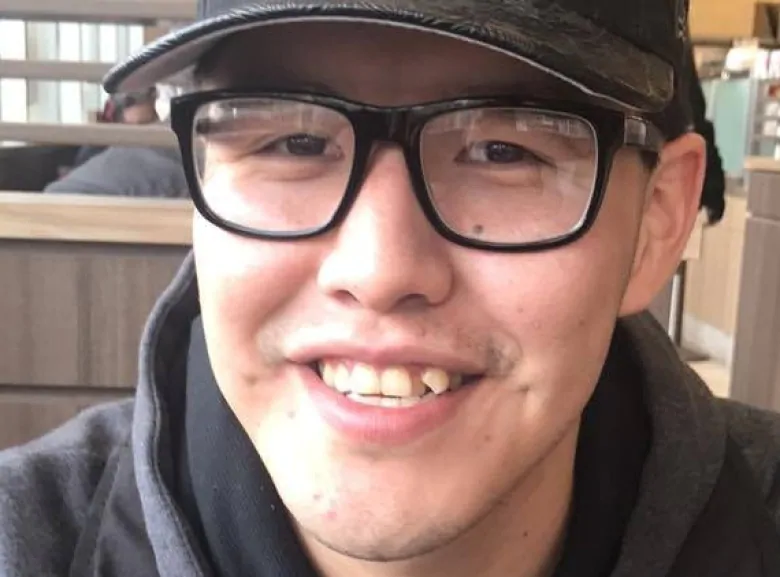
Devlin Neyando has been identified as the man killed by police Wednesday night. (Facebook)
Neyando was shot at about 9 p.m. after allegedly breaking into a home in the Gold Bar neighbourhood. Police said when the man stepped outside, there was a confrontation and officers discharged their weapons.
The officers involved in the shooting didn’t show any signs of distress, but it’s possible they were in shock, Elliott said.
Watch: EPA President Michael Elliott discusses the use of lethal force by police.
“All the members involved are physically okay. The reason I say physically, because mentally I don’t know,” Elliott told CBC News.
“Last night, the appearance of the members is that they were okay. But I remind all the members involved, like it could be 48 hours, 72, it could be a week, it could be a month, it could be six months — you don’t know how it may affect you.”
It’s normal for police officers who respond to traumatic calls to develop ulcers or experience anxiety, mood swings and sleep deprivation, he said.

Buck Evans was shot and killed by police on Boxing Day. (Diane Delorme)
Another man, Edmonton resident Buck Evans, was shot and killed by police on Boxing Day during a high-risk arrest.
One-on-one counselling is available to the officers involved in the shootings, along with the Employee Family Assistance program, Elliott said. The program provides police with the opportunity to talk to other officers who can relate to what they’re going through.
Officers who have used lethal force have to take a reintegration program to reintroduce them to using a weapon. Elliott said using a gun again can be distressing, and the program gives officers an idea of how they’ll react if they have to use their weapon again.
No one really knows how you’re going to react until you’re faced with that situation.– Michael Elliott, Edmonton Police Association President
“A shooting in this case can be very traumatic. And no one really knows how you’re going to react until you’re faced with that situation,” he said.
“It even can be traumatic for the whole service because we are a big family and we rely on one another out on the street to look after one another.”
‘No member wants to use lethal force’
Elliott noted there has been a number of officer-involved shootings in western Canada in the past two weeks. In addition to the two in Edmonton, there was one in Calgary on Christmas morning and another in Saskatoon on Dec. 22.
Elliott said some people might question the number of recent incidents.
“This is not something I think that the citizens of Edmonton should be concerned about. We are a safe city and we have properly trained first responders to help deal with the situations that are out there,” he said, noting police go through training every year.
No member walks into a situation thinking ‘I’m going to use lethal force.’– Michael Elliott, Edmonton Police Association President
“No member walks into a situation thinking ‘I’m going to use lethal force.'”
Lethal force is used as a last resort, Elliott said. The goal is for police to deescalate dangerous situations by using their best weapons: their mouths and ears.
“We want to listen, we want to learn and we want to talk,” Elliott said. “We want to do our best to deescalate any situation because no member wants to use lethal force.”